

Quebec energy deal is chief election issue for Newfoundland and Labrador premier
Advertisement
Read this article for free:
or
Already have an account? Log in here »
To continue reading, please subscribe:
Monthly Digital Subscription
$1 per week for 24 weeks*
- Enjoy unlimited reading on winnipegfreepress.com
- Read the E-Edition, our digital replica newspaper
- Access News Break, our award-winning app
- Play interactive puzzles
*Billed as $4.00 plus GST every four weeks. After 24 weeks, price increases to the regular rate of $19.95 plus GST every four weeks. Offer available to new and qualified returning subscribers only. Cancel any time.
Monthly Digital Subscription
$4.99/week*
- Enjoy unlimited reading on winnipegfreepress.com
- Read the E-Edition, our digital replica newspaper
- Access News Break, our award-winning app
- Play interactive puzzles
*Billed as $19.95 plus GST every four weeks. Cancel any time.
To continue reading, please subscribe:
Add Free Press access to your Brandon Sun subscription for only an additional
$1 for the first 4 weeks*
*Your next subscription payment will increase by $1.00 and you will be charged $16.99 plus GST for four weeks. After four weeks, your payment will increase to $23.99 plus GST every four weeks.
Read unlimited articles for free today:
or
Already have an account? Log in here »
Hey there, time traveller!
This article was published 26/08/2025 (213 days ago), so information in it may no longer be current.
ST. JOHN’S – The premiers of Quebec and Newfoundland and Labrador, along with the heads of their power utilities, met in St. John’s Tuesday as both provinces hammer out final agreements on a sweeping new energy partnership.
Newfoundland and Labrador Premier John Hogan said officials are still gunning to reach definitive agreements by April 2026. The Liberal premier warned that any halt to the negotiations — as has been called for by the provincial Progressive Conservatives — could quash the entire arrangement.
Hogan said the issue could be top of mind in a provincial election campaign he is expected to trigger in the coming weeks.
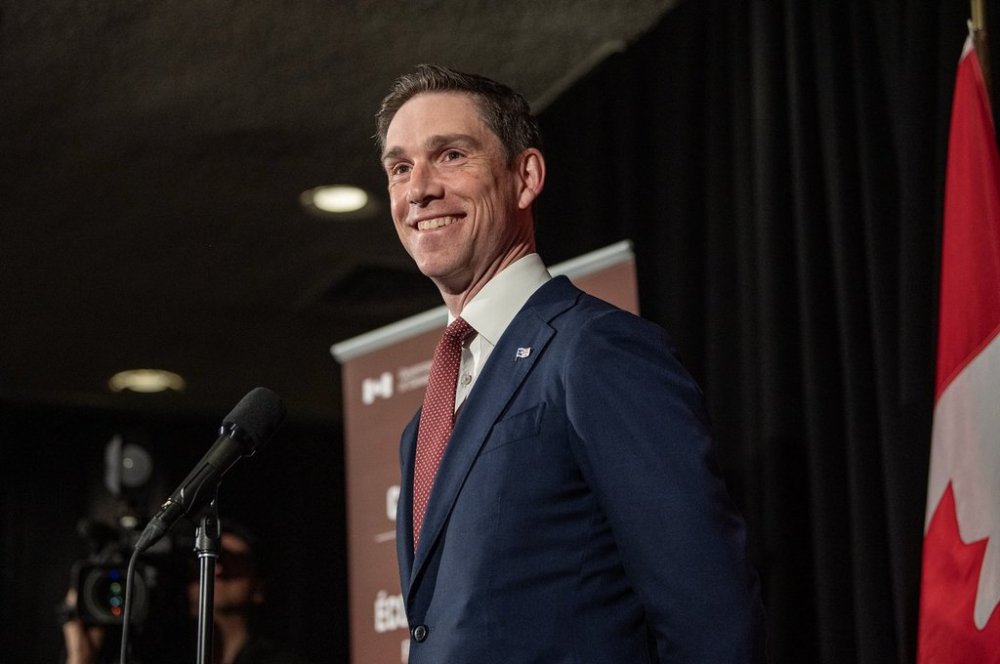
“Not only is it an important election issue, it is the election issue. It is what we need to talk about as a province,” Hogan told reporters. “Pausing a project of this size, when Quebec wants to move now, really means we’re stopping the project, and we will lose all ability to develop and to benefit from Churchill Falls, not only now, but in the next generation and 50 to 75 years to come.”
Newfoundland and Labrador Hydro and Hydro-Québec are negotiating a new deal to end an existing contract 16 years early that allows Quebec’s utility to buy most of the power from the Churchill Falls station in Labrador at rock-bottom prices.
Newfoundland and Labrador Hydro pays the same low prices — 0.2 cents per kilowatt hour — but can buy only a fraction of the power. The deal signed in 1969 has long been a source of bitterness toward Quebec in Newfoundland and Labrador. The province has unsuccessfully challenged the deal in court.
Under the new draft agreement, Hydro-Québec would pay an estimated $33.8 billion for Churchill Falls power over the next 50 years, and partner with Newfoundland and Labrador Hydro on more energy projects. Newfoundland and Labrador would also get more power from the massive generating station on the Churchill River.
Jennifer Williams, chief executive of Newfoundland and Labrador Hydro, literally clapped back at criticisms of the new arrangement Tuesday that claim the forecasted $33.8 billion is a fixed rate that would not be tied to market prices.
“We would not sign that contract,” she said, clapping her hands as she said each word. “It is not a fixed value.”
Officials are negotiating formulas that will tie the rates to the energy market, as well the price Quebec would pay for the same energy from other sources, Williams said.
“We’re associating it with new supply in Quebec,” she said. “The price will change over time, and if the market does increase over time, we’re associating ourselves with that, but we’re not associating ourselves with only that.”
Hogan said the parties also discussed mining opportunities around the boundary between Quebec and Labrador.

Tony Wakeham, leader of the provincial Progressive Conservatives, said too many people in Newfoundland and Labrador feel they don’t understand the tentative agreement between the utilities, which was unveiled in December. He said if he wins the provincial election expected in October, he would have the memorandum of understanding reviewed by an independent third party, such as the province’s public utilities board.
“It shouldn’t simply be an election issue. It’s a generational issue,” Wakeham said in an interview. “We’ve been through a contract for more than 50 years, and now they want to turn around and sign another one for another 50 years.”
Wakeham has previously called for a pause on the negotiations, though he did not repeat that call on Tuesday. However, when asked about negotiators’ goals of having final agreements on hand by April 2026, he was blunt: “I will not be held hostage by any kind of arbitrary deadline set by the province of Quebec.”
“It appears that this deal, or this rush to sign this deal, is more about political futures than it is about the people of Newfoundland and Labrador,” he added.
This report by The Canadian Press was first published Aug. 26, 2025.