

Alberta, citing oil prices and U.S. trade woes, says budget deficit rising to $6.5B
Advertisement
Read this article for free:
or
Already have an account? Log in here »
To continue reading, please subscribe:

Digital Subscription
One year of digital access for only $205*
- Enjoy unlimited reading on winnipegfreepress.com
- Read the E-Edition, our digital replica newspaper
- Access News Break, our award-winning app
- Play interactive puzzles
*First annual payment billed as $205.00 + GST for one year. This annual subscription will automatically renew at $233.00 + GST every 52 weeks (10% off the regular annual price of $259.35). Offer available to new and qualified returning subscribers only. Cancel any time.
To continue reading, please subscribe:
Add Free Press access to your Brandon Sun subscription for only an additional
$1 for the first 4 weeks*
- Enjoy unlimited reading on winnipegfreepress.com
- Read the E-Edition, our digital replica newspaper
- Access News Break, our award-winning app
- Play interactive puzzles
*Your next Brandon Sun subscription payment will increase by $1.00 and you will be charged $17.95 plus GST for four weeks. After four weeks, your payment will increase to $24.95 plus GST every four weeks.
Read unlimited articles for free today:
or
Already have an account? Log in here »
Hey there, time traveller!
This article was published 28/08/2025 (409 days ago), so information in it may no longer be current.
CALGARY – The bad news for Alberta’s oil-reliant budget is set to get worse.
Finance Minister Nate Horner says softening oil prices mean this year’s projected budget deficit is expected to grow by $1.3 billion, and will now finish at $6.5 billion in the red when the fiscal year ends next spring.
That represents a massive multibillion-dollar swing in Alberta’s financial fortunes, as it is coming off an $8.3-billion surplus the year prior.
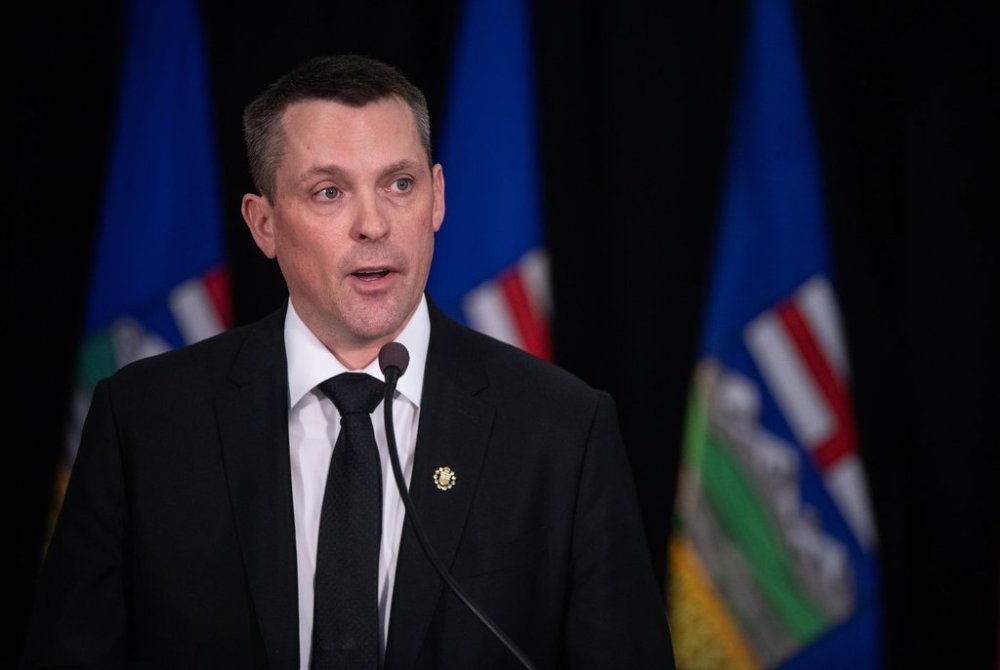
“We are going to have to weather some of this,” Horner told a news conference Thursday.
Horner said oil prices, along with uncertainty created by U.S. trade policy — specifically the conflict over tariffs — are hurting the Alberta economy and remain a significant risk.
Alberta’s taxpayer-supported debt is also up $1.7 billion from the budget, reaching $84.3 billion.
“We’re experiencing many pressures on the economy that are outside of our control,” Horner said.
But, he said, despite challenges, a radical response to the budget bottom line isn’t the answer — though the province may set ministry spending targets as it develops next year’s budget.
“We’ll face these challenges together, and that commitment stands even with a higher deficit.”
Oil prices remain the determining factor in Alberta’s budget, as they have for decades.
Every dollar drop in the per-barrel price for the benchmark West Texas Intermediate slashes $750 million from Alberta’s bottom line. Alberta has lowered its forecast by more than USD $4 a barrel since introducing the 2025 budget in February.
It’s now expected to average almost USD $64 a barrel for the year.
Opposition finance critic Court Ellingson said Alberta’s budget is an example of “fiscal incompetence.”
“This UCP government continues to show that they don’t know what they’re doing and that they’re really bad with money,” Ellingson said in a statement.
Alberta has also added nearly $650 million in expenses related to new agreements with various unions, while negotiations with others are ongoing.
The province is currently in talks with the union representing Alberta teachers. The group representing Alberta’s public sector employees — the largest union in the province— was to vote on a mediator-recommended collective agreement Thursday.
Horner wouldn’t say whether program cuts are in store, but said he may ask ministries to hit spending targets as next year’s budget is developed, similar to the savings proposals Prime Minister Mark Carney has asked from federal ministries.

“I wouldn’t rule out the possibility that we may have a spending target memo come out … before the budget process starts, much like we’ve seen the federal government do,” Horner said.
“We’re not as fat as the federal government, so it probably won’t be as high.”
Alberta’s United Conservative government will also make good on its 2023 election promise to give Albertans a break on personal income taxes. That tax cut will cost the province about $1 billion in revenue.
The province has previously projected multibillion-dollar deficits will remain through to the scheduled 2027 provincial election.
This report by The Canadian Press was first published Aug. 28, 2025.