

Nigeria bans exports of raw shea nuts used for cosmetic products to help grow its economy
Advertisement
Read this article for free:
or
Already have an account? Log in here »
To continue reading, please subscribe:
Monthly Digital Subscription
$1 per week for 24 weeks*
- Enjoy unlimited reading on winnipegfreepress.com
- Read the E-Edition, our digital replica newspaper
- Access News Break, our award-winning app
- Play interactive puzzles
*Billed as $4.00 plus GST every four weeks. After 24 weeks, price increases to the regular rate of $19.95 plus GST every four weeks. Offer available to new and qualified returning subscribers only. Cancel any time.
Monthly Digital Subscription
$4.99/week*
- Enjoy unlimited reading on winnipegfreepress.com
- Read the E-Edition, our digital replica newspaper
- Access News Break, our award-winning app
- Play interactive puzzles
*Billed as $19.95 plus GST every four weeks. Cancel any time.
To continue reading, please subscribe:
Add Free Press access to your Brandon Sun subscription for only an additional
$1 for the first 4 weeks*
*Your next subscription payment will increase by $1.00 and you will be charged $16.99 plus GST for four weeks. After four weeks, your payment will increase to $23.99 plus GST every four weeks.
Read unlimited articles for free today:
or
Already have an account? Log in here »
Hey there, time traveller!
This article was published 28/08/2025 (212 days ago), so information in it may no longer be current.
LAGOS, Nigeria (AP) — Nigeria’s government has banned the export of raw shea nuts, an essential raw material in many cosmetic products, in a bid to grow the country into a global supplier of refined shea butter and other skincare ingredients.
The immediate ban on the crop will be in place for six months and then reviewed, Vice President Kashim Shettima said.
Nigeria follows a growing list of other West African countries, including Burkina Faso, Mali, Togo, Ivory Coast and Ghana, that have banned or restricted export of the crop in the past two years.
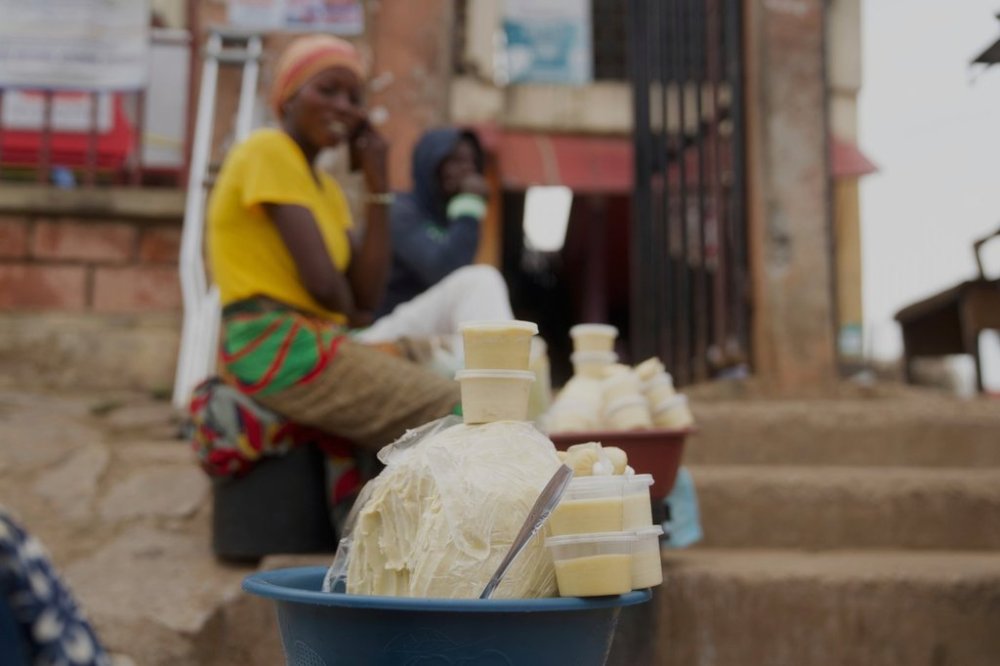
“The ban will transform Nigeria from an exporter of raw shea nut to a global supplier of refined shea butter, oil, and other derivatives,” Shettima said Tuesday.
He added that the decision was not “an anti-trade policy but a pro-value addition policy designed to secure raw materials for our processing factories” and boost income and jobs for rural workers.
Raw shea nut is pulverized and processed to produce shea butter, a key ingredient for manufacturing products like lotion, shampoos, conditioners and moisturizers.
“It is one of the most important bases for skincare, especially now that a lot of people are tilting toward nontoxic skincare,” said Zainab Bashir, an Abuja-based dermatologist.
While Nigeria accounts for 40% of the world’s supply of the crop, it contributes to just 1% of the $6.5-billion global market share in shea products, according to the vice president.

The measure came weeks after the northern Niger state opened a shea butter processing plant that officials described as one of Africa’s largest.
Authorities said that if the export ban remains in force, it is expected to generate $300 million in the short term and $3 billion by 2027.
Experts have argued that such efforts must come with more investment to grow domestic industries.
“The ban seems to suggest that the government has identified a supply-gap issue, but an export ban does little actually to lock in current in-country production solely for Nigerian processors,” Ikemesit Effiong, a partner at SBM Intelligence, a Lagos-based risk advisory firm, told The Associated Press.
The move appeared to contradict the long-standing trade policy of Nigeria’s President Bola Tinubu, who has positioned the country as a free-market economy by removing a series of subsidies on essential commodities such as fuel and electricity. Tinubu has also floated the country’s currency and reversed a ban on the import of dozens of items by the former government.