

Ottawa hasn’t heard directly from China on EV tariffs, agriculture minister says
Advertisement
Read this article for free:
or
Already have an account? Log in here »
To continue reading, please subscribe:

Digital Subscription
One year of digital access for only $205*
- Enjoy unlimited reading on winnipegfreepress.com
- Read the E-Edition, our digital replica newspaper
- Access News Break, our award-winning app
- Play interactive puzzles
*First annual payment billed as $205.00 + GST for one year. This annual subscription will automatically renew at $233.00 + GST every 52 weeks (10% off the regular annual price of $259.35). Offer available to new and qualified returning subscribers only. Cancel any time.
To continue reading, please subscribe:
Add Free Press access to your Brandon Sun subscription for only an additional
$1 for the first 4 weeks*
- Enjoy unlimited reading on winnipegfreepress.com
- Read the E-Edition, our digital replica newspaper
- Access News Break, our award-winning app
- Play interactive puzzles
*Your next Brandon Sun subscription payment will increase by $1.00 and you will be charged $17.95 plus GST for four weeks. After four weeks, your payment will increase to $24.95 plus GST every four weeks.
Read unlimited articles for free today:
or
Already have an account? Log in here »
Hey there, time traveller!
This article was published 09/09/2025 (376 days ago), so information in it may no longer be current.
WINNIPEG – Any decision on easing tariffs on electric vehicles from China would have to take into consideration impacts on other sectors, federal Agriculture Minister Heath MacDonald said Tuesday.
Canada, following the lead of the United States, slapped a 100 per cent tariff on Chinese electric vehicles last year and committed to a review within 12 months. China later imposed tariffs on Canadian canola, in what was widely seen as a retaliatory move that has hurt Canadian producers.
Saskatchewan Premier Scott Moe, who is currently in China, and Alberta Premier Danielle Smith have called on Ottawa to lift its tariffs.
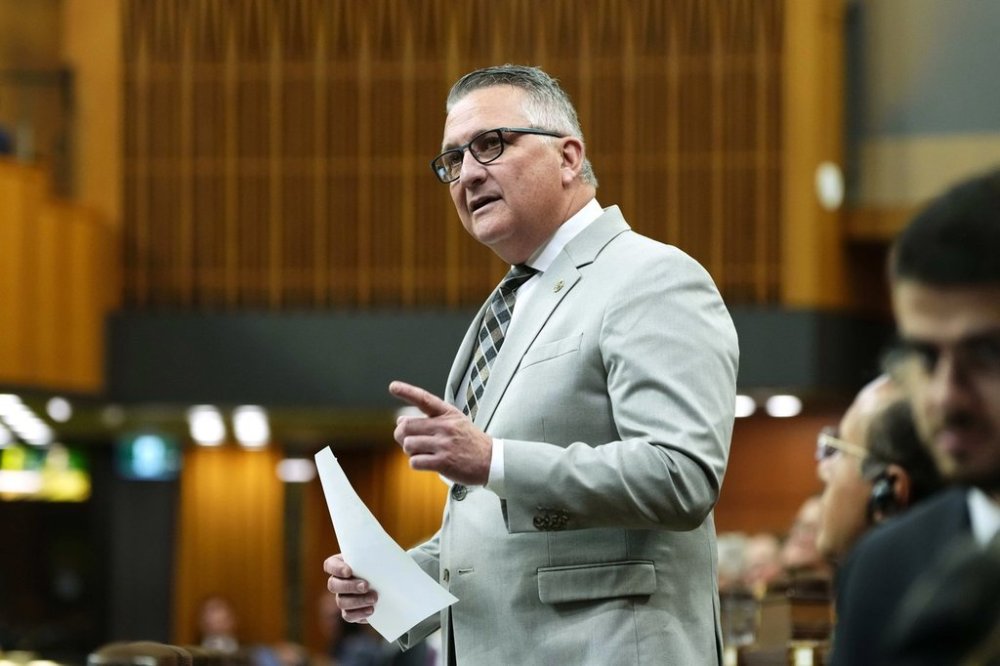
When asked whether Canada might do so, MacDonald said it’s “certainly something that we’re looking at” but cautioned that other trade concerns are being kept in mind. MacDonald didn’t specifically mention the United States, which is also a big importer of Canadian canola and was the first to slap a tariff on Chinese EVs.
“Every decision that we make as a federal government, we want to ensure that we’re not jeopardizing a situation that could be ever broader,” MacDonald told reporters at the end of a meeting with his provincial and territorial counterparts.
“And not knowing the … ask of the Chinese government specifically at this point in time, to speculate on any decisions that we make, and to put that speculation into possible jeopardy of another industry or sector, would be inappropriate.”
Manitoba Agriculture Minister Ron Kostyshyn said all provinces should be consulted on any possible change to the EV tariffs.
MacDonald said he hadn’t yet been briefed on the Canadian delegation to China. Kody Blois, parliamentary secretary to the prime minister, joined Moe on the trade trip.
As part of the meeting in the Manitoba capital, the federal and provincial ministers toured farms and heard from producers who said the tariffs on their canola are hurting.
The canola industry represents 200,000 jobs and $43 billion for the economy, the Canadian Chamber of Commerce has said.

Last Friday, Prime Minister Mark Carney announced a series of trade-related measures, including a $370-million production incentive for the canola sector to help soften the blow of the Chinese tariffs.
The Canadian Canola Growers Association said the package doesn’t go far enough and doesn’t recognize the tariffs’ effects on exporters and processors.
MacDonald said Tuesday that everyone’s main goal is to reopen the Chinese market, and he repeated assurances from Carney that more help could be coming in the meantime.
“We said that it wasn’t the end,” MacDonald said.
This report by The Canadian Press was first published Sept. 9, 2025.

Advertisement Advertise With Us
Advertisement Advertise With Us