

Jerry quits Ben & Jerry’s, saying its independence on social issues has been stifled
Advertisement
Read this article for free:
or
Already have an account? Log in here »
To continue reading, please subscribe:

Digital Subscription
One year of digital access for only $205*
- Enjoy unlimited reading on winnipegfreepress.com
- Read the E-Edition, our digital replica newspaper
- Access News Break, our award-winning app
- Play interactive puzzles
*First annual payment billed as $205.00 + GST for one year. This annual subscription will automatically renew at $233.00 + GST every 52 weeks (10% off the regular annual price of $259.35). Offer available to new and qualified returning subscribers only. Cancel any time.
To continue reading, please subscribe:
Add Free Press access to your Brandon Sun subscription for only an additional
$1 for the first 4 weeks*
- Enjoy unlimited reading on winnipegfreepress.com
- Read the E-Edition, our digital replica newspaper
- Access News Break, our award-winning app
- Play interactive puzzles
*Your next Brandon Sun subscription payment will increase by $1.00 and you will be charged $17.95 plus GST for four weeks. After four weeks, your payment will increase to $24.95 plus GST every four weeks.
Read unlimited articles for free today:
or
Already have an account? Log in here »
Hey there, time traveller!
This article was published 17/09/2025 (385 days ago), so information in it may no longer be current.
Ben & Jerry’s co-founder Jerry Greenfield is leaving the ice cream brand after 47 years, saying that the independence it once had to speak up on social issues has been stifled by its parent company Unilever.
In a letter, which co-founder Ben Cohen posted on social media on Greenfield’s behalf, Greenfield said he could not “in good conscience” remain at Ben & Jerry’s — citing a loss of independence to Unilever, which he said had once agreed to give Ben & Jerry’s autonomy around its social mission when it acquired the brand more than two decades ago.
“For more than 20 years under their ownership, Ben & Jerry’s stood up and spoke out in support of peace, justice and human rights, not as abstract concepts, but in relation to real events happening in our world,” Greenfield wrote “It’s profoundly disappointing to come to the conclusion that that independence, the very basis of our sale to Unilever, is gone.”
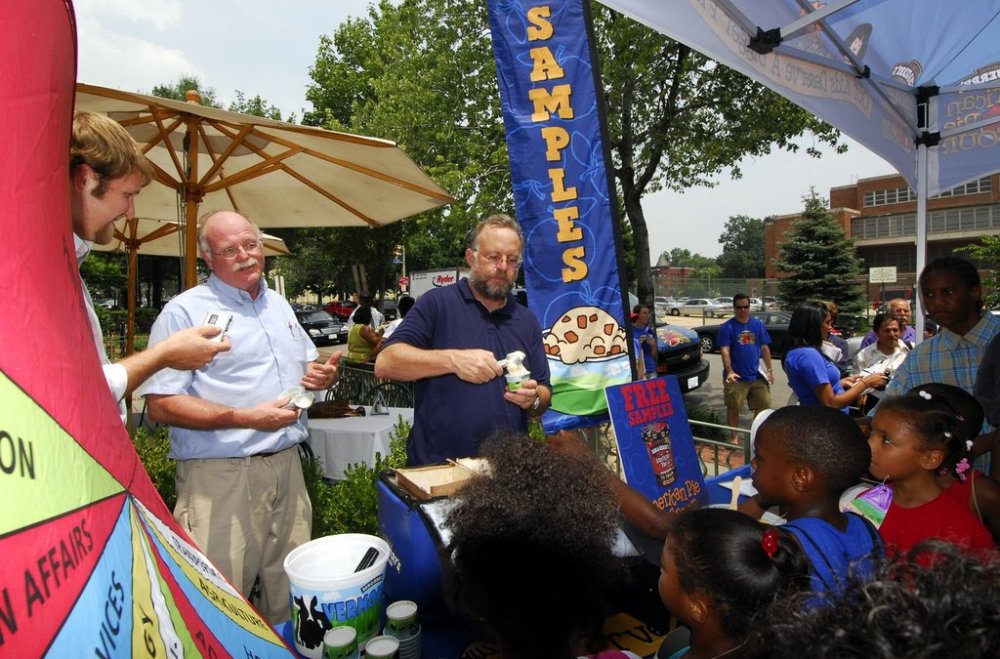
Ben & Jerry’s, famous for its colorful ice cream containers with flavor names such as Cherry Garcia and Phish Food, has also long been known for its progressive political values — speaking out on a range of social issues over the years. And in his letter late Tuesday, Greenfield noted that the brand’s loss of independence arrived at time in the U.S. when the Trump administration “is attacking civil rights, voting rights, the rights of immigrants, women and the LGBTQ community.”
“Standing up for the values of justice, equity, and our shared humanity has never been more important, and yet Ben & Jerry’s has been silenced, sidelined for fear of upsetting those in power,” he wrote.
Tensions between Ben & Jerry’s and its parent have heightened in recent years — with the ice cream brand accusing Unilever of silencing its statements in support of Palestinians amid Israel’s war in Gaza, among other conflicts. And Greenfield’s departure also arrives as the consumer product giant, based in London, is spinning off its ice cream business into a stand-alone company called The Magnum Ice Cream Company.
In a statement on Wednesday, a spokesperson for Magnum said that it would be forever grateful to Greenfield for his contributions to Ben & Jerry’s and thanked him for his service, but was not aligned with his viewpoint.
“We disagree with his perspective and have sought to engage both co-founders in a constructive conversation on how to strengthen Ben & Jerry’s powerful values-based position in the world,” the spokesperson said — adding that Magnum is still committed to Ben & Jerry’s mission and remains “focused on carrying forward the legacy of peace, love, and ice cream of this iconic, much-loved brand.”
Meanwhile, Greenfield and Cohen have been pushing for Ben & Jerry’s to be allowed to become an independently owned company again, saying in a letter to Magnum’s board that they don’t believe the brand should be part of a corporation that doesn’t support its founding mission.
Ben & Jerry’s has been at odds with Unilever for a while. In March Ben & Jerry’s said that its CEO was unlawfully removed by Unilever in retaliation for the ice cream maker’s social and political activism.
In a federal court filing, Ben & Jerry’s said that Unilever informed its board on March 3 that it was removing and replacing Ben & Jerry’s CEO David Stever. Ben & Jerry’s said that violated its merger agreement with Unilever, which states that any decisions regarding a CEO’s removal must come after a consultation with an advisory committee from Ben & Jerry’s board.
Unilever said in a statement at the time that it hoped Ben & Jerry’s board would engage in the agreed-upon process.
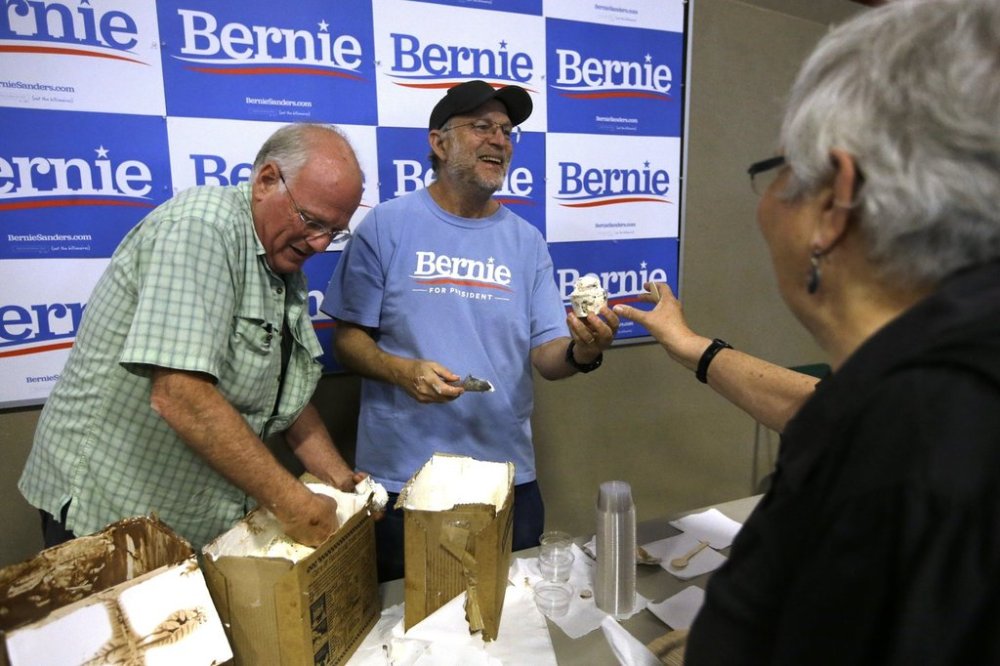
Unilever acquired Ben & Jerry’s in 2000 for $326 million. At the time, Ben & Jerry’s said the partnership would help the progressive Vermont-based ice cream company expand its social mission. But experts stress that preserving complete independence from a corporate owner is never promised.
“What Ben & Jerry’s does spills over onto brand Unilever, and vice versa,” said Kimberly Whitler, a marketing professor at the University of Virginia’s Darden School of Business. “If a brand wants complete and total autonomy, then it is best to remain independent,” she added.
Tommaso Bondi, an assistant professor of marketing at Cornell Tech, speculates that both Unilever and Ben & Jerry’s “underestimated” conflicts that would arise out of the arrangement — noting that the way that brands now talk about politics and social issues is “completely different” from when this deal was struck 25 years ago. And the size of the parent company today also piles on pressure.
“Unilever is just simply too big to be polarizing,” Bondi said, while speaking out on social issues remains a defining feature of Ben & Jerry’s identity. “In some sense, it was an obvious clash,” he said.
Particularly in recent years, the marriage has been on shaky ground. In 2021, Ben & Jerry’s announced it would stop serving Israeli settlements in the occupied West Bank and contested east Jerusalem. The following year, Unilever sold its Israeli business to a local company that said it would sell Ben & Jerry’s under its Hebrew and Arabic name throughout Israel and the West Bank.
In March 2024 Unilever announced the spinoff of the ice cream business — including Ben & Jerry’s — by the end of 2025 as part of a larger restructuring. Unilever also owns personal hygiene brands like Dove soap and food brands like Hellmann’s mayonnaise.
But the acrimony continued. In November, Ben & Jerry’s sued Unilever in federal court in New York, accusing it of silencing Ben & Jerry’s statements in support of Palestinians in the Gaza war.
In its complaint, Ben & Jerry’s said Unilever also refused to let the company release a social media post that identified issues it believed would be challenged during President Donald Trump’s second term — including minimum wages, universal health care, abortion and climate change.
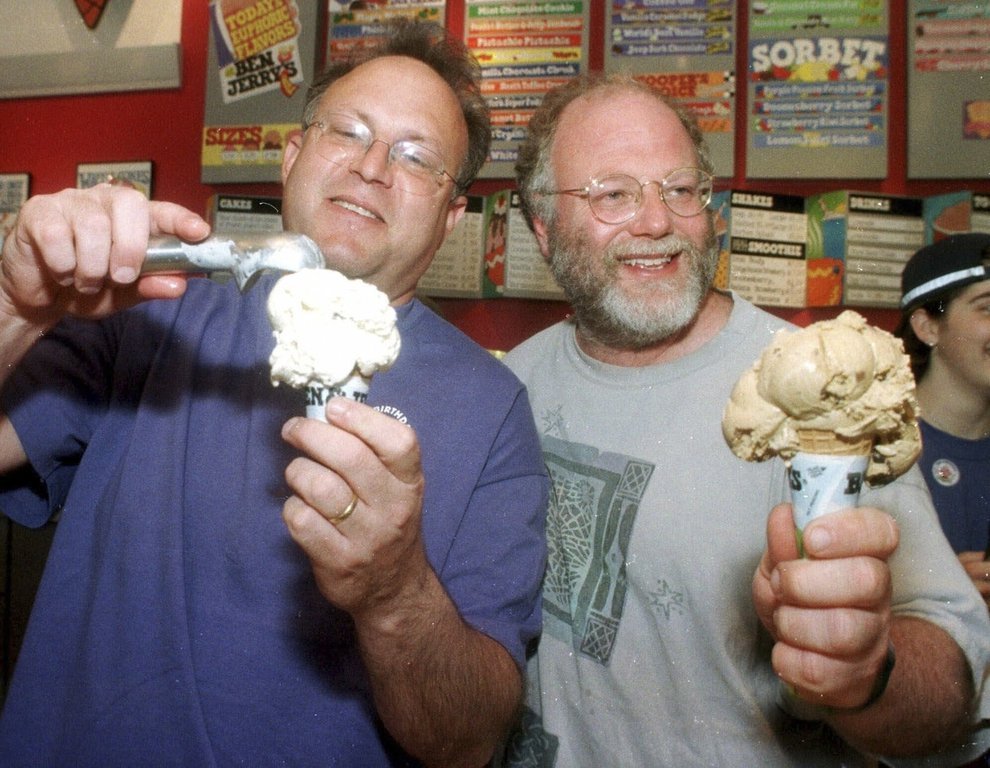

Businesses across sectors have encountered growing pressure to take a backseat when it comes to social activism today — particularly amid the Trump administration’s wider crackdown on diversity, equity and inclusion efforts in both government and workplaces across the U.S.
Vanessa Burbano, a professor at Columbia Business School, notes that her research shows that corporate stakeholders today “most appreciate” when companies take an apolitical stance, or try their best to distance themselves from politics as much as possible.
Still, Burbano notes that it’s a “tough line to navigate.” She and others note that there can be a sense of whiplash if companies stay silent on something today that they may have commented on just a few years ago.
“You need to know what your brand is. You need to know what your brand is not. And you need to be consistent,” said Beth Egan, an associate professor of advertising at Syracuse University.
While she understands that a company “the size of Unilever is being cautious in this political environment,” Egan adds that it’s important to recognize Ben & Jerry’s longstanding brand and nature of their relationship as a well-known subsidiary. “I think trying to silence them will probably backfire,” she said.