

Japan and South Korea leaders commit to closer ties in their final summit
Advertisement
Read this article for free:
or
Already have an account? Log in here »
To continue reading, please subscribe:

Digital Subscription
One year of digital access for only $205*
- Enjoy unlimited reading on winnipegfreepress.com
- Read the E-Edition, our digital replica newspaper
- Access News Break, our award-winning app
- Play interactive puzzles
*First annual payment billed as $205.00 + GST for one year. This annual subscription will automatically renew at $233.00 + GST every 52 weeks (10% off the regular annual price of $259.35). Offer available to new and qualified returning subscribers only. Cancel any time.
To continue reading, please subscribe:
Add Free Press access to your Brandon Sun subscription for only an additional
$1 for the first 4 weeks*
- Enjoy unlimited reading on winnipegfreepress.com
- Read the E-Edition, our digital replica newspaper
- Access News Break, our award-winning app
- Play interactive puzzles
*Your next Brandon Sun subscription payment will increase by $1.00 and you will be charged $17.95 plus GST for four weeks. After four weeks, your payment will increase to $24.95 plus GST every four weeks.
Read unlimited articles for free today:
or
Already have an account? Log in here »
Hey there, time traveller!
This article was published 30/09/2025 (366 days ago), so information in it may no longer be current.
SEOUL, South Korea (AP) — Japan’s outgoing prime minister and his South Korean counterpart underscored the need to strengthen cooperation between their nations, as U.S. President Donald Trump’s transactional approach to allies and trade wars are bringing the often-feuding Asian neighbors closer.
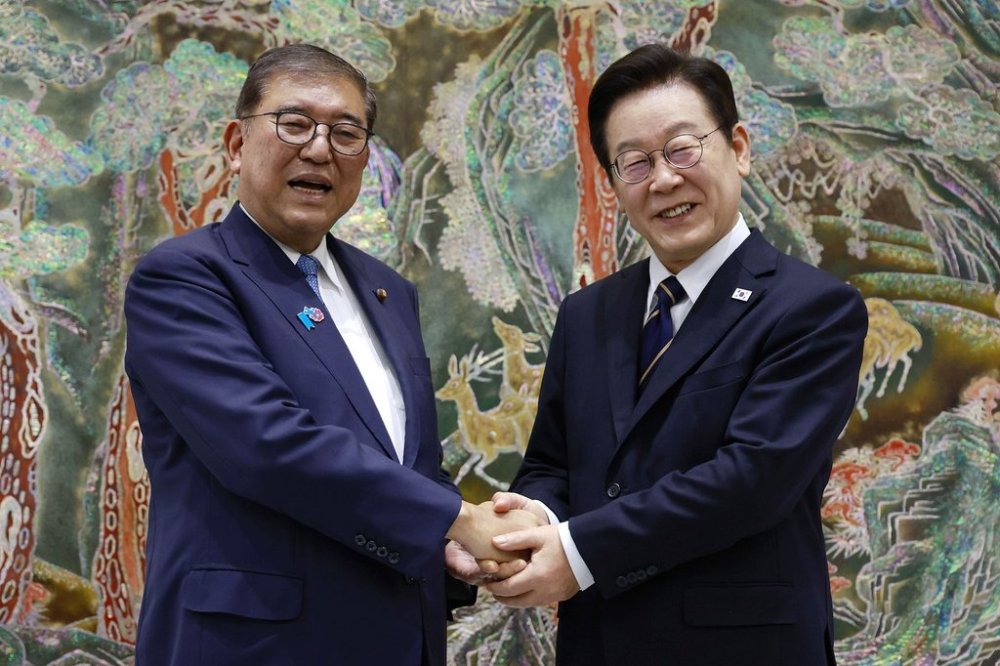
Tuesday’s meeting between Japanese Prime Minister Shigeru Ishiba and South Korean President Lee Jae Myung in South Korea’s southeastern port city of Busan is their third and likely final summit. Earlier this month, Ishiba offered to resign over his ruling coalition’s recent election defeat, triggering a contest to find his successor.
“I hope that (South) Korea and Japan can grow closer emotionally, economically, socioculturally, and in terms of security, just as they are in physical distance,” Lee said at the start of the meeting.
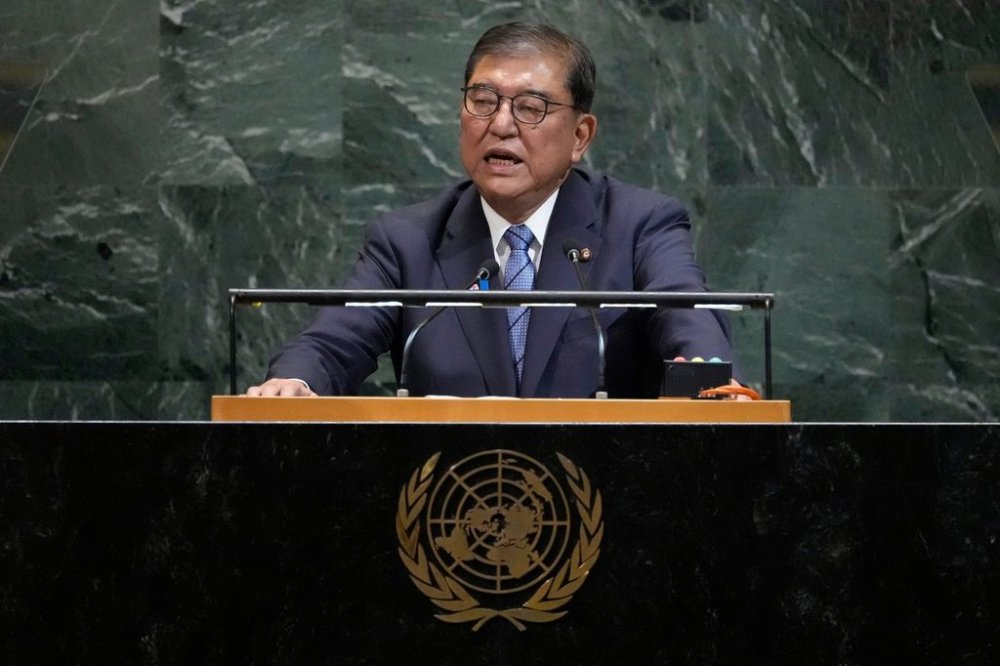
Ishiba said that it was “deeply meaningful” to conclude his diplomatic activities as prime minister with a summit with Lee. “By sharing each other’s wisdom and experience, we can strengthen relations between our two countries while addressing our common challenges,” Ishiba said through a translator.
The two leaders issued a joint statement vowing further bilateral consultations on shared issues like low birth rates, rural revitalization and enhanced disaster prevention steps. Lee’s office said the two also reaffirmed their commitment to the complete denuclearization of the Korean Peninsula, a reference to efforts to end North Korea’s nuclear program.
Relations hobbled by the past
South Korea and Japan are both key U.S. allies and major trading partners. But their ties have experienced constant shifts because of history disputes stemming from Japan’s past colonial rule of the Korean Peninsula. Relations began improving under Lee and Ishiba’s predecessors. But the impending departure of Ishiba, who has acknowledged Japan’s wartime aggression and shown empathy toward the Asian victims, could pose a foreign policy challenge to Lee.
Speaking to reporters after the summit, Ishiba acknowledged enduring differences with South Korea over wartime history but stressed the need for Tokyo to maintain “sincerity and courage” in confronting the past. He expressed hope that his successor will continue strengthening bilateral ties, which would “not only benefit the two countries but also the entire world.”
Both governments said the summit was part of earlier agreements to maintain close communication and high-level exchanges between the countries.
When Lee traveled to Tokyo in August for his second summit with Ishiba, he became the first South Korean leader to pick Japan as their first destination for a bilateral summit since the two countries established diplomatic ties in 1965. In Tokyo, Lee said he intended to pursue pragmatic diplomacy and build future-oriented relations with Japan.
South Korea and Japan have sought ways to tackle together challenges like North Korea’s expanding nuclear arsenal and supply chain vulnerabilities. They are now being pushed closer together by Trump’s push to reset global trade.
Trump’s tariffs rattle both nations
Lee’s national security director, Wi Sung-lac, earlier told reporters that Tuesday’s summit would provide a venue to expand discussions in the midst of “the rapidly changing geopolitical environment and trade order.” He said that the meeting would also discuss Ishiba’s possible active role in developing bilateral ties even after his departure.

South Korea and Japan have pledged hundreds of billions of dollars in U.S. industrial investments in hopes of avoiding the Trump administration’s highest tariffs. But South Korean officials acknowledge they remain at odds with Washington over how Seoul’s proposed $350 billion package would be structured and operated.
South Korean officials have proposed delivering the investment through loans and loan guarantees and have balked at U.S. demands for upfront payments, which they say would put the country at risk of a financial crisis given the size of its foreign-currency reserves.
Unlike Seoul, Tokyo has already put its trade deal with Washington in writing. Trump earlier this month signed an order to lower tariffs on Japanese automobiles and other critical imports, from the initially proposed 25% to 15%, while the two governments also signed a joint statement in Washington confirming $550 billion in Japanese investment in U.S. projects.
__
Associated Press writer Mari Yamaguchi in Tokyo contributed to this report.