

FAA says flight cuts will stay at 6% because more air traffic controllers are coming to work
Advertisement
Read this article for free:
or
Already have an account? Log in here »
To continue reading, please subscribe:

Digital Subscription
One year of digital access for only $205*
- Enjoy unlimited reading on winnipegfreepress.com
- Read the E-Edition, our digital replica newspaper
- Access News Break, our award-winning app
- Play interactive puzzles
*First annual payment billed as $205.00 + GST for one year. This annual subscription will automatically renew at $233.00 + GST every 52 weeks (10% off the regular annual price of $259.35). Offer available to new and qualified returning subscribers only. Cancel any time.
To continue reading, please subscribe:
Add Free Press access to your Brandon Sun subscription for only an additional
$1 for the first 4 weeks*
- Enjoy unlimited reading on winnipegfreepress.com
- Read the E-Edition, our digital replica newspaper
- Access News Break, our award-winning app
- Play interactive puzzles
*Your next Brandon Sun subscription payment will increase by $1.00 and you will be charged $17.95 plus GST for four weeks. After four weeks, your payment will increase to $24.95 plus GST every four weeks.
Read unlimited articles for free today:
or
Already have an account? Log in here »
Hey there, time traveller!
This article was published 12/11/2025 (265 days ago), so information in it may no longer be current.
Flight reductions at 40 major U.S. airports will remain at 6% instead of rising to 10% by the end of the week because more air traffic controllers are coming to work, officials said Wednesday.
The announcement was made as Congress took steps to end the longest government shutdown in history. Not long after, President Donald Trump signed a government funding bill to end the closure.
The flight cuts were implemented last week as more air traffic controllers were calling out of work, citing stress and the need to take on second jobs — leaving more control towers and facilities short-staffed. Air traffic controllers missed two paychecks during the impasse.
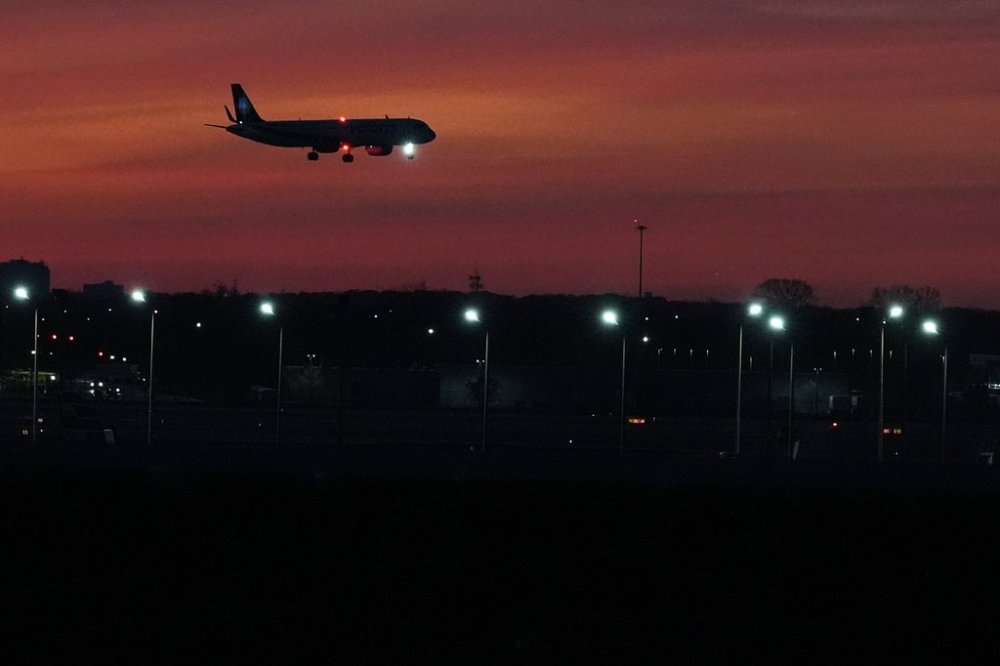
The Department of Transportation said the flight reduction decision was made on recommendations from the Federal Aviation Administration’s safety team, after a “rapid decline” in controller callouts.
The 6% limit will stay in place while officials assess whether the air traffic system can safely return to normal operations, Transportation Secretary Sean Duffy said, although he did not provide a timeline Wednesday.
“If the FAA safety team determines the trend lines are moving in the right direction, we’ll put forward a path to resume normal operations,” Duffy said in a statement.
Duffy and FAA Administrator Bryan Bedford said Wednesday that safety remains their top priority and that all decisions will be guided by data.
Delta struck an optimistic note about how much longer flight reductions would continue, saying in a statement the airline looked forward to bringing its “operation back to full capacity over the next few days.”
Since the restrictions took effect last Friday, more than 10,100 flights have been canceled, according to the flight tracking site FlightAware. The FAA originally planned to ramp up flight cuts from 4% to 10% at the 40 airports.
The FAA said that worrisome safety data showed flight reductions were needed to ease pressure on the aviation system and help manage worsening staffing shortages at its air traffic control facilities as flight disruptions began to pile up.
Duffy has declined to share the specific safety data that prompted the flight cuts. But at a news conference Tuesday at Chicago’s O’Hare International Airport, he cited reports of planes getting too close in the air, more runway incursions and pilot concerns about controllers’ responses.
The FAA’s list of 40 airports spans more than two dozen states and includes large hubs such as New York, Atlanta, Los Angeles and Chicago. The order requires all commercial airlines to make cuts at those airports.
Airlines for America, the trade group of U.S. airlines, posted on social media that it was grateful for the funding bill. It said reopening the government would allow U.S. airlines to restore operations ahead of the Thanksgiving holiday which is in about two weeks.
How long it will take for the aviation system to stabilize is unclear. The flight restrictions upended airline operations in just a matter of days. Many planes were rerouted and aren’t where they’re supposed to be. Airlines for America said earlier Wednesday that there would be residual effects for days.
Eric Chaffee, a Case Western Reserve professor who studies risk management, says airlines face complex hurdles, including rebuilding flight schedules that were planned months in advance.
Airline and hotel trade groups had earlier Wednesday urged the House to act quickly to end the shutdown, warning of potential holiday travel chaos.

Flight cuts disrupted other flights and crews, leading to more cancelations than the FAA required at first. The impact was worsened by unexpected controller shortages over the weekend and severe weather.
The CEO of the U.S. Travel Association said essential federal workers like air traffic controllers and Transportation Security Administration workers must be paid if “Congress ever goes down this foolish path again” and there is a shutdown.
“America cannot afford another self-inflicted crisis that threatens the systems millions rely on every day,” Geoff Freeman said in a statement.
_____
Associated Press writer Audrey McAvoy contributed to this report.