

Japan’s economy contracts as exports get hit by US tariffs
Advertisement
Read this article for free:
or
Already have an account? Log in here »
To continue reading, please subscribe:

Digital Subscription
One year of digital access for only $205*
- Enjoy unlimited reading on winnipegfreepress.com
- Read the E-Edition, our digital replica newspaper
- Access News Break, our award-winning app
- Play interactive puzzles
*First annual payment billed as $205.00 + GST for one year. This annual subscription will automatically renew at $233.00 + GST every 52 weeks (10% off the regular annual price of $259.35). Offer available to new and qualified returning subscribers only. Cancel any time.
To continue reading, please subscribe:
Add Free Press access to your Brandon Sun subscription for only an additional
$1 for the first 4 weeks*
- Enjoy unlimited reading on winnipegfreepress.com
- Read the E-Edition, our digital replica newspaper
- Access News Break, our award-winning app
- Play interactive puzzles
*Your next Brandon Sun subscription payment will increase by $1.00 and you will be charged $17.95 plus GST for four weeks. After four weeks, your payment will increase to $24.95 plus GST every four weeks.
Read unlimited articles for free today:
or
Already have an account? Log in here »
Hey there, time traveller!
This article was published 16/11/2025 (262 days ago), so information in it may no longer be current.
TOKYO (AP) — Japan’s economy contracted at a 1.8% annual pace in July-September as President Donald Trump’s tariffs hit exports and private residential investment plunged.
Data released by the government Monday showed that on a quarter-by-quarter basis, Japan’s gross domestic product, the sum value of its goods and services, slipped 0.4%, the first contraction in six quarters.
The annualized rate shows what the economy would have done if the same rate were to continue for a year.
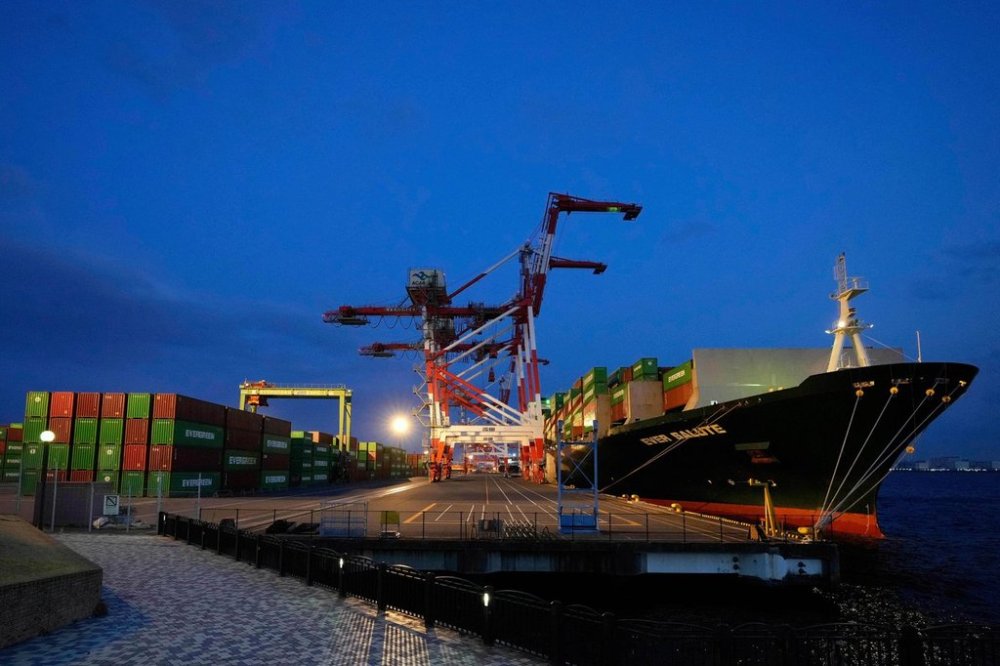
In the April-June quarter, the Japanese economy grew 0.6% on quarter, while in the January-March period, it grew 0.2%..
Exports fell 4.5% in annual terms in the three months through September.
As Trump implemented higher tariffs on imports from many countries earlier this year, businesses ramped up their exports to try to beat higher costs. That inflated some of the earlier data for exports.
Imports for the third quarter slipped 0.1%. Private consumption edged up 0.1% during the quarter.
Analysts said a 9.4% quarter-on-quarter drop in private residential investment, which translates to a 32.5% drop in annualized terms, was mainly due to revisions of Japan’s building code that caused housing starts to plunge after they took effect in April, the start of Japan’s fiscal year.
Tariffs are a major blow to Japan’s export-reliant economy, led by powerful automakers like Toyota Motor Corp., although many manufacturers have moved production abroad to avert the impact from tariffs and other trade controls.
The U.S. imposes a 15% tariff surcharge on nearly all Japanese imports. That’s down from Trump’s earlier plan for a 25% tariff.

Prime Minister Sanae Takaichi, who took office in October, has vowed to revive the economy and is expected to boost government spending, among other policies. That could complicate the central bank’s efforts to rein in inflation by raising interest rates from their longstanding level near zero.
The lackluster level of activity in the last quarter means a possible rate hike in December is unlikely, Marcel Thieliant of Capital Economics said in a report.
But initial data for this quarter and surveys of business sentiment suggest the economy may improve in coming months, and the Bank of Japan may resume raising interest rates early in 2026, he said.
___
Yuri Kageyama is on Threads: https://www.threads.com/@yurikageyama