

Tariff pressure crimps kitchen cabinet sector
Elias Woodwork co-founder says Manitoba company has eaten $4M in added costs, forced into layoffs to stay in U.S. market

Advertisement
Read this article for free:
or
Already have an account? Log in here »
To continue reading, please subscribe:

Digital Subscription
One year of digital access for only $205*
- Enjoy unlimited reading on winnipegfreepress.com
- Read the E-Edition, our digital replica newspaper
- Access News Break, our award-winning app
- Play interactive puzzles
*First annual payment billed as $205.00 + GST for one year. This annual subscription will automatically renew at $233.00 + GST every 52 weeks (10% off the regular annual price of $259.35). Offer available to new and qualified returning subscribers only. Cancel any time.
To continue reading, please subscribe:
Add Free Press access to your Brandon Sun subscription for only an additional
$1 for the first 4 weeks*
- Enjoy unlimited reading on winnipegfreepress.com
- Read the E-Edition, our digital replica newspaper
- Access News Break, our award-winning app
- Play interactive puzzles
*Your next Brandon Sun subscription payment will increase by $1.00 and you will be charged $17.95 plus GST for four weeks. After four weeks, your payment will increase to $24.95 plus GST every four weeks.
Read unlimited articles for free today:
or
Already have an account? Log in here »
Hey there, time traveller!
This article was published 11/12/2025 (252 days ago), so information in it may no longer be current.
Ralph Fehr knows operating costs: payroll, machinery upgrades, a mortgage on the Morden plant.
The $4 million tariff bill is new. And as U.S. tariffs on Canadian kitchen cabinets are set to double Jan. 1 from the current 25 per cent, Fehr is bracing for a future he calls “pretty much insurmountable.”
“I don’t think that it’d be possible to have U.S. sales with 50 per cent tariffs,” Fehr said.
SUPPLIED
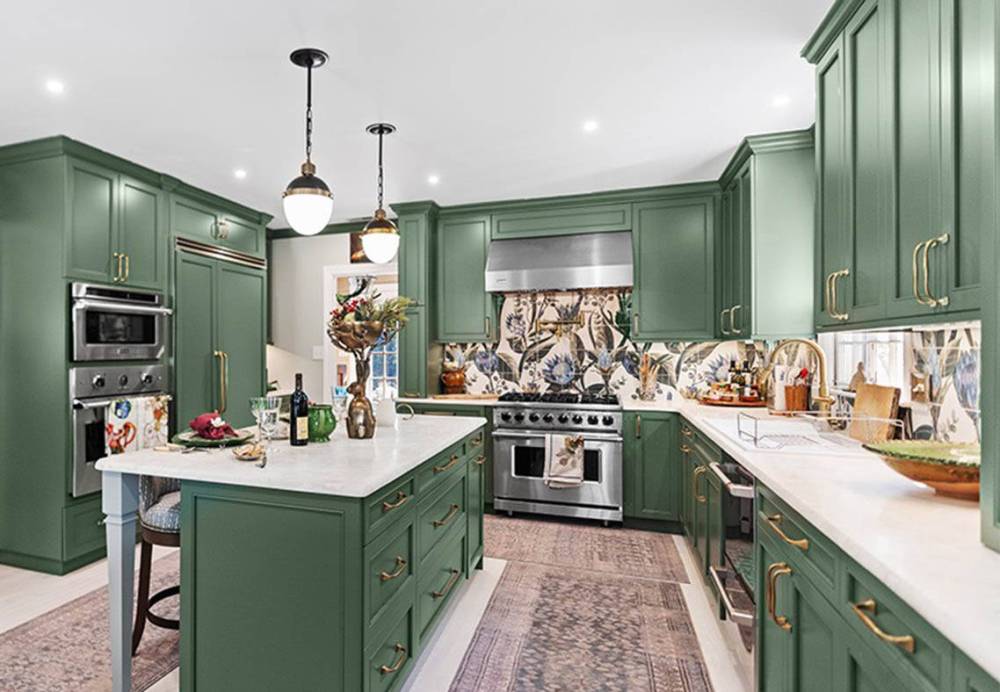
A sample kitchen project by Manitoba-based Elias Woodwork & Manufacturing Ltd.
He co-founded Elias Woodwork & Manufacturing Ltd. with his brother four decades ago. It’s grown to two sites — in Winkler and Morden — and, at one point, counted 500 employees creating parts for kitchen cabinets.
Most of the cabinet doors and mouldings travel south to the United States. The goods land in chains across the country, Fehr said.
His company started eating recent tariff costs. Twenty-five per cent tariffs on Canadian-built kitchen cabinets took effect in October; U.S. President Donald Trump cited a “flooding” of foreign-made goods harming American manufacturers. (Other countries’ kitchen cabinets have also been targeted.)
Within two months, Elias Woodwork’s cumulative bill has come to roughly $4 million, Fehr said.
“We want to keep the (U.S.) sales,” he said. “Our feeling has been that this is a temporary situation.”
The added costs have led to layoffs: Elias Woodwork’s employee count dropped to around 440 through a mix of tariffs and “efficiency” seeking. Last month, the company added robots for hand sanding and assisting with quality inspection.
“We’d be quite content to pay for labour if we could have the income to support it,” Fehr said, adding it’s been harder to keep immigrant workers on staff.
Similar layoffs have occurred in the sector across the country. The Canadian Kitchen Cabinet Association has clocked hundreds of jobs cut in Ontario and Quebec.
Manitoba has 69 companies in the household and institutional furniture and kitchen cabinet manufacturing business, federal government data show. Many sell within Canada and aren’t directly affected by U.S. tariffs.
Still, there could be indirect impacts, noted Carl Dueck, a salesperson with Silverpine Cabinets in Ste. Anne.
“There definitely are some price increases, but a person doesn’t know if that’s related,” Dueck said. “The prices go up and down.”
Nationally, the kitchen cabinet industry employs some 25,000 people. It draws $4.7 billion in sales, according to the Canadian Kitchen Cabinet Association.
The $600 million worth of goods shipped to the United States has “practically turned off,” said Luke Elias, the association’s vice-president.
As a result, Canadian companies that would normally export are looking inside Canada for customers, driving up competition. The housing market has been “soft” over the past couple years, Elias said, adding residential towers largely buy cheap imports.
“There’s been a lot of… rental apartments in the last couple of years. Especially in the Ottawa area, you’ll see cranes up all over the city,” said Elias, who is president of Ottawa-based Muskoka Cabinet Co. Inc. “We compete for that business, and we’ve lost millions of dollars in contracts.”
The United States imposed anti-dumping and countervailing duties on Chinese-sourced cabinets in 2020.
The American Kitchen Cabinet Alliance recently accused Canadian companies of shipping Chinese wares into the United States. It presented during public hearings in Washington ahead of Canada-United States-Mexico Agreement talks.
“China didn’t leave the U.S. market, it just changed the return address,” said Luke Meisner, who represented the AKCA. “We closed the front door for China. Canada and Mexico became the side doors.”
Canadian imports of Chinese-made cabinets rose 23 per cent in 2020-24, and imports of Chinese wooden materials jumped 84 per cent, according to Global Trade Atlas data the AKCA shared in its presentation.
It’s hard to tell how many kitchen cabinets are mislabelled as Canadian and shipped to the United States, Elias said. Below-market value imports are a threat to Canadian businesses, he added.
The American association called on government to make regulatory changes, including altering country of origin rules so at least 85 per cent of wooden materials should be harvested and milled in North America to qualify as a North American cabinet.
Canada and Mexico should be required to apply border measures like the United States, Meisner relayed.
Elias Woodwork procures its hardwood from the United States. Materials like drawer slides and hinges are hard to find within the continent, Fehr said.
“I kind of have my doubts that certain things will ever be made in (North America),” Fehr said, adding he ships some items from China.

He’s against the practice of importing Chinese cabinets and doing minimal work to the goods before shipping to customers. Fehr expects to scale back production if 50 per cent tariffs materialize.
Canada hasn’t placed a tariff on Chinese kitchen cabinet imports. Prime Minister Mark Carney and Chinese President Xi Jinping committed to growing the Canada-China relationship earlier this year.
The Canadian Kitchen Cabinet Association is lobbying for Canadian kitchen cabinets to be prioritized by the federal government’s new Build Canada Homes agency.
“Every home in Canada has a kitchen,” Elias said. “If you ever ask anybody to name a kitchen cabinet company, very few can. We are just forgotten.”
gabrielle.piche@winnipegfreepress.com
Gabrielle Piché reports on business for the Free Press. She interned at the Free Press and worked for its sister outlet, Canstar Community News, before entering the business beat in 2021. Read more about Gabrielle.
Every piece of reporting Gabrielle produces is reviewed by an editing team before it is posted online or published in print — part of the Free Press‘s tradition, since 1872, of producing reliable independent journalism. Read more about Free Press’s history and mandate, and learn how our newsroom operates.
Our newsroom depends on a growing audience of readers to power our journalism. If you are not a paid reader, please consider becoming a subscriber.
Our newsroom depends on its audience of readers to power our journalism. Thank you for your support.
Gabrielle Piché reports on business for the Free Press. She interned at the Free Press and worked for its sister outlet, Canstar Community News, before entering the business beat in 2021. Read more about Gabrielle.
Every piece of reporting Gabrielle produces is reviewed by an editing team before it is posted online or published in print — part of the Free Press‘s tradition, since 1872, of producing reliable independent journalism. Read more about Free Press’s history and mandate, and learn how our newsroom operates.
Our newsroom depends on a growing audience of readers to power our journalism. If you are not a paid reader, please consider becoming a subscriber.
Our newsroom depends on its audience of readers to power our journalism. Thank you for your support.
Advertisement Advertise With Us
Advertisement Advertise With Us