

Churchill Falls agreement could be jeopardized by Quebec election, minister says
Advertisement
Read this article for free:
or
Already have an account? Log in here »
To continue reading, please subscribe:

Digital Subscription
One year of digital access for only $205*
- Enjoy unlimited reading on winnipegfreepress.com
- Read the E-Edition, our digital replica newspaper
- Access News Break, our award-winning app
- Play interactive puzzles
*First annual payment billed as $205.00 + GST for one year. This annual subscription will automatically renew at $233.00 + GST every 52 weeks (10% off the regular annual price of $259.35). Offer available to new and qualified returning subscribers only. Cancel any time.
To continue reading, please subscribe:
Add Free Press access to your Brandon Sun subscription for only an additional
$1 for the first 4 weeks*
- Enjoy unlimited reading on winnipegfreepress.com
- Read the E-Edition, our digital replica newspaper
- Access News Break, our award-winning app
- Play interactive puzzles
*Your next Brandon Sun subscription payment will increase by $1.00 and you will be charged $17.95 plus GST for four weeks. After four weeks, your payment will increase to $24.95 plus GST every four weeks.
Read unlimited articles for free today:
or
Already have an account? Log in here »
Hey there, time traveller!
This article was published 13/12/2025 (262 days ago), so information in it may no longer be current.
QUÉBEC – The Quebec government is warning that a draft energy deal with Newfoundland and Labrador could be at risk if it’s not settled before next year’s provincial election.
In a recent interview with The Canadian Press, Economy Minister Christine Fréchette said a defeat for the governing Coalition Avenir Québec in 2026 could jeopardize the $33.8-billion energy supply agreement.
Fréchette said she has made the argument directly to Newfoundland and Labrador Premier Tony Wakeham.
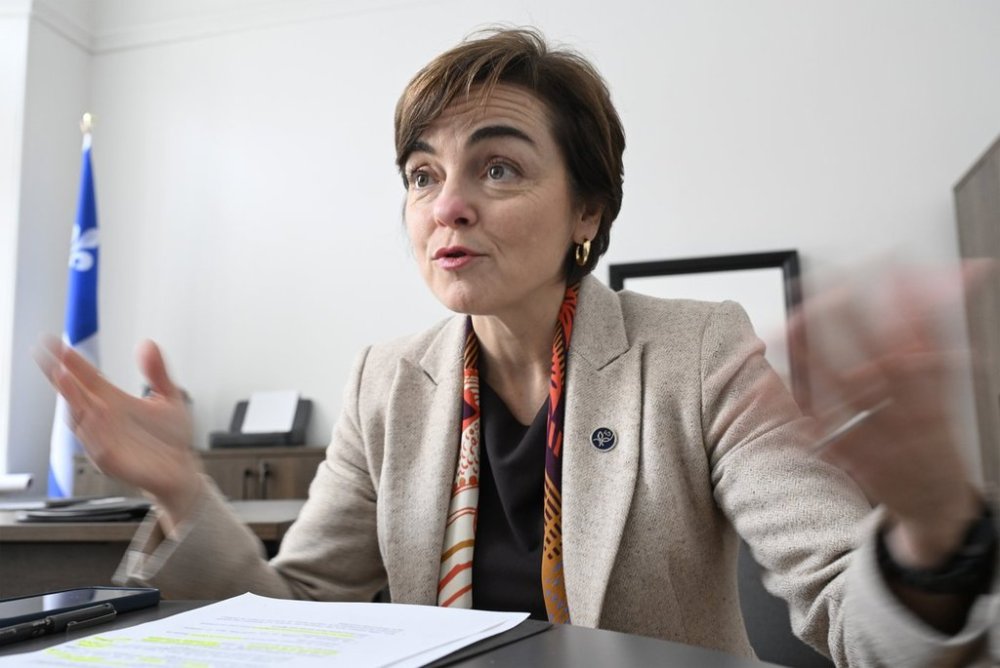
“If another party comes to power (in Quebec) in 2026, it’s not certain that this agreement will go ahead,” she said.
The two provinces announced a preliminary deal in December 2024 that would raise the rates Hydro-Québec pays for electricity from the Churchill Falls plant in Labrador. They planned to reach a final agreement by April 2026.
But in October, Newfoundland and Labrador elected a new Conservative government led by Wakeham, leaving the fate of the agreement up in the air. Wakeham has declared the April deadline “arbitrary,” and wants to have the deal reviewed by an independent panel.
The Quebec government, however, says it’s in Newfoundland and Labrador’s best interest to reach an agreement as soon as possible. Fréchette said she believes Wakeham understands what’s at stake.
“I pointed out this important election deadline to Mr. Wakeham, he was well aware of it, and that’s when he told me that his process would move very quickly,” she said. “I’m taking him at his word.”
Quebec’s next election must be held by October 2026, though it could be called earlier. The government of Premier François Legault is lagging in the polls and is at risk of being wiped off the electoral map, while the sovereigntist Parti Québécois has been leading for the last two years.
Last year, PQ Leader Paul St-Pierre Plamondon said the agreement with Newfoundland and Labrador was “humiliating” for Quebec and asked that it be reviewed by members of the legislature. The Quebec Liberals initially agreed that it was a bad deal, though Leader Pablo Rodriguez has more recently described it as “fair.”
Wakeham has said he’s not worried about what happens in Quebec. He has promised to have the draft deal reviewed by an independent committee and to subject the final agreement to a public referendum, pointing to lessons from the province’s past hydroelectric failures. He has not said when the review will begin.
“I am confident that this committee will be satisfied with what it finds in the agreement,” Fréchette said, claiming that Quebec will pay Newfoundland and Labrador huge sums of money if the deal goes forward.
The December 2024 memorandum of understanding aims to secure Quebec’s hydroelectric supply until 2075. The deal would replace the current contract, signed in 1969, which allows Hydro‑Québec to buy the lion’s share of the energy from the Churchill Falls hydroelectric plant at prices far below market value.
Currently, Hydro-Québec buys electricity from Newfoundland and Labrador at 0.2 cents per kilowatt hour, which it then resells at higher prices. Under the draft agreement, Hydro-Québec would gradually increase the royalty to six cents per kilowatt hour, or 30 times more.
Hydro-Québec would also be the lead developer for a project to increase the capacity of the Churchill Falls power plant, as well as for a second nearby power plant and another downstream at Gull Island. The projects are valued at a total of $25 billion.

Quebec would then have access to an additional 7,200 megawatts to meet its needs.
Currently, Churchill Falls has a capacity of 5,400 megawatts and supplies 15 per cent of Hydro-Québec’s electricity.
Newfoundland and Labrador’s Liberals, who signed the memorandum of understanding last year before being defeated in October’s election, say that the proposal, if finalized, would bring the province more than $225 billion over the next 50 years. But Wakeham has said he believes a better deal is possible.
The province has the highest per capita net debt in the country.
This report by The Canadian Press was first published Dec. 13, 2025.