

US stocks drift ahead of Tuesday’s jobs report
Advertisement
Read this article for free:
or
Already have an account? Log in here »
To continue reading, please subscribe:

Digital Subscription
One year of digital access for only $205*
- Enjoy unlimited reading on winnipegfreepress.com
- Read the E-Edition, our digital replica newspaper
- Access News Break, our award-winning app
- Play interactive puzzles
*First annual payment billed as $205.00 + GST for one year. This annual subscription will automatically renew at $233.00 + GST every 52 weeks (10% off the regular annual price of $259.35). Offer available to new and qualified returning subscribers only. Cancel any time.
To continue reading, please subscribe:
Add Free Press access to your Brandon Sun subscription for only an additional
$1 for the first 4 weeks*
- Enjoy unlimited reading on winnipegfreepress.com
- Read the E-Edition, our digital replica newspaper
- Access News Break, our award-winning app
- Play interactive puzzles
*Your next Brandon Sun subscription payment will increase by $1.00 and you will be charged $17.95 plus GST for four weeks. After four weeks, your payment will increase to $24.95 plus GST every four weeks.
Read unlimited articles for free today:
or
Already have an account? Log in here »
Hey there, time traveller!
This article was published 14/12/2025 (280 days ago), so information in it may no longer be current.
NEW YORK (AP) — Wall Street drifted through a quiet day of trading on Monday, ahead of economic reports this week that could drive where interest rates go.
The S&P 500 slipped 0.2%, though the majority of stocks within the index rose. The Dow Jones Industrial Average dipped 41 points, or 0.1%, and the Nasdaq composite fell 0.6%.
Helping to keep indexes in check were stocks in the artificial-intelligence industry, which were mixed following last week’s scary swings.
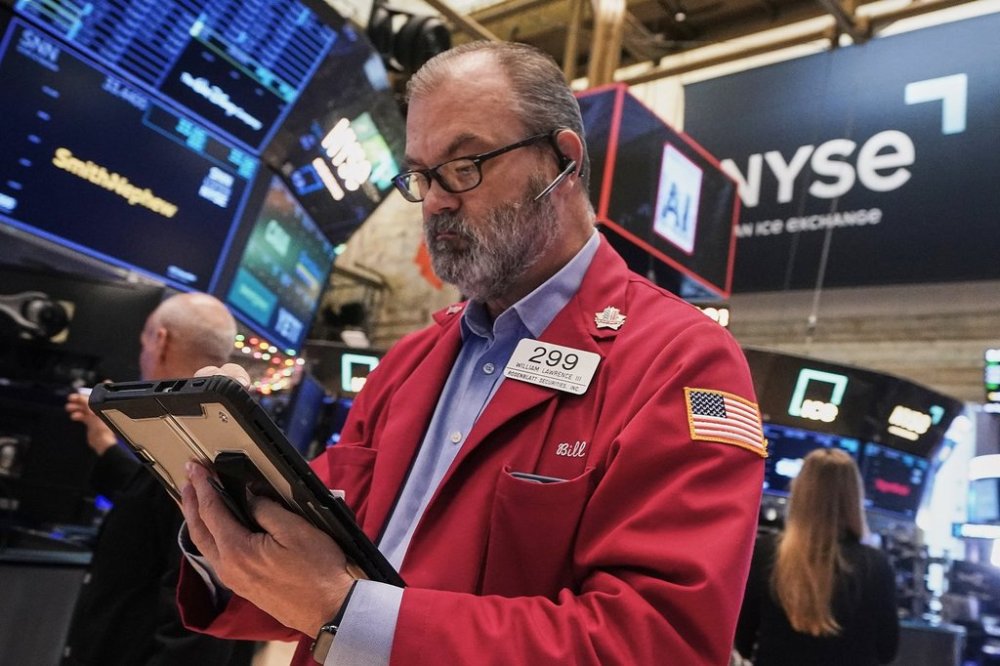
Nvidia, the chip company that’s become the face of the AI boom, added 0.7%. It was one of the strongest forces pushing upward on the S&P 500 after dropping 4.1% last week.
But Oracle sank another 2.7% following its 12.7% tumble last week, which was its worst in more than seven years. Broadcom fell 5.6%.
AI stocks have been shaky on worries that the billions of dollars flowing into chips and data centers may not produce a big-enough payoff to make it worth it. The doubts are causing cracks for the industry, whose earlier surges was the main driver for the U.S. market’s rally to records.
Besides AI, the main focus on Wall Street this week will be on what several big updates on the U.S. economy’s health say.
On Tuesday will come the jobs report for November, and economists expect it to show employers added 40,000 more jobs than they cut during the month. Thursday will bring an update on the inflation, and economists expect it to show U.S. consumers paid prices that were 3.1% higher in November than a year before.
Such data is under the microscope because the Federal Reserve is trying to figure out if a slowing job market or high inflation is the bigger problem for the economy. The Fed is in a potentially tough spot because fixing one of those problems by moving interest rates would likely worsen the other in the short term.
The hope on Wall Street is that the job market weakens, but only by a little: enough to get the Fed to lower interest rates but not so much that a recession swamps the economy. Wall Street loves lower rates because they can give a boost to the economy and prices for investments, even if they also may worsen inflation.
“With the Fed still appearing to be more focused on labor-market weakness than inflation, we’re likely facing a ‘bad news is good’ scenario for the jobs report,” according to Chris Larkin, managing director, trading and investing, at E-Trade from Morgan Stanley.
“As long as the numbers don’t suggest employment is falling off a cliff,” that would mean the market would likely welcome soft numbers, he said.
The spotlight will be brightest on the unemployment rate, not the overall job growth numbers, because the latter is feeling downward pressure from a drop-off in immigrant workers. Economists expect Tuesday’s report to show the unemployment rate at 4.4%, which would keep it near its highest and worst level since 2021.
Treasury yields eased a bit ahead of the updates. A report earlier on Monday morning also said that a measure of manufacturing strength in New York state unexpectedly weakened, when economists expected to see continued growth.
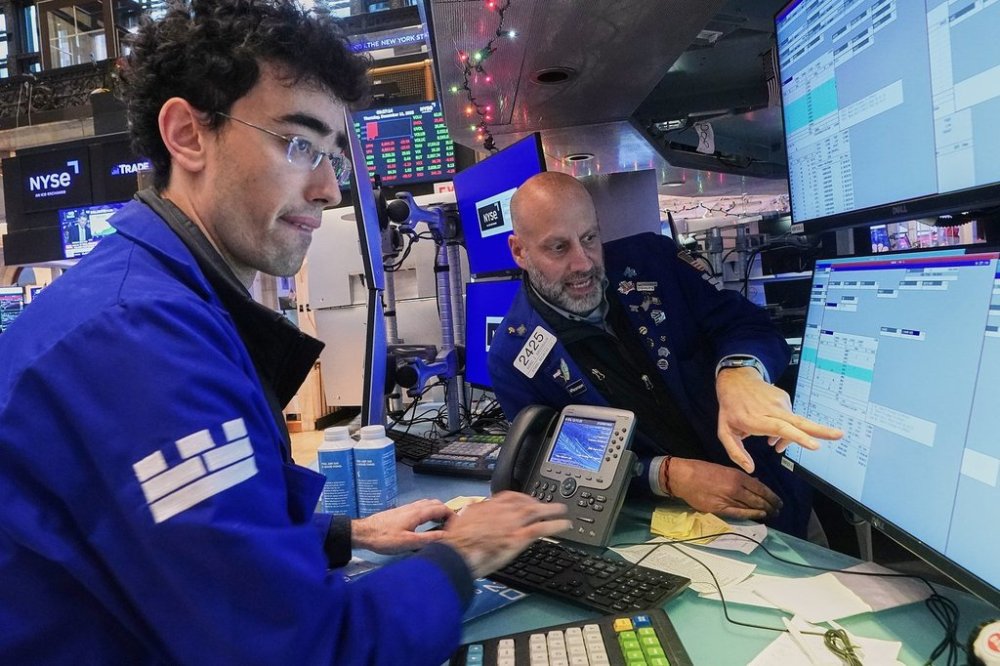
The yield on the 10-year Treasury slipped to 4.18% from 4.19% late Friday.
Elsewhere on Wall Street, shares of iRobot tumbled nearly 73% to $1.18 after the maker of Roomba vacuums said holders of its stock will likely face a total loss after it filed for Chapter 11 bankruptcy protection over the weekend. The company has reached an agreement with its primary contract manufacturer, Picea, to buy it through a process supervised by a U.S. bankruptcy court.
All told, the S&P 500 slipped 10.90 points to 6,816.51. The Dow Jones Industrial Average dipped 41.49 to 48,416.56, and the Nasdaq composite fell 137.76 to 23,057.41.

In stock markets abroad, indexes rose in Europe following weaker finishes in Asia.
Indexes fell 1.3% in Hong Kong and 0.6% in Shanghai after the Chinese government reported a drop in investment in factory equipment, infrastructure and other fixed assets. It’s the latest signal that demand in the world’s second-largest economy remains weak.
Japan’s Nikkei 225 sank 1.3% after a quarterly survey of big manufacturers by the central bank showed a slight improvement in sentiment. That could encourage the Bank of Japan to go ahead with a hike to interest rates.
___
AP Business Writer Elaine Kurtenbach contributed.