

November home sales down almost 11% annually as market hits ‘holding pattern’: CREA
Advertisement
Read this article for free:
or
Already have an account? Log in here »
To continue reading, please subscribe:
Monthly Digital Subscription
$1 per week for 24 weeks*
- Enjoy unlimited reading on winnipegfreepress.com
- Read the E-Edition, our digital replica newspaper
- Access News Break, our award-winning app
- Play interactive puzzles
*Billed as $4.00 plus GST every four weeks. After 24 weeks, price increases to the regular rate of $19.95 plus GST every four weeks. Offer available to new and qualified returning subscribers only. Cancel any time.
Monthly Digital Subscription
$4.99/week*
- Enjoy unlimited reading on winnipegfreepress.com
- Read the E-Edition, our digital replica newspaper
- Access News Break, our award-winning app
- Play interactive puzzles
*Billed as $19.95 plus GST every four weeks. Cancel any time.
To continue reading, please subscribe:
Add Free Press access to your Brandon Sun subscription for only an additional
$1 for the first 4 weeks*
*Your next subscription payment will increase by $1.00 and you will be charged $16.99 plus GST for four weeks. After four weeks, your payment will increase to $23.99 plus GST every four weeks.
Read unlimited articles for free today:
or
Already have an account? Log in here »
National home sales fell 10.7 per cent in November compared with the same month last year as the Canadian Real Estate Association says activity has veered into a holding pattern heading into 2026.
The association said 33,895 properties changed hands across the country last month, as home sales also ticked 0.6 per cent lower from October on a seasonally adjusted basis.
The actual national average sale price of a home sold in November was $682,219, down two per cent from a year earlier.
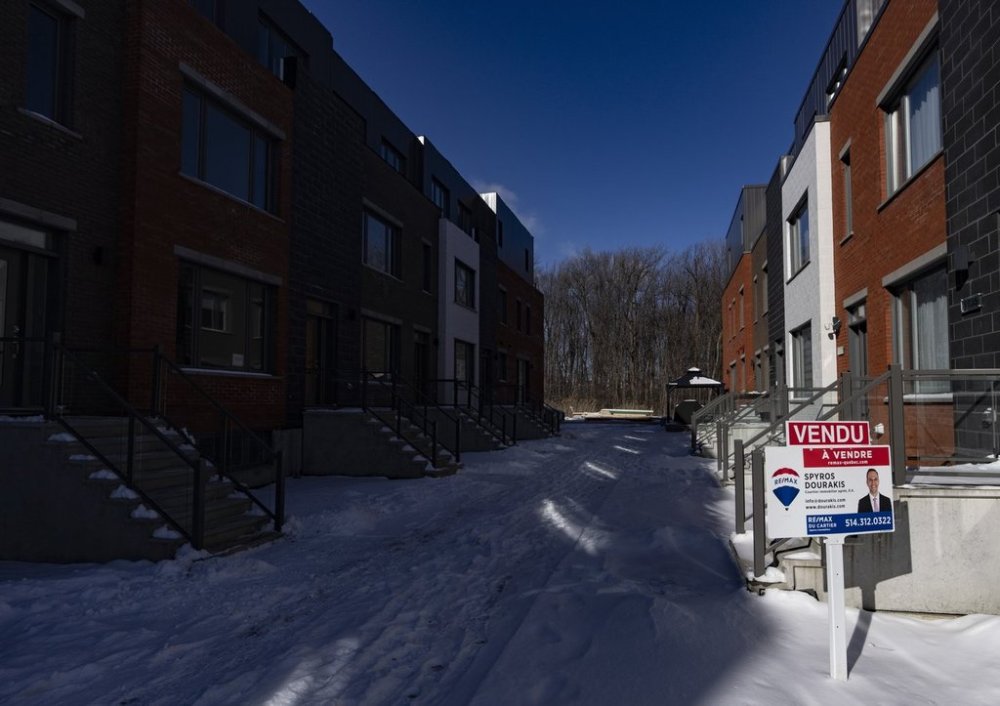
CREA senior economist Shaun Cathcart said some sellers are making price concessions in order to get deals done before the end of 2025 following a mid-year rally.
“That said, the Bank of Canada’s clear signal that rates are now about as good as they’re likely going to get is the green light many fixed-rate borrowers have no doubt been waiting for, so we remain of the view that activity will continue to pick up next year,” he said in a press release.
The central bank held its key rate at 2.25 per cent last week, with economists expecting it to remain unchanged for much of next year. Bank of Canada governor Tiff Macklem said the rate is at the level it should be to balance inflation and economic growth.
That would halt a downward push that started in June 2024 to bring the key rate down from five per cent, including one percentage point worth of cuts this year.
CREA’s home price index, which aims to represent the sale of typical homes, edged 0.4 per cent lower between October and November and was down 3.7 per cent on a year-over-year basis.
But some real estate watchers are less convinced a turnaround is likely in the near-term.
NerdWallet Canada spokesman Clay Jarvis said November’s sales dip “is proof that Canadian homebuyers are being held back by more than just interest rates.”
“Wrestling with inflation for the past two years has left Canadians exhausted and unsure. If their savings have been depleted, where are their down payments coming from?” he said in a statement.
“It’s hard to see how 2026 will be markedly better than 2025 for home sales, especially if the cost of living is what’s reining buyers in.”
Marco Pedri, a Toronto-based broker with Shoreline Realty, said he believes it could take until well into the new year for demand to rebound, as concerns persist around tariffs, the job market and the broader economy.
“And even then I think it won’t be a huge drastic increase,” he said in an interview.
“I think we’re holding steady for the foreseeable future. I don’t think anyone needs to get too worked up or too cautious that they’re going to miss the boat or anything. I really don’t see a pickup happening until late 2026, even maybe as far into 2027.”
For first-time homebuyers, Pedri said it’s been even harder to find motivation to get off the sidelines.
He said some had planned for years to make their move once prices finally came down, but still feel hesitant now that the market has levelled off.
“With all these external pressures that are causing this slowdown, the psychological aspect of it is, ‘Am I really making the right decision?'”
TD economist Rishi Sondhi said home prices will likely continue to be weighed down by oversupply in B.C. and Ontario. Meanwhile, tighter markets should fuel stronger price gains elsewhere in the country.

“November was a soft month for resale housing, with Canadian sales and prices both down,” he said in a note.
“However, November’s sales dip was small, and sales have climbed for six of the past eight months. As such, we’re not throwing in the towel yet on our view that Canadian sales will grind higher through next year, supported by pent-up demand in B.C. and Ontario, and some improvement in job markets in 2026.”
The association said new listings were down 1.6 per cent month-over-month.
There were 173,000 properties listed for sale across Canada at the end of November, up 8.5 per cent from a year earlier but 2.5 per cent below the long-term average for that time of the year.
This report by The Canadian Press was first published Dec. 15, 2025.