

Academic whose report led to fracking ban questions N.S. government’s gas claims
Advertisement
Read this article for free:
or
Already have an account? Log in here »
To continue reading, please subscribe:
Monthly Digital Subscription
$1 per week for 24 weeks*
- Enjoy unlimited reading on winnipegfreepress.com
- Read the E-Edition, our digital replica newspaper
- Access News Break, our award-winning app
- Play interactive puzzles
*Billed as $4.00 plus GST every four weeks. After 24 weeks, price increases to the regular rate of $19.95 plus GST every four weeks. Offer available to new and qualified returning subscribers only. Cancel any time.
Monthly Digital Subscription
$4.99/week*
- Enjoy unlimited reading on winnipegfreepress.com
- Read the E-Edition, our digital replica newspaper
- Access News Break, our award-winning app
- Play interactive puzzles
*Billed as $19.95 plus GST every four weeks. Cancel any time.
To continue reading, please subscribe:
Add Free Press access to your Brandon Sun subscription for only an additional
$1 for the first 4 weeks*
*Your next subscription payment will increase by $1.00 and you will be charged $16.99 plus GST for four weeks. After four weeks, your payment will increase to $23.99 plus GST every four weeks.
Read unlimited articles for free today:
or
Already have an account? Log in here »
HALIFAX – A former university president who oversaw the report that led to a decade-long ban on fracking in Nova Scotia is questioning the government’s claims that new natural-gas development will lower emissions and energy prices.
On Monday the government said it was putting Dalhousie University in charge of a $30-million program that will see a call for onshore natural-gas exploration in the new year. Officials said new natural-gas development will allow the province to cut back on burning coal for electricity generation and help it hit its 2030 emission targets.
David Wheeler was president of Cape Breton University when he chaired an independent group whose 2014 report for the government said fracking shouldn’t be allowed until more research was done on health, environmental and economic impacts. Now an environmental consultant, he says natural gas was once seen as a transitional fuel that could lower carbon emissions until cleaner technologies came online, but scientists have since rejected that outlook.
The understanding of the climate crisis has only deepened in the last decade, he said in an interview Tuesday.
“Now I think you can’t really make a case for exploiting new oil and gas resources because of climate change,” Wheeler said.
“That seems to me to be the absolute block to any idea like this. Unless you believe in fairies and carbon capture there is no justification for doing this on climate grounds.”
The former Liberal government banned fracking in Nova Scotia the month after Wheeler filed the 2014 report. The embargo stayed in place until Premier Tim Houston’s Progressive Conservatives scrapped it in March.
Facing a $1.3-billion budget deficit, the government says it may take ownership stakes in drilling companies or strike royalty agreements to share in natural-gas profits. Gas development, it adds, can increase energy sovereignty as Canada faces economic aggression from the U.S. and a supply of local gas can help fight rising power and heating costs.
Wheeler says that is a fundamental misunderstanding of how global energy markets work. “The reality is that oil and gas resources, wherever they come from, are sold into international markets at international market prices and they are bought back from international markets at international prices,” he said.
“The idea that Nova Scotia is going to have its own little cottage industry is spurious. It’s not real.”
In response to Wheeler’s comments, the Department of Energy says it’s taking a cautious, science-based look at how the province can use its natural-gas resources and wants the industry to bring best practices forward for testing.
“All our natural gas is currently imported either from or through the United States,” the department said in an email.
“We have a responsibility to find out how we can safely extract this natural resource to lower power bills, bring good-paying jobs to the province and attract the investment we need to pay for schools, hospitals, roads and all the other services Nova Scotians deserve.”
Wheeler, also Dalhousie’s former dean of management, says he’s worried the university has signed on to be an active participant in the oil-and-gas sector, not just an academic observer, and that could lead to difficulty in recruiting students and faculty.
Potential students and staff, Wheeler said, “are going to be horrified by that, and I think there’s a price to be paid in terms of internal strife on this project that has not been thought through.”
Dalhousie said that under the program the university will answer research questions about Nova Scotia’s geology and the province’s ability to produce natural gas. It says the research will be conducted with scientific integrity and public confidence.
“We understand Nova Scotians may have concerns about natural gas and the exploration process,” the university said in a statement Tuesday.

“Our role is to ensure that any exploration is approached with transparency, scientific rigour, and community input. The university will provide clear, evidence-based information so that future decisions are made with the highest level of public trust and accountability.”
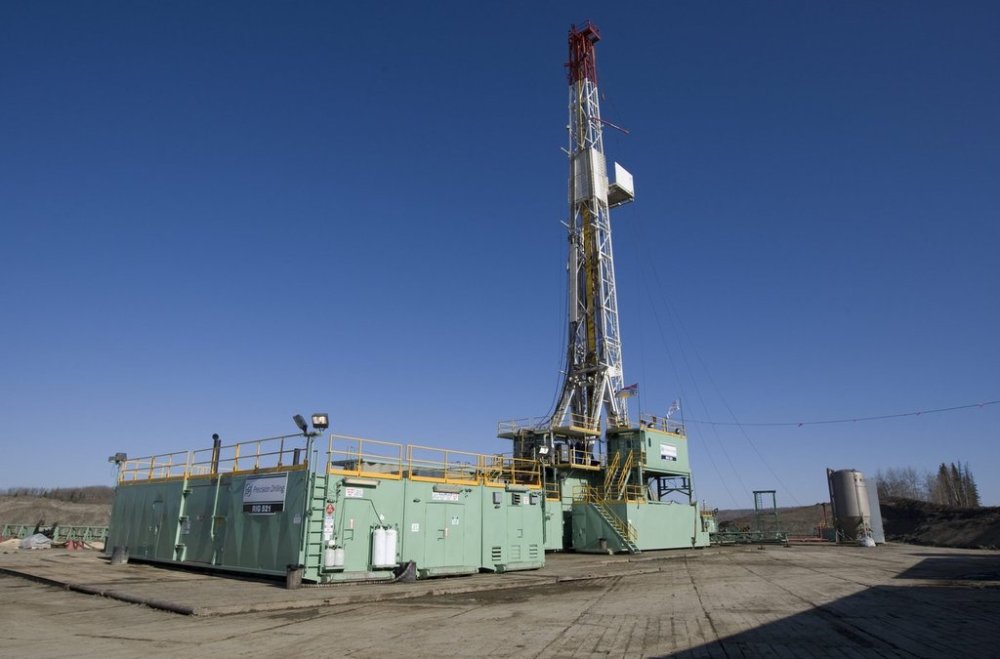
There’s an estimated 198-billion cubic metres of onshore natural gas in Nova Scotia. According to a 2017 report, about 64 per cent of it is shale gas, the kind usually requiring fracking to extract in commercial quantities. About 20 per cent of Nova Scotia’s reserves are coal bed methane with the rest conventional natural gas.
Environmentalists and First Nations groups have opposed the end of the fracking ban. When it was lifted, the Assembly of Nova Scotia Mi’kmaq Chiefs called out the premier for a lack of consultation and said it may seek a legal injunction.
Wheeler says there was almost no support for fracking at the dozens of meetings held across the province for his 2014 report, with some participants being downright hostile. He said engagement with the Mi’kmaq is always based on personal relationships and expects little support from the chiefs. Dalhousie says it will be seeking First Nations representation on an advisory board it will create.
This report by The Canadian Press was first published Dec. 23, 2025.