

Greece cuts student population at universities by half after long study breaks are abolished
Advertisement
Read this article for free:
or
Already have an account? Log in here »
To continue reading, please subscribe:
Monthly Digital Subscription
$1 per week for 24 weeks*
- Enjoy unlimited reading on winnipegfreepress.com
- Read the E-Edition, our digital replica newspaper
- Access News Break, our award-winning app
- Play interactive puzzles
*Billed as $4.00 plus GST every four weeks. After 24 weeks, price increases to the regular rate of $19.95 plus GST every four weeks. Offer available to new and qualified returning subscribers only. Cancel any time.
Monthly Digital Subscription
$4.99/week*
- Enjoy unlimited reading on winnipegfreepress.com
- Read the E-Edition, our digital replica newspaper
- Access News Break, our award-winning app
- Play interactive puzzles
*Billed as $19.95 plus GST every four weeks. Cancel any time.
To continue reading, please subscribe:
Add Free Press access to your Brandon Sun subscription for only an additional
$1 for the first 4 weeks*
- Enjoy unlimited reading on winnipegfreepress.com
- Read the E-Edition, our digital replica newspaper
- Access News Break, our award-winning app
- Play interactive puzzles
*Your next Brandon Sun subscription payment will increase by $1.00 and you will be charged $17.95 plus GST for four weeks. After four weeks, your payment will increase to $24.95 plus GST every four weeks.
Read unlimited articles for free today:
or
Already have an account? Log in here »
ATHENS, Greece (AP) — More than 300,000 inactive university students have been removed from the rolls in Greece, cutting the country’s official student population by nearly half, authorities said Friday.
The move marks the end of a decadeslong practice — formally abolished in recent legislation — that allowed extended enrollment to facilitate lifelong learning and lengthy breaks for work.
On Friday, the Education Ministry said that 308,605 students admitted to state-run universities’ four-year degree programs before 2017 had been removed from the records.
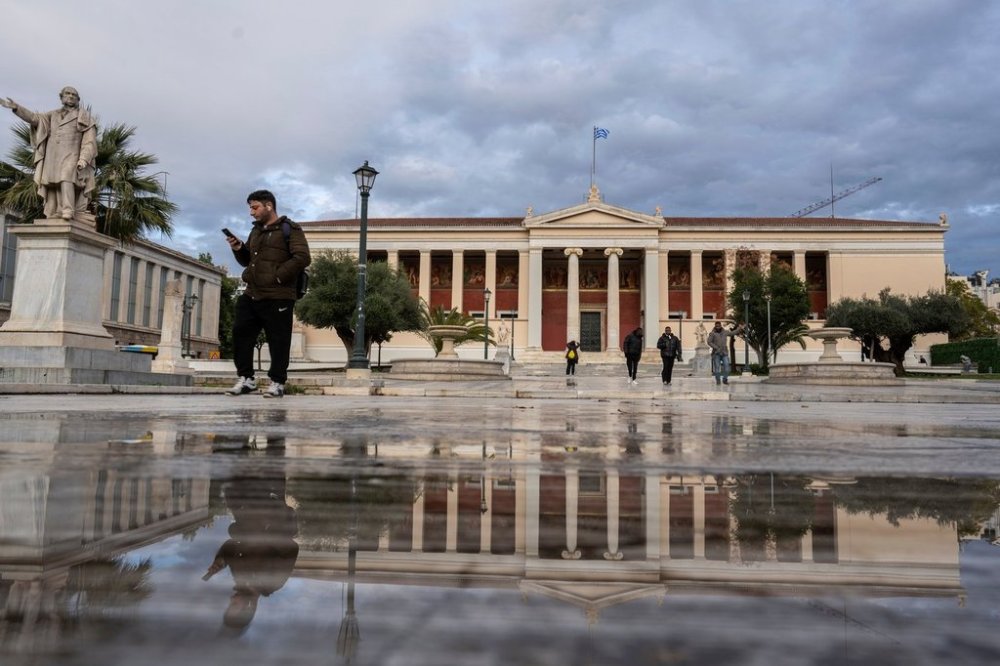
“Student status is not valid for life in any modern European university,” Education Minister Sofia Zacharaki said. “We want degrees with value, which reflect effort, skills and passion.”
Ministry officials said that about 35,000 people successfully applied for reenrollment in 2025.
Opponents of the conservative government’s reform, mostly from the academic community, argue the second-chance program failed to address the scale of disruption caused by Greece’s severe financial crisis in the previous decade.

The country’s active student population stands at just over 350,000, studying at 25 public higher education institutions, according to 2024 data from the Hellenic Authority for Higher Education.
Undergraduate degree programs at state universities are normally funded by the government. Until recently, only public universities offering state-recognized degrees have operated in Greece. But recognized private universities are gradually being introduced.
Education Ministry officials said that dormant students — those who had interrupted their studies — didn’t impose any direct financial burden on universities, but created administrative difficulties.
“With updated student lists, universities gain the ability to plan more precisely,” Deputy Education Minister Nikos Papaioannou said.
“That is a prerequisite for improving academic quality, daily operations and the criteria used to evaluate Greek universities in international rankings.”