

First Nations chiefs alarmed by feds’ lack of commitment to protecting source water
Advertisement
Read this article for free:
or
Already have an account? Log in here »
To continue reading, please subscribe:

Digital Subscription
One year of digital access for only $205*
- Enjoy unlimited reading on winnipegfreepress.com
- Read the E-Edition, our digital replica newspaper
- Access News Break, our award-winning app
- Play interactive puzzles
*First annual payment billed as $205.00 + GST for one year. This annual subscription will automatically renew at $233.00 + GST every 52 weeks (10% off the regular annual price of $259.35). Offer available to new and qualified returning subscribers only. Cancel any time.
To continue reading, please subscribe:
Add Free Press access to your Brandon Sun subscription for only an additional
$1 for the first 4 weeks*
- Enjoy unlimited reading on winnipegfreepress.com
- Read the E-Edition, our digital replica newspaper
- Access News Break, our award-winning app
- Play interactive puzzles
*Your next Brandon Sun subscription payment will increase by $1.00 and you will be charged $17.95 plus GST for four weeks. After four weeks, your payment will increase to $24.95 plus GST every four weeks.
Read unlimited articles for free today:
or
Already have an account? Log in here »
Hey there, time traveller!
This article was published 07/01/2026 (272 days ago), so information in it may no longer be current.
OTTAWA – Some First Nations chiefs say Indigenous Services Minister Mandy Gull-Masty’s recent refusal to commit to source water protections in a promised clean water bill shows the government is sidelining the health of Indigenous communities in its push to build up the economy.
Two provinces — Alberta and Ontario — objected to clean water legislation introduced by former prime minister Justin Trudeau’s government that failed to pass before Parliament was prorogued last year. Gull-Masty said last summer she was committed to reintroducing the bill.
The minister vowed at the time the legislation would affirm First Nations’ human right to clean drinking water. She did not explain how that might work after the passage of legislation in June that speeds up the approval timeline for major infrastructure projects and gives cabinet the ability to sidestep some environmental laws.
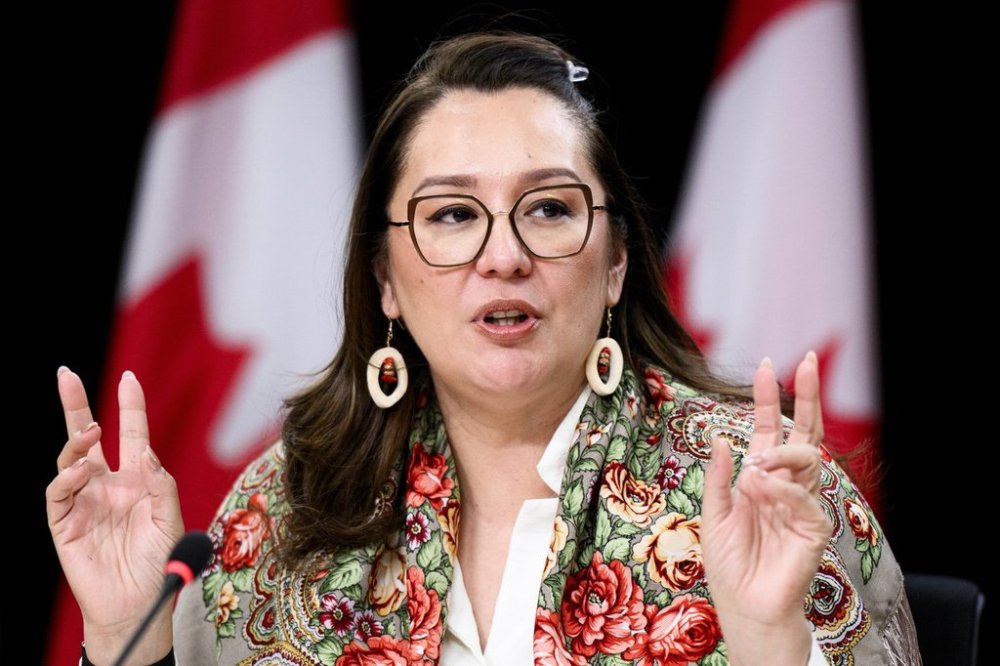
In a followup interview with The Canadian Press earlier in December, Gull-Masty would not commit to including the same source water protections in the new bill. She also wouldn’t say if she is pushing for those protections around the cabinet table.
Cold Lake First Nations Chief Kelsey Jacko said Indigenous communities worked hard with the previous government on the legislation — in part to obtain clear rules on protecting fresh water sources.
“The bill as amended wasn’t strong. It left a lot to the regulations and the minister’s decisions in the future, but at least it acknowledged upstream impacts (from development),” said Jacko, who represents a community in Alberta.
“Until our inherent rights are recognized within the legislation frameworks, our communities are being put at risk … It’s a struggle every day for the people living off the land.”
Conservative MP Billy Morin, the party’s critic for Indigenous services, said the federal government continues to break its promises to First Nations on access to clean drinking water.
He said the minister is indicating the legislation will offer less of what First Nations have called for, and claimed the new bill will introduce “meaningless bureaucracy” without setting benchmarks to measure progress.
Anishinabek Nation Grand Chief Linda Debassige helped to negotiate the defunct water legislation.
Debassige, who represents 39 chiefs in Ontario, said that if Ottawa leaves source water protections out of the new bill, it will be capitulating to Ontario and Alberta and ignoring Indigenous rights.
“When source water protection was included in the bill, that was very important (and) a huge win,” she said.
“I’ve always told people you can’t give up the protection of water for money because you can’t drink money, and money alone will not nourish you long enough to stay alive.”
Debassige said consultations on the new bill are also lacking and she has met with Gull-Masty for only about 15 minutes to discuss the legislation. She said she is not aware of other chiefs meeting with the minister to talk about the legislation.
“I do know Minister Gull-Masty said she wanted to strengthen the bill, but removing source water protection from the bill is not making it stronger,” she said.
“Perhaps it’s time again for First Nations to take further legal actions against Canada for their protections.”
Alberta, which has long sought new ways to get its bitumen to Asian markets, recently signed an agreement with Ottawa clearing a path for a possible pipeline to the B.C. coast. Ontario, meanwhile, is seeking to develop the mineral-rich Ring of Fire region.
Both provinces have passed legislation that allows for faster development of major projects, similar to the federal bill passed in June.
First Nations leaders objected to all three pieces of legislation and accused the federal and provincial governments of trampling over their rights to consultation and threatening the environment.
Debassige said she fears the new water legislation will be passed in a similar manner, without proper consultation with chiefs and community members.
“When we talk about source water protection, we’re also talking about the protection of the Great Lakes because many of our nations, especially within the Anishinabek Nation, their source of water is Lake Huron or Lake Superior,” she said.
“It’s like (the federal government) is just playing to the media that First Nations are important, but they haven’t actually fundamentally demonstrated that.”
Jacko agreed, saying it feels as though they “don’t care about us as people.”
Several water systems in First Nations communities have failed in the past month, sending the communities into states of emergency and evacuations.
In northern Ontario, Kashechewan Cree First Nation is looking to evacuate all community members due to multiple failures of its water and wastewater systems.
A news release says the community has been plagued by pump failures in the sewage lift stations due to an overworked system that is now more than 30 years old. Kashechewan Cree First Nation said the situation is causing an urgent public health and safety threat, as sewage creeps up into people’s homes and contaminates fresh water systems.
And in northern Manitoba, Pimicikamak Cree Nation is trying to recover from a days-long power outage that destroyed its water treatment plant, with freezing temperatures leading to burst pipes, cracked floors and overflowing sewage.

One of Pimicikamak Cree Nation’s three water treatment plants is fully operational but it isn’t able to service the entire community. One is shut down and the other is reportedly on its last legs.
Water treatment operators have said they have had to work around the clock to fix the damage.
“It’s very stressful,” one operator said. “I’ve had hardly any sleep. We eat when we can.”
This report by The Canadian Press was first published Jan. 7, 2026.
— With files from Brittany Hobson in Pimicikamak Cree Nation and Cassidy McMackon in Toronto
Related Articles
Unlivable conditions after outage leave emotional Pimicikamak resident uncertain about future
Advertisement Advertise With Us
Advertisement Advertise With Us