

Farmers block highways across Greece in protest over rising costs and EU trade deal
Advertisement
Read this article for free:
or
Already have an account? Log in here »
To continue reading, please subscribe:
Monthly Digital Subscription
$1 per week for 24 weeks*
- Enjoy unlimited reading on winnipegfreepress.com
- Read the E-Edition, our digital replica newspaper
- Access News Break, our award-winning app
- Play interactive puzzles
*Billed as $4.00 plus GST every four weeks. After 24 weeks, price increases to the regular rate of $19.95 plus GST every four weeks. Offer available to new and qualified returning subscribers only. Cancel any time.
Monthly Digital Subscription
$4.99/week*
- Enjoy unlimited reading on winnipegfreepress.com
- Read the E-Edition, our digital replica newspaper
- Access News Break, our award-winning app
- Play interactive puzzles
*Billed as $19.95 plus GST every four weeks. Cancel any time.
To continue reading, please subscribe:
Add Free Press access to your Brandon Sun subscription for only an additional
$1 for the first 4 weeks*
*Your next subscription payment will increase by $1.00 and you will be charged $16.99 plus GST for four weeks. After four weeks, your payment will increase to $23.99 plus GST every four weeks.
Read unlimited articles for free today:
or
Already have an account? Log in here »
KASTRO, Greece (AP) — Farmers in Greece escalated nationwide protests Thursday, launching a 48-hour blockade of major highways, junctions and toll stations over soaring production costs and a contentious European Union trade deal with South American nations.
Tractors lined key routes across the country, halting all traffic except emergency vehicles. Police directed traffic to secondary routes when possible and did not intervene to counter the blockades.
But the country’s conservative government has warned that it would not tolerate more extended blockades.
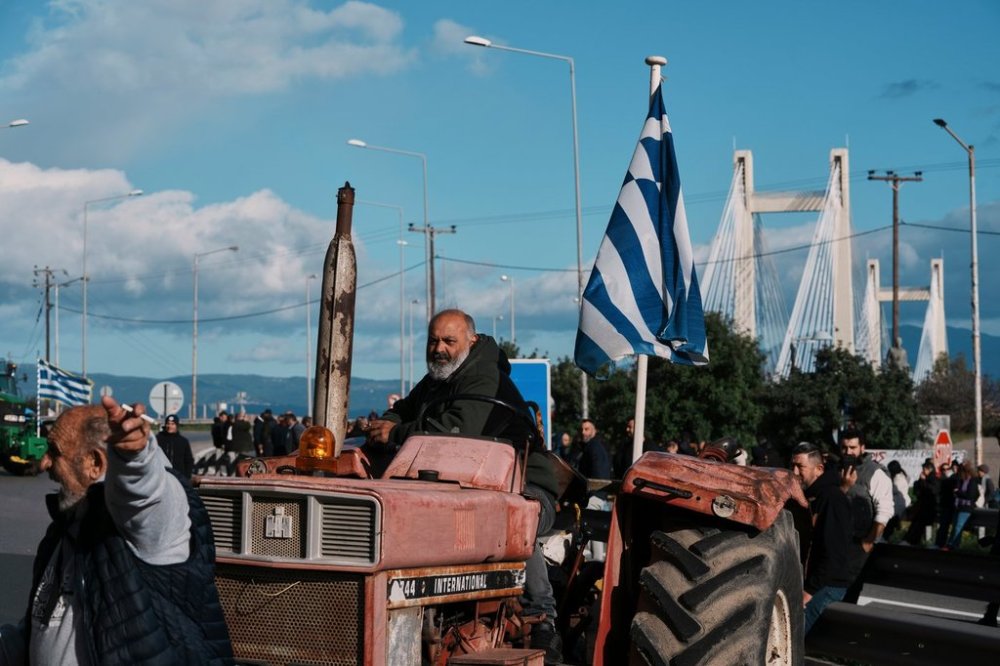
The country’s main highway connecting Athens to the northern city of Thessaloniki was shut in both directions at several points, as farmers demanded stronger state support and the rejection of the EU-Mercosur agreement.
“We’ve reached a breaking point,” Yiannis Baritas, a cabbage farmer and father of five, said at roadblock in southern Greece. “We’ll stay here as long as it takes to support our families. They’ve pushed us to desperation.”
The protests, which began in November, initially centered on rising production costs, worsened by a series of crises: a subsidy fraud scandal delaying legitimate payments, and a sheep and goat pox outbreak.
The government on Wednesday announced late concessions to try and head off the latest protests, including cheaper electricity rates for farmers and fuel tax rebates.
The proposed trade deal would create a vast free-trade zone between Europe and South American nations including Brazil and Argentina. European farmers fear it would flood the market with cheaper imports — triggering protests in other EU countries as well, including in France on Thursday.
“If this agreement goes through, Greek agriculture is finished,” Vangelis Roubis, a protest organizer, told The Associated Press outside the southern city of Halkida.

“Greece depends on agriculture and tourism. We don’t have heavy industry like Germany or France. Production costs here are 300% higher than in Latin America.”
Roubis pointed to potatoes as an example: Greek farmers need 35 to 40 cents per kilogram to break even, compared with roughly 10 cents in Brazil.
He added: “We want Greece to join the block of EU nations that rejects this deal.”
___
Kantouris reported from Malgara, Greece. Thanassis Stavrakis and Lefteris Piratakis in Kastro, Greece, contributed.