

GM hit with $6 billion in charges as EV incentives cut and emissions standards fade
Advertisement
Read this article for free:
or
Already have an account? Log in here »
To continue reading, please subscribe:

Digital Subscription
One year of digital access for only $205*
- Enjoy unlimited reading on winnipegfreepress.com
- Read the E-Edition, our digital replica newspaper
- Access News Break, our award-winning app
- Play interactive puzzles
*First annual payment billed as $205.00 + GST for one year. This annual subscription will automatically renew at $233.00 + GST every 52 weeks (10% off the regular annual price of $259.35). Offer available to new and qualified returning subscribers only. Cancel any time.
To continue reading, please subscribe:
Add Free Press access to your Brandon Sun subscription for only an additional
$1 for the first 4 weeks*
- Enjoy unlimited reading on winnipegfreepress.com
- Read the E-Edition, our digital replica newspaper
- Access News Break, our award-winning app
- Play interactive puzzles
*Your next Brandon Sun subscription payment will increase by $1.00 and you will be charged $17.95 plus GST for four weeks. After four weeks, your payment will increase to $24.95 plus GST every four weeks.
Read unlimited articles for free today:
or
Already have an account? Log in here »
Hey there, time traveller!
This article was published 09/01/2026 (250 days ago), so information in it may no longer be current.
General Motors will be hit with charges of about $6 billion as sales of electric vehicles sputter after the U.S. cut tax incentives to buy them and also eased auto emissions standards.
Shares slid almost 3% Friday.
The charges that will be recorded in the fourth quarter follow an announcement in October that the Detroit automaker would take a $1.6 billion charge for the same reason in the previous quarter, with automakers forced to reconsider ambitious plans to convert their fleets to electric power.
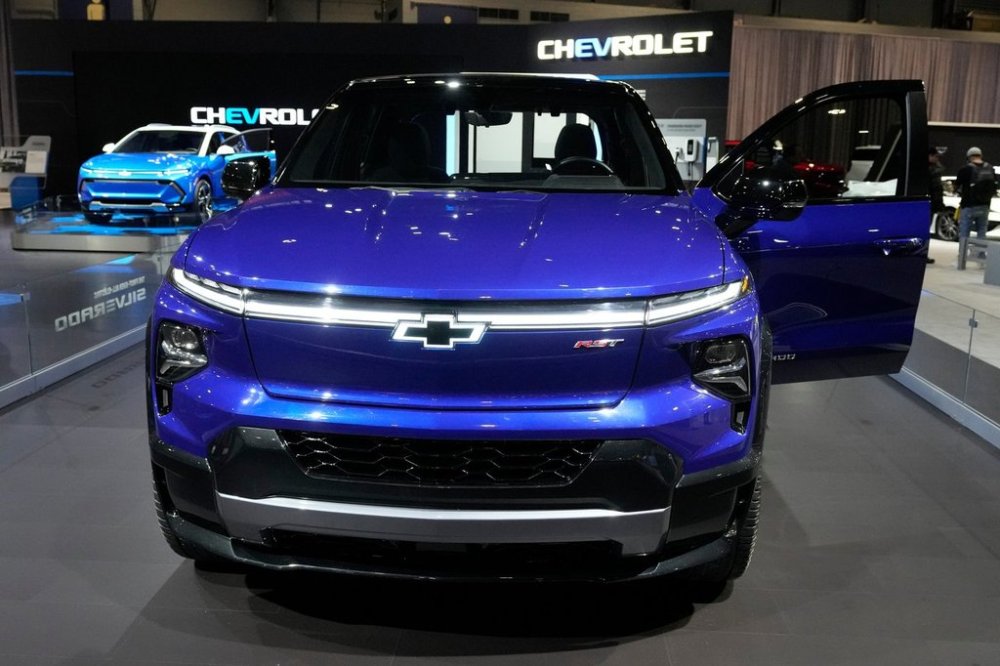
The EV tax credit ended in September. The clean vehicle tax credit was worth $7,500 for new EVs and up to $4,000 for used ones.
GM, which had been the most ambitious among all U.S. automakers with plans to replace internal combustion engines, said in its filing with the Securities and Exchange Commission late Thursday that the $6 billion in charges includes non-cash impairments and other non-cash charges of about $1.8 billion as well as supplier commercial settlements, contract cancellation fees, and other charges of approximately $4.2 billion.
EVs have been considered to be the future of the US automotive industry. GM announced in 2020 that it was going to invest $27 billion in electric and autonomous vehicles over the next five years, a 35% increase over plans made before the pandemic.
GM expected more than half of its factories in North America and China would be capable of making electric vehicles by 2030. It also pledged at the time to increase its investment in EV charging networks by nearly $750 million through 2025.

Its goal was to make the vast majority of the vehicles electric by 2035, and the entire company carbon neutral five years after that.
Those plans have been shaken due to the drastic differences in economic and environmental policies between the Biden and Trump administrations.
China has become a global leader in electric vehicle technology in recent years, with factories there churning out millions of cars and laying the groundwork for a massive charging network for vehicles.
Earlier this month, Tesla was dethroned as the world’s largest EV automaker, replaced by China’s BYD, which produced 2.26 million electric vehicles last year.
Also Friday, Netherlands-based Stellantis, said that due to shifting customer demand it would “phase out plug in hybrid (PHEV) programs in North America beginning with the 2026 model year, and focus on more competitive electrified solutions.” Stellantis owns Jeep, Dodge, Chrysler and other carmakers.