

Gains with China augur further strife with U.S.
Advertisement
Read this article for free:
or
Already have an account? Log in here »
To continue reading, please subscribe:

Digital Subscription
One year of digital access for only $205*
- Enjoy unlimited reading on winnipegfreepress.com
- Read the E-Edition, our digital replica newspaper
- Access News Break, our award-winning app
- Play interactive puzzles
*First annual payment billed as $205.00 + GST for one year. This annual subscription will automatically renew at $233.00 + GST every 52 weeks (10% off the regular annual price of $259.35). Offer available to new and qualified returning subscribers only. Cancel any time.
To continue reading, please subscribe:
Add Free Press access to your Brandon Sun subscription for only an additional
$1 for the first 4 weeks*
- Enjoy unlimited reading on winnipegfreepress.com
- Read the E-Edition, our digital replica newspaper
- Access News Break, our award-winning app
- Play interactive puzzles
*Your next Brandon Sun subscription payment will increase by $1.00 and you will be charged $17.95 plus GST for four weeks. After four weeks, your payment will increase to $24.95 plus GST every four weeks.
Read unlimited articles for free today:
or
Already have an account? Log in here »
Hey there, time traveller!
This article was published 17/01/2026 (217 days ago), so information in it may no longer be current.
The package of two-way concessions the Canadian delegation led by Prime Minister Mark Carney is bringing home from China is a game-changer for the agricultural sector on multiple fronts.
While there will be lots of nitpicking to come, the agreements significantly reduce the punishing tariffs the Chinese imposed on $2.6 billion in Canadian agricultural goods, while allowing Canadian consumers increased access to more affordable electric vehicles without gutting the Canadian auto sector.
Canada will start allowing up to 49,000 electric vehicles into the country at the most-favoured nation tariffs of 6.1 per cent, a sharp drop from the 100 per cent tariff imposed by the previous Liberal government under Justin Trudeau.
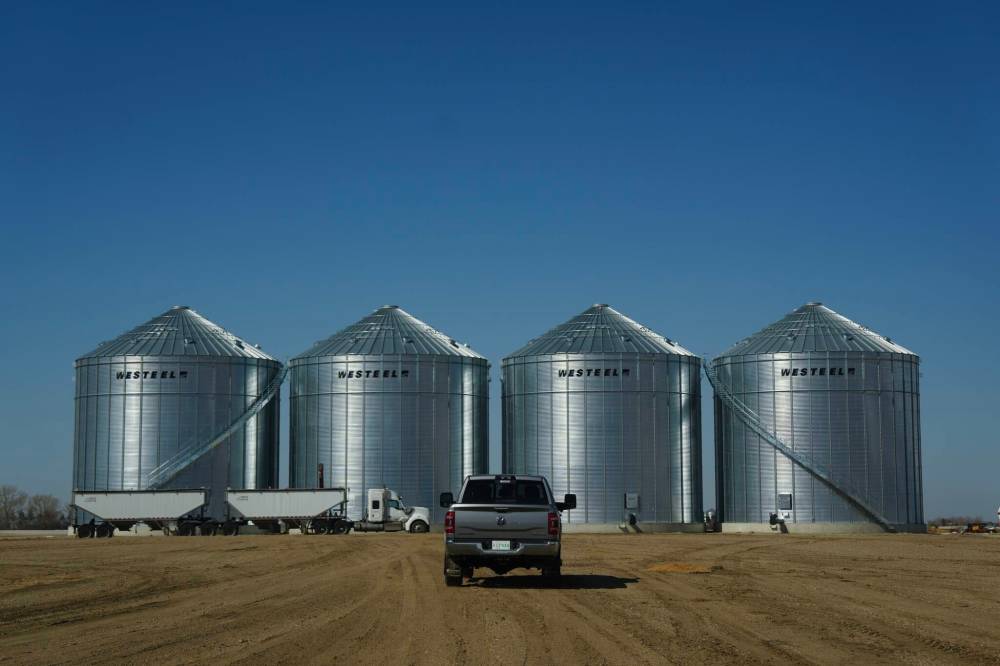
Chris Young / THE CANADIAN PRESS files
China is Canada’s second-largest market for grains and oilseeds, worth about $4 billion annually for canola alone.
Farm organizations were quick to applaud the announcements. China is Canada’s second-largest market for grains and oilseeds, worth about $4 billion annually for canola alone.
However, farm leaders were also quick to call for “pragmatic engagement with both the United States and China to protect tariff-free access and prevent farmers from becoming collateral damage in broader geopolitical disputes,” as Grain Growers of Canada worded it.
Farmers well understand this thawing of diplomatic relations with China after nearly a decade of tense standoffs and economic warfare using humans and food as weapons is likely to heat things up with Canada’s other significant other on the trade front.
It’s not easy to support Canadian livelihoods while being wedged between your largest trading partners who are economically warring with each other and with you. While Canada does about $80 billion in total trade with China annually, Canada-U.S. trade is about $1 trillion.
American media were reporting on the Canada-China deal-making as evidence of a significant break with the U.S. by falling out of line on the 100 per cent tariffs imposed to essentially block China’s access to the North American EV market.
Coverage in the Wall Street Journal cited former Canadian diplomats and foreign policy analysts as predicting the move will “annoy” the Trump administration.
And we know what happens when U.S. President Donald Trump gets annoyed. Well, actually, we don’t, which is the whole problem and why defrosting Canada’s relationship with China has become so important to the Canadian economy and specifically the farm sector.
Does this raise the spectre of more retaliatory tariffs from the U.S.?
Probably.
Will it further jeopardize the Canada-United States-Mexico Agreement on trade up for review this year?
Possibly, and there’s no denying the impact of losing the predictability it brings to the marketplace would be a major blow to farmers.
However, as U.S. foreign and domestic policy becomes increasingly unhinged, the odds of any new deal having the stabilizing influence this and previous trade deals have had over the past four decades are falling faster than Trump’s popularity ratings.
Despite the protestations from politicians representing the auto belt, Canada’s EV manufacturing sector is in its infancy. If governments are serious about encouraging consumers to embrace renewable energy, it makes little sense to block imports that offer more affordable options.
As well, Trump has abandoned any commitment to an integrated North American auto manufacturing sector, which further erodes any rationale for Canada to mimic the U.S. blockade. Canada can’t afford to throw its own auto sector under the bus, so to speak, but opening the door to some competition is in Canada’s overall interests.
This isn’t over yet. As important as the gains of the past few days might prove to be, they are likely to result in even more damaging retaliatory measures by the U.S.

It’s going to hurt.
However, this country has a long history of building trading and diplomatic relationships that focus on doing the right things for the right reasons. In the 1950s and ’60s, Canadian grain sales helped spare China from famine at a time when many exporters refused to do business with a communist regime.
The events of the past year aside, Canadians have on many occasions stood by the United States in times of crisis.
If Canada has any hope of emerging from these uncertain times with its sovereignty — and dignity — intact, its trade and foreign policy must be about more than ducking and dodging blows from bigger players.
Laura Rance is executive editor, production content lead for Glacier FarmMedia. She can be reached at lrance@farmmedia.com

Advertisement Advertise With Us
Advertisement Advertise With Us