

Supreme Court rules against private prison firm facing forced-work suit from immigration detainees
Advertisement
Read this article for free:
or
Already have an account? Log in here »
To continue reading, please subscribe:

Digital Subscription
One year of digital access for only $205*
- Enjoy unlimited reading on winnipegfreepress.com
- Read the E-Edition, our digital replica newspaper
- Access News Break, our award-winning app
- Play interactive puzzles
*First annual payment billed as $205.00 + GST for one year. This annual subscription will automatically renew at $233.00 + GST every 52 weeks (10% off the regular annual price of $259.35). Offer available to new and qualified returning subscribers only. Cancel any time.
To continue reading, please subscribe:
Add Free Press access to your Brandon Sun subscription for only an additional
$1 for the first 4 weeks*
- Enjoy unlimited reading on winnipegfreepress.com
- Read the E-Edition, our digital replica newspaper
- Access News Break, our award-winning app
- Play interactive puzzles
*Your next Brandon Sun subscription payment will increase by $1.00 and you will be charged $17.95 plus GST for four weeks. After four weeks, your payment will increase to $24.95 plus GST every four weeks.
Read unlimited articles for free today:
or
Already have an account? Log in here »
Hey there, time traveller!
This article was published 25/02/2026 (194 days ago), so information in it may no longer be current.
WASHINGTON (AP) — The Supreme Court on Wednesday ruled against a private prison company facing a lawsuit alleging immigration detainees were forced to work and paid only $1 a day in Colorado.
The unanimous ruling is a procedural defeat for the GEO Group, but it’s not a final decision. The company is fighting a lawsuit from 2014 alleging detainees in Aurora had to perform unpaid janitorial work and other jobs for little pay to supplement meager meals.
GEO defended its practices and argued that the case should be tossed out because it’s immune from lawsuits as a government contractor.
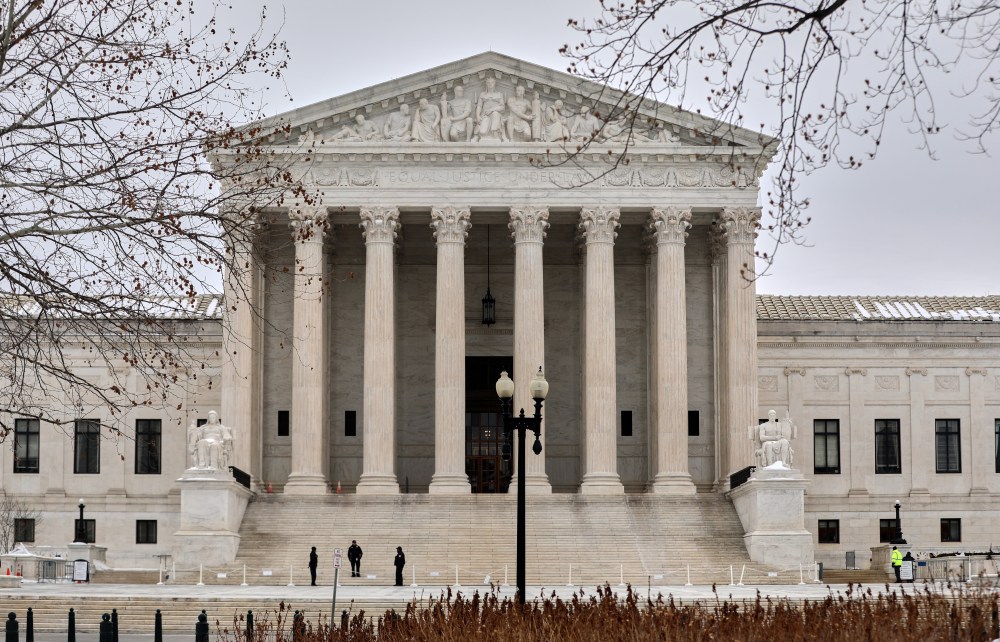
After a judge disagreed, the company asked the Supreme Court to allow it to quickly appeal the ruling. But the justices refused.
“If eventually found liable, GEO may of course appeal … but GEO must wait until then,” Justice Elena Kagan wrote. All nine justices agreed with the outcome, but two justices, Clarence Thomas and Samuel Alito, differed on the reasoning.
An attorney who argued for the Colorado detainees applauded the ruling. “The Supreme Court’s unanimous decision reaffirms a straightforward rule: government contractors like GEO do not qualify for sovereign immunity and must follow the same ‘one case, one appeal’ principle that governs every other litigant,” Jennifer Bennett said.
The Florida-based GEO Group is one of the top private detention providers in the country, with management or ownership of about 77,000 beds at 98 facilities. Its contracts include a new federal immigration detention center where Newark, New Jersey, Mayor Ras Baraka was arrested at a protest in May 2025, before the case against the Democrat was dropped.
Similar lawsuits have been brought on behalf of immigration detainees elsewhere, including a case in Washington state, where the company was ordered to pay more than $23 million.

___
Follow the AP’s coverage of the U.S. Supreme Court at https://apnews.com/hub/us-supreme-court.