

Simulation software, real-world impact
CEMWorks Inc. founder secures research/science prize at DARE Innovation Awards

Advertisement
Read this article for free:
or
Already have an account? Log in here »
To continue reading, please subscribe:

Digital Subscription
One year of digital access for only $205*
- Enjoy unlimited reading on winnipegfreepress.com
- Read the E-Edition, our digital replica newspaper
- Access News Break, our award-winning app
- Play interactive puzzles
*First annual payment billed as $205.00 + GST for one year. This annual subscription will automatically renew at $233.00 + GST every 52 weeks (10% off the regular annual price of $259.35). Offer available to new and qualified returning subscribers only. Cancel any time.
To continue reading, please subscribe:
Add Free Press access to your Brandon Sun subscription for only an additional
$1 for the first 4 weeks*
- Enjoy unlimited reading on winnipegfreepress.com
- Read the E-Edition, our digital replica newspaper
- Access News Break, our award-winning app
- Play interactive puzzles
*Your next Brandon Sun subscription payment will increase by $1.00 and you will be charged $17.95 plus GST for four weeks. After four weeks, your payment will increase to $24.95 plus GST every four weeks.
Read unlimited articles for free today:
or
Already have an account? Log in here »
Hey there, time traveller!
This article was published 09/03/2026 (210 days ago), so information in it may no longer be current.
Jonatan Aronsson likes to keep a low profile, but that’s becoming increasingly difficult.
The Winnipeg-based computational electromagnetics expert and entrepreneur was recognized in front of more than 300 people last month when he was awarded the Research and Science Innovation prize at the inaugural DARE Innovation Awards.
North Forge presented the awards during a gala at the Royal Aviation Museum of Western Canada. The award Aronsson received honours “scientific and research-driven breakthroughs across any discipline that transform discovery into real-world impact, advancing innovation, industry and community well-being,” according to the local incubator.

Aronsson is the founder of CEMWorks Inc., an engineering software company that develops physics-based virtual prototyping tools.
He was travelling when the gala took place, so he couldn’t accept his award in person — fitting, perhaps, for someone who likes to fly under the radar. Still, he was honoured to be part of the night.
“It’s nice to be recognized and it’s nice to be able to support the ecosystem here,” Aronsson says. “I think a lot of people don’t realize how much expertise and potential there is in the province.”
The modest 46-year-old is talking about other people, but he could very well be describing himself and CEMWorks, which he started in 2014.
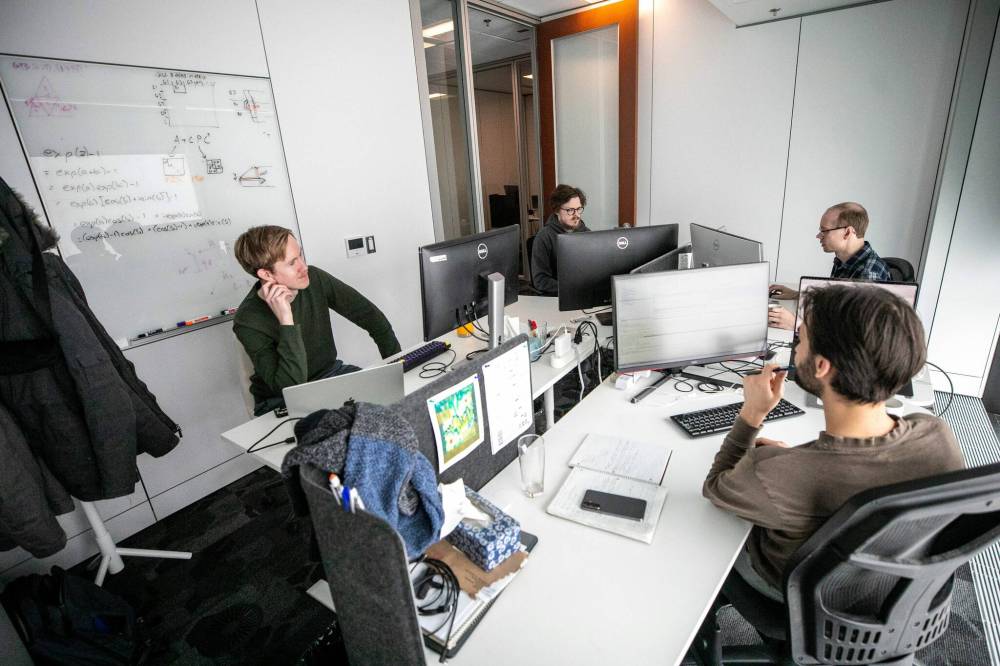
Headquartered in the Smartpark development at the University of Manitoba’s Fort Garry campus, the company specializes in the development of advanced computational electromagnetic simulation software for the analysis and design of complex electronic systems.
The high-performance simulation tools the company produces are intended for applications such as semiconductor packaging, high-frequency antennas, automotive radar and next-generation wireless communication systems.
If you’re feeling lost, this is how Hans Schreckenbach, a research and development specialist at CEMWorks, breaks it down:
Many electronic devices, such as a smartphone, send and receive signals to communicate with each other — a process that has gotten more complicated as technology has advanced.
CEMWorks simulates the physics of those devices, allowing engineers to predict how something will behave in the real world before they manufacture a prototype.

“Physical prototyping is usually very expensive, very costly, very time consuming, so (before) that step, or as you’re iterating through that process, you want to ideally get as much information as you can,” Schreckenbach says. “Simulation is one of those tools in the engineer’s tool belt that they can use.”
What CEMWorks does has applications in areas such as artificial intelligence hardware, autonomous vehicles, and space and defence systems.
“There are tools out there that do different types of simulation, but there are limitations in those tools. I want to overcome the limitations,” Aronsson says. “I guess the way I’m wired, I’ve always liked technical challenges — the harder, the better.”
The eldest of two sons born to an engineer and a real estate executive in Karlskrona, Sweden, Aronsson started experimenting with computer programming when he was about 13 — first creating programs to make music and then eventually creating programs to solve math problems.
While earning his master’s of science degree in engineering physics at Lund University in his home country, Aronsson spent almost a year-and-a-half as a visiting student at the University of Waterloo in Ontario.
There, he met an optometry student who is now his wife. When Aronsson’s wife finished her program in 2006, the couple moved to Winnipeg, where she was born and raised.
Aronsson started CEMWorks as a one-man operation about a year after finishing his PhD in computer and electrical engineering at the University of Manitoba.
Today, the company employs 22 people, most of whom are based in Winnipeg. Due to the confidential nature of much of what CEMWorks does, Aronsson declines to name the company’s clients, though he does say that they are based primarily in the United States, Europe and Asia.
In recent years, CEMWorks has led the InnoStar project, a collaborative European research and development initiative focused on creating new virtual prototyping tools to enable next-generation 6G mobile communications systems.
Partners in the project include semiconductor manufacturers NXP Semiconductors N.V., an American-Dutch company with more than 33,000 employees; and Infineon Technologies AG, a German corporation with more than 55,000 employees worldwide.
Aronsson says he enjoys working with his colleagues at CEMWorks and solving problems.
“At times, you might be getting stuck on a problem for months, and then all of a sudden, you make a lot of progress, and that’s very exciting and rewarding,” he says.
“And, of course, (it’s enjoyable) when you see that you have real-world impact — that something you’ve worked on for a long time becomes useful … and you help somebody with a problem or pain point.”
The company has worked closely with the electrical engineering department at the U of M on several projects, something that caught the attention of Yvette Shang, who was one of three judges North Forge selected to assess the four finalists in the Research and Science Innovation category at the DARE awards.
CEMWorks employees display strong leadership and collaboration in the research they do and support, says Shang, who is a senior adviser at national research non-profit Mitacs.
“Their business model is already quite mature domestically and internationally,” she adds. “They are already making an impact in the local ecosystem.”
Vladimir Okhmatovski, a professor in the U of M’s electrical and computer engineering department, agrees.
CEMWorks stimulates research on relevant topics at the university, he says. Meanwhile, the university has produced quality graduates who have gone on to work at CEMWorks.

Okhmatovski has taught at the university for more than two decades and was Aronsson’s PhD adviser.

“He is a one-of-a-kind guy,” Okhmatovski says. “He was one of the best students I’ve ever had. That would not be an overstatement.”
Aronsson is quick to credit his alma mater.
“Building a deep-technology company like CEMWorks really requires a strong ecosystem,” he says.
“The engineering faculty at the University of Manitoba has played a major role in that, both through its research environment and the talent pipeline. The university has several world-leading professors in our field, and that environment made it possible for a company like this to emerge here.”
aaron.epp@freepress.mb.ca
Aaron Epp reports on business for the Free Press. After freelancing for the paper for a decade, he joined the staff full-time in 2024. Read more about Aaron.
Every piece of reporting Aaron produces is reviewed by an editing team before it is posted online or published in print — part of the Free Press‘s tradition, since 1872, of producing reliable independent journalism. Read more about Free Press’s history and mandate, and learn how our newsroom operates.
Our newsroom depends on a growing audience of readers to power our journalism. If you are not a paid reader, please consider becoming a subscriber.
Our newsroom depends on its audience of readers to power our journalism. Thank you for your support.
Aaron Epp reports on business for the Free Press. After freelancing for the paper for a decade, he joined the staff full-time in 2024. Read more about Aaron.
Every piece of reporting Aaron produces is reviewed by an editing team before it is posted online or published in print — part of the Free Press‘s tradition, since 1872, of producing reliable independent journalism. Read more about Free Press’s history and mandate, and learn how our newsroom operates.
Our newsroom depends on a growing audience of readers to power our journalism. If you are not a paid reader, please consider becoming a subscriber.
Our newsroom depends on its audience of readers to power our journalism. Thank you for your support.
Advertisement Advertise With Us
Advertisement Advertise With Us