

Venezuelan lawmakers open debate on a mining bill to lure foreign capital
Advertisement
Read this article for free:
or
Already have an account? Log in here »
To continue reading, please subscribe:

Digital Subscription
One year of digital access for only $205*
- Enjoy unlimited reading on winnipegfreepress.com
- Read the E-Edition, our digital replica newspaper
- Access News Break, our award-winning app
- Play interactive puzzles
*First annual payment billed as $205.00 + GST for one year. This annual subscription will automatically renew at $233.00 + GST every 52 weeks (10% off the regular annual price of $259.35). Offer available to new and qualified returning subscribers only. Cancel any time.
To continue reading, please subscribe:
Add Free Press access to your Brandon Sun subscription for only an additional
$1 for the first 4 weeks*
- Enjoy unlimited reading on winnipegfreepress.com
- Read the E-Edition, our digital replica newspaper
- Access News Break, our award-winning app
- Play interactive puzzles
*Your next Brandon Sun subscription payment will increase by $1.00 and you will be charged $17.95 plus GST for four weeks. After four weeks, your payment will increase to $24.95 plus GST every four weeks.
Read unlimited articles for free today:
or
Already have an account? Log in here »
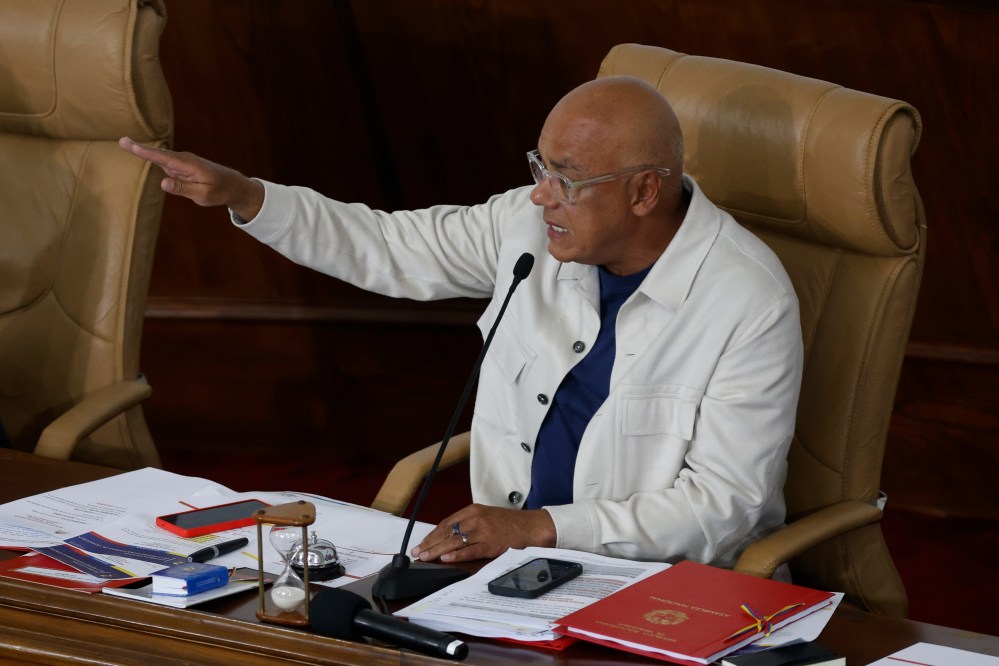
CARACAS, Venezuela (AP) — Venezuelan lawmakers on Monday began debating a bill proposed by acting President Delcy Rodríguez to regulate the country’s mining industry and create conditions to attract crucial foreign investment.
The bill aims to generate confidence among foreign investors, many of whom lost assets through expropriations decades ago, and draw much-needed capital to boost the country’s industry. It partially mirrors a recently approved oil-industry reform that opened the door to privatization, doing away with a tenet of the self-proclaimed socialist movement that has ruled the country for more than two decades.
It is the latest legislative action that Rodríguez has proposed since coming under pressure from the Trump administration in January, when the United States military deposed then-President Nicolás Maduro. She announced the measure last week during the visit to the capital, Caracas, of U.S. Secretary of the Interior Doug Burgum.
Burgum’s visit came as the Trump administration seeks to defend against China’s hold on critical minerals — some of which are abundant in Venezuela — and advances its phased plan to stabilize the South American country that was marred by a complex crisis for the entirety of Maduro’s near 13-year rule.
In addition to oil, Venezuela is rich in gold, copper, coltan, bauxite, diamonds and other precious mined resources, while unsafe working conditions are common in the poorly regulated industry. The elements niobium and tantalum, both considered critical minerals and crucial for smartphones and the batteries of electric vehicles, are extracted from coltan. Bauxite is processed into aluminum, which the U.S. also lists as a critical mineral.
“ The restoration of relations between Venezuela and the United States has led the world’s leading mining corporations to evaluate the possibility of investing significant capital to reactivate sectors capable of guaranteeing the supply of critical minerals essential for the development of the technology industry, the generation of new energy sources, and the manufacture of electric vehicles,” lawmaker Félix Freites said before vowing to work diligently to ensure the bill leads to job opportunities for Venezuelans.
The proposed bill regulates mineral rights, establishes small, medium and large-scale mining categories and allows for independent arbitration of disputes, which foreign investors view as key to guard against future expropriation. An independent arbitration provision was included in the oil industry overhaul that Rodríguez signed into law earlier this year.
The bill also bans the president, vice president, ministers, governors and others from holding mining titles.
Venezuela’s mineral-rich areas have long been controlled by guerrilla members, gangs and other illegal groups that mine with consent — and to the benefit — of officials and the military.
Many foreign companies that invested in Venezuela, including in mining and oil sectors, saw their assets expropriated about two decades ago. Then, in 2016, Maduro’s government established a huge mining development zone stretching across the central area of the country to supplement flagging revenue from its dominant oil industry, which saw its production decline as a result of mismanagement, corruption and, more recently, U.S. sanctions.
Since then, mining operations for gold, diamonds, copper and other minerals have proliferated. Many are wildcat mines, operating under brutal conditions and the presence of criminal gangs, but ordinary Venezuelans continue to flock there in hopes of getting rich quick and escaping poverty. Officials and members of the military take cuts from the illegal mining revenue in exchange for allowing the operation of mines, access to fuel and other equipment and transportation of minerals.

The U.S. last week issued a sanctions license that authorizes dealings with Minerven, Venezuela’s state-owned gold mining company.
In announcing the bill Wednesday, Rodríguez told reporters it will be “a win for the social well-being” of Venezuelans.
“May the Venezuelan people also see the good aspects of having good relations with the world and with the United States of America,” she said.
___
Follow AP’s Latin America coverage at https://apnews.com/hub/latin-america