

Canadian companies should create strategies for possible CUSMA outcomes now: report
Advertisement
Read this article for free:
or
Already have an account? Log in here »
To continue reading, please subscribe:

Digital Subscription
One year of digital access for only $205*
- Enjoy unlimited reading on winnipegfreepress.com
- Read the E-Edition, our digital replica newspaper
- Access News Break, our award-winning app
- Play interactive puzzles
*First annual payment billed as $205.00 + GST for one year. This annual subscription will automatically renew at $233.00 + GST every 52 weeks (10% off the regular annual price of $259.35). Offer available to new and qualified returning subscribers only. Cancel any time.
To continue reading, please subscribe:
Add Free Press access to your Brandon Sun subscription for only an additional
$1 for the first 4 weeks*
- Enjoy unlimited reading on winnipegfreepress.com
- Read the E-Edition, our digital replica newspaper
- Access News Break, our award-winning app
- Play interactive puzzles
*Your next Brandon Sun subscription payment will increase by $1.00 and you will be charged $17.95 plus GST for four weeks. After four weeks, your payment will increase to $24.95 plus GST every four weeks.
Read unlimited articles for free today:
or
Already have an account? Log in here »
Hey there, time traveller!
This article was published 10/03/2026 (209 days ago), so information in it may no longer be current.
TORONTO – As Canadian companies prepare for the coming review of the Canada-U.S.-Mexico Agreement on trade, a new report from Boston Consulting Group says the talks could change the rules for a range of industries, including automobiles and digital services.
The report says that despite moves by the U.S. to impose higher duties on some Canadian and Mexican products, North American trade has remained relatively strong, with about 60 per cent of goods imported from those countries into the U.S. remaining duty-free. The formal review of the trade agreement, known as CUSMA, is set to begin in July.
“The U.S. is for almost every Canadian company, the largest export market if they export, and even if they don’t export, the U.S. is such a huge source of imports to Canada, including for further value added, that the trade relationship between the two countries is critical for Canadian companies,” said Michael McAdoo, a Montreal-based partner at BCG who specializes in international trade.
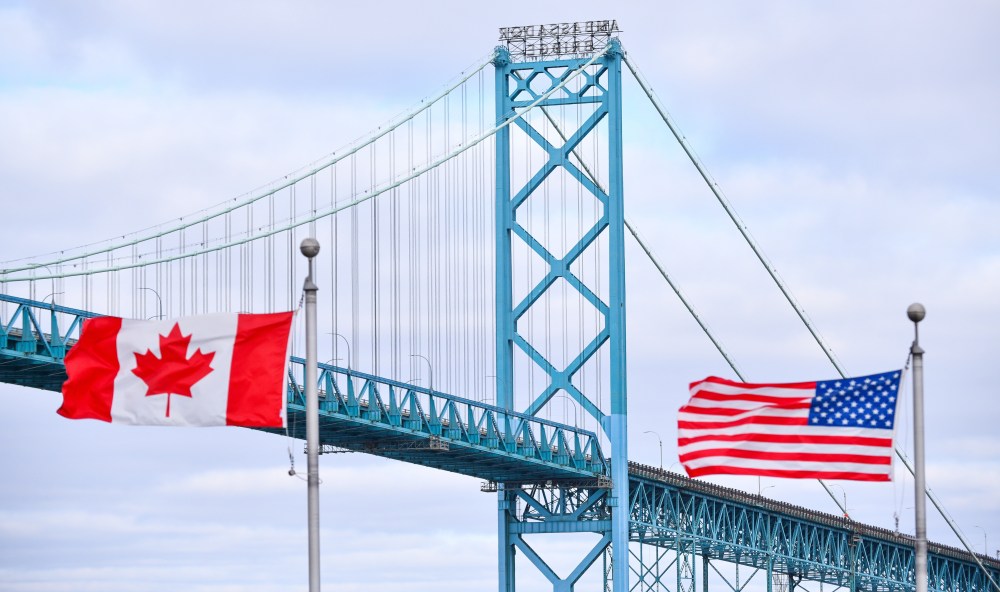
Companies can prepare for the outcome of the negotiations, the report says, by taking steps like establishing a tariff command centre to monitor the situation, along with working through potential scenarios that could impact their business.
“The command centre provides a global, company-wide assessment and quantification of a business’s exposure to potential outcomes under different scenarios,” the report said.
Other preparations might include redesigning procurement and manufacturing networks to preserve flexibility and engaging with stakeholders.
“Although formal negotiations for USMCA 2.0 are still months away, companies that have spent years building integrated manufacturing and sourcing chains spanning North America must begin preparing now for potential disruption,” the report said.
“Those who act now to put contingency plans in place for various outcomes will be ready to move quickly to seize competitive advantage out of uncertainty in a shifting trade and investment landscape.”
The report outlines three potential outcomes for the negotiations, which include an extension of CUSMA with targeted changes to side agreements, a new three-way deal and the termination of CUSMA in favour of bilateral agreements.
McAdoo said signs may emerge as to how the negotiations are playing out.

If a narrower set of issues are being discussed, that would indicate momentum toward an extended CUSMA agreement with targeted changes. If negotiations proceed under a more “conventional free-trade agreement structure” with robust stakeholder engagement that continues for months, “we may be headed toward a completely renewed agreement,” he said.
McAdoo said bilateral agreements are another possibility. Separate agreements with the U.S. or Mexico would create operational challenges, “including for U.S. companies with potentially conflicting or incompatible trade rules to manage across an integrated North American value chain.”
Last week, Canada’s new chief trade negotiator to the United States met her American counterpart in Washington as Ottawa sought to steady the bilateral relationship ahead of a review of the critical continental trade pact.
Janice Charette was joined by Canada-U.S. Trade Minister Dominic LeBlanc and Canada’s newly appointed ambassador to the United States, Mark Wiseman, for a meeting with U.S. Trade Representative Jamieson Greer.
This report by The Canadian Press was first published March 10, 2026.