

Investigators find gas utility pipes separated before deadly Mississippi explosions
Advertisement
Read this article for free:
or
Already have an account? Log in here »
To continue reading, please subscribe:

Digital Subscription
One year of digital access for only $205*
- Enjoy unlimited reading on winnipegfreepress.com
- Read the E-Edition, our digital replica newspaper
- Access News Break, our award-winning app
- Play interactive puzzles
*First annual payment billed as $205.00 + GST for one year. This annual subscription will automatically renew at $233.00 + GST every 52 weeks (10% off the regular annual price of $259.35). Offer available to new and qualified returning subscribers only. Cancel any time.
To continue reading, please subscribe:
Add Free Press access to your Brandon Sun subscription for only an additional
$1 for the first 4 weeks*
- Enjoy unlimited reading on winnipegfreepress.com
- Read the E-Edition, our digital replica newspaper
- Access News Break, our award-winning app
- Play interactive puzzles
*Your next Brandon Sun subscription payment will increase by $1.00 and you will be charged $17.95 plus GST for four weeks. After four weeks, your payment will increase to $24.95 plus GST every four weeks.
Read unlimited articles for free today:
or
Already have an account? Log in here »
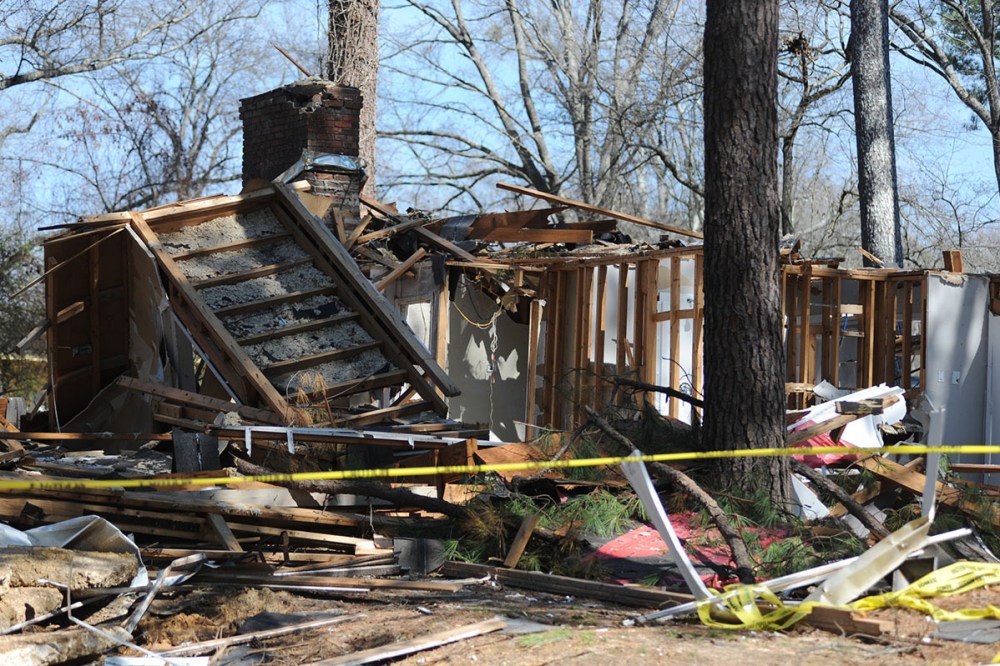
JACKSON, Miss. (AP) — Separate natural gas explosions in January 2024 that destroyed two homes in Jackson, Mississippi resulted from underground pipes pulling loose from their fittings as spongy clay soil expanded and contracted with rainfall, according to a federal report released Thursday.
The first explosion killed Clara Barbour, 82.
The National Transportation Safety Board found that the natural gas utility in the city, Dallas-based Atmos Energy Corp., had detected the leaks before the explosions, but didn’t evaluate them as severe enough for quick repair. The board also found that Atmos didn’t do enough to assess risks and make repairs to its pipeline system and didn’t do enough to educate the public or emergency officials about how to respond to natural gas leaks. It urged regulators to take a closer look at the company.
“Atmos has had significant safety shortfalls in recent years,” the board wrote “Thus, Atmos’s multistate operations require broader oversight.”
Company spokesperson Bobby Morgan said safety remains “our highest priority.”
“We will work diligently in the coming days and weeks to evaluate the findings as part of our ongoing safety efforts to further our vision to be the safest provider of natural gas services,” Morgan said in a statement.
The company distributes natural gas in Colorado, Kansas, Kentucky, Louisiana, Mississippi, Tennessee, Texas and Virginia.
One explosion and fire in south Jackson on Jan. 24 killed the elderly woman Barbour and slightly injured her husband, Johnny Barbour. Three days later and three-quarters of a mile (1.1 kilometers) away, another explosion leveled one home and burned a neighboring home. No one was injured there.
Investigators found that in both cases, gas pipes feeding the homes had pulled loose from their couplings as soil expanded and contracted, allowing dangerous levels of gas to build up, setting the stage for the explosions.
Much of the Jackson area is built atop a soil layer known as Yazoo clay that expands in wet weather and contracts in times of drought. Besides causing building foundations to crack and roadways to heave, the expansion and contraction can cause pipes to disconnect, and the pipe couplings that an Atmos predecessor installed are not resistant to pulling out, the board found. Investigators recommended that Atmos find and replace all those couplings.

The leak at the Barbour home had been detected Nov. 17, 2023, after the homeowner smelled an odor compound that is inserted into methane gas. An Atmos technician declared the leak nonhazardous, meaning Atmos might not repair it for a year or more. The leak at the second home was detected Dec. 1, but Atmos evaluated it as even less hazardous, scheduling it for repair within three years.
The report indicates the company re-evaluated leaks in Jackson following the explosion and found others that were more serious than initially reported.
The safety board faulted Atmos for not doing more to identify threats posed by expansive soils, noting regulators had been warning about the issue since 2008 and that the NTSB identified expansive soils as a factor in a 2018 Atmos explosion in Dallas that killed one and injured four.
Investigators said Atmos had different safety procedures in different states and that if stricter state rules in Kansas had been followed in Mississippi, the explosions could have been prevented.
“Atmos’s siloed state operations, including leak monitoring procedures that differed by state, demonstrate that Atmos has not applied lessons learned in one state to the other states it operates in,” the board wrote.