NDP cutting corners on PST: critics Tax structure called confusing, unfair to inner city
Read this article for free:
or
Already have an account? Log in here »
To continue reading, please subscribe:

Digital Subscription
One year of digital access for only $205*
- Enjoy unlimited reading on winnipegfreepress.com
- Read the E-Edition, our digital replica newspaper
- Access News Break, our award-winning app
- Play interactive puzzles
*First annual payment billed as $205.00 + GST for one year. This annual subscription will automatically renew at $233.00 + GST every 52 weeks (10% off the regular annual price of $259.35). Offer available to new and qualified returning subscribers only. Cancel any time.
To continue reading, please subscribe:
Add Free Press access to your Brandon Sun subscription for only an additional
$1 for the first 4 weeks*
- Enjoy unlimited reading on winnipegfreepress.com
- Read the E-Edition, our digital replica newspaper
- Access News Break, our award-winning app
- Play interactive puzzles
*Your next Brandon Sun subscription payment will increase by $1.00 and you will be charged $17.95 plus GST for four weeks. After four weeks, your payment will increase to $24.95 plus GST every four weeks.
Read unlimited articles for free today:
or
Already have an account? Log in here »
Hey there, time traveller!
This article was published 27/03/2026 (190 days ago), so information in it may no longer be current.
As retailers prepare to remove the PST from a long list of grocery items July 1, one sector stands apart — the local convenience store.
The Manitoba budget, unveiled Tuesday, includes a cut to the provincial sales tax on food and drinks in grocery stores, however, shops that sell tobacco — and have a footprint of 3,012 square feet or smaller — are excluded from the cut. It will largely impact inner-city corner stores.
The exemption has rankled business groups and urban studies experts who say people who need affordability measures most won’t benefit.
“It’s pretty confusing,” Seyed Ahmadi said about the province’s tax structure.
MIKAELA MACKENZIE / FREE PRESS “It’s pretty confusing,” Seyed Ahmadi, owner of Ellice Avenue Deli Store, said about the province’s tax structure.
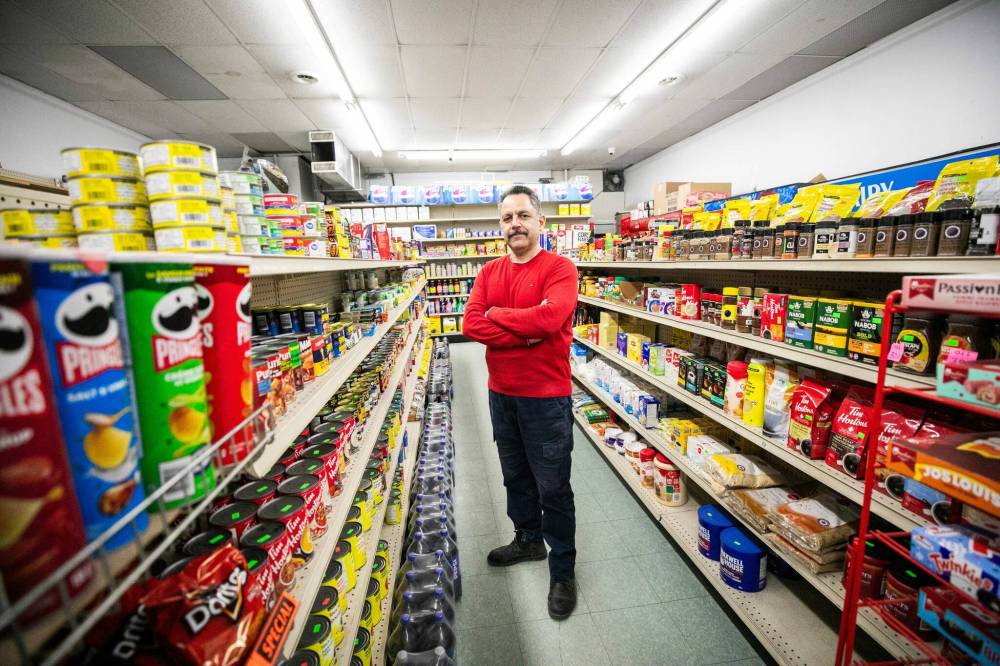
The owner of Ellice Avenue Deli Store has charged the provincial sales tax on chips and soft drinks for nearly 10 years — and may do so for 10 more.
Most customers are “neighbours,” Ahmadi said. They might buy tobacco from him or purchase bread, which is sold without a seven per cent retail sales tax across the province.
Shawn Davies stopped by Friday for lottery tickets. He has a bad back and knees, he said, and the Ellice shop is “convenient” and close to home.
“If the big guys would get a break, then the little guys should… get a break,” Davies said. “(The government) should be able to give to everyone.”
The Retail Council of Canada met with provincial government officials Friday to lobby for the tax cut to apply to smaller stores, said John Graham, the council’s Prairies director of government relations.
The budget must be passed this spring before the tax cut to take effect.
“If the big guys would get a break, then the little guys should… get a break.”
“We think it’s important that those who are less mobile, may not have access to a car and rely on that local corner store to be able to benefit from the tax relief,” Graham said.
“(They’re) probably the most important constituents to benefit from tax relief.”
Corner stores account for a fraction of total food sold in retail, but they’re an “important part,” Graham said.
People who live in the inner city may depend on corner stores because there’s no major grocery store nearby, said Shauna MacKinnon, chair of the University of Winnipeg’s urban studies department.
“It’s inequitable,” she said. “The reality is, if you’re going to have this policy in place, it should apply to everywhere.”
Roughly 35 Red River Co-op convenience stores that are attached to gas stations will continue to charge PST on food and drinks after July 1.
The Canadian chain hosted a news conference on Wednesday, at its large grocery store on Grant Avenue, in which Premier Wab Kinew and members of his cabinet touted their budget announcement.
Related Articles
Restaurant association says it will suffer when grocery items become PST-exempt July 1


“I think it’s a good move by the government,” said Craig Gilpin, chief executive of Red River Co-op, on Friday. “It will provide relief on people’s cost of groceries.
“At the same time, I’d like a fair and equitable system so the customer doesn’t have to go out of their way to make a purchase.”
Customers will be able to walk across a parking lot from a Co-op gas station to a competitor’s grocery store to pay for the same item without the provincial tax, Gilpin noted.
The government doesn’t track the number of grocery stores in Manitoba or details about which types of shops sell tobacco. There are 2,000 active tobacco licences in the province, a government spokesperson said.
The vast majority of Manitobans buy from grocery chains, and the tax cut ensures “the largest number” of people can benefit, Finance Minister Adrien Sala said Friday.
“The legislation has yet to be passed or implemented, so happy to continue having conversations on this with Manitobans,” he said.
MIKAELA MACKENZIE / FREE PRESS Stores that sell tobacco are excluded from the cut.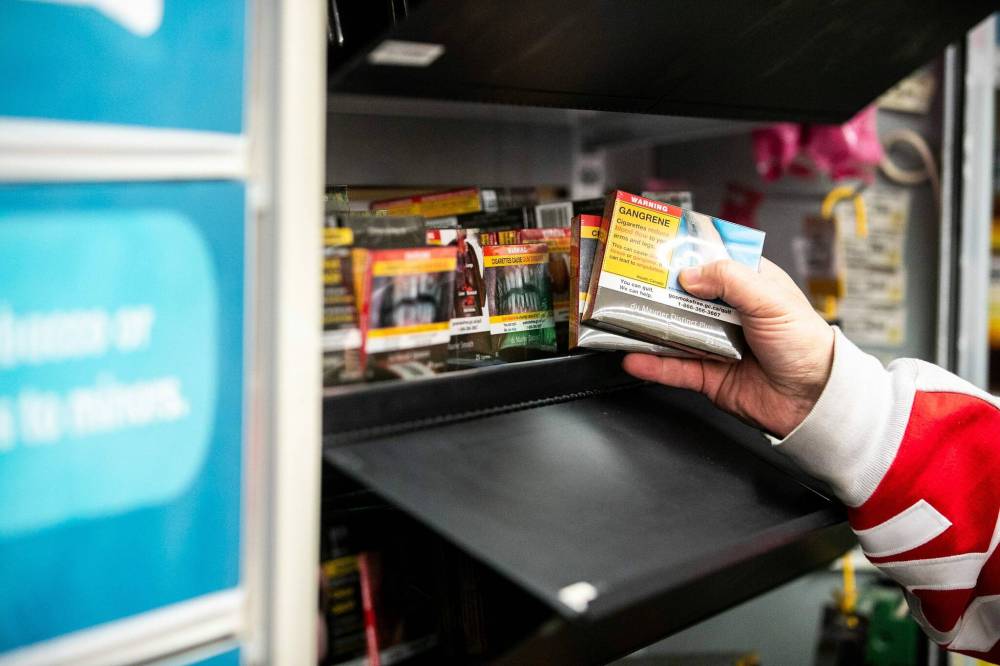
The Canadian Federation of Independent Business is calling for Manitoba to extend the PST exemption to all retailers and food establishments that sell eligible goods.
“(This cut) creates a pretty clear two-tier system for where small businesses are at,” said Tyler Slobogian, a senior policy analyst with the group.
The Manitoba Restaurant and Foodservices Association put out a similar request to ask for takeout and quick-service restaurants to be included in the tax measure.
Tory Leader Obby Khan said the NDP is picking “winners and losers” and “sprinkling pennies everywhere.”
Government officials estimate the tax cut will save the average Manitoba family $100 per year, resulting in a loss of $24 million from government coffers.
“(This cut) creates a pretty clear two-tier system for where small businesses are at.”
Customers won’t pay PST at ethnic stores and independent grocers unless the shops meet the three combined exemption criteria — being in a city, occupying a footprint of 3,012 sq. ft. or less and selling tobacco.
Eateries inside grocery stores — including coffee shops — will still charge the provincial tax, as will movie theatres, sports facilities and vending machines.
Meat, vegetables, fruit and dairy products are already PST exempt. Roughly 10 per cent of items bought in a given week are subject to the tax; about one-third of those will no longer be taxed via the new policy, Graham said on budget day.
He estimated that 83 to 93 per cent of grocery store products won’t be subject to the provincial tax after July 1.
Alcohol, dietary supplements and non-food items — including paper towels — will still be charged.
gabrielle.piche@winnipegfreepress.com


Gabrielle Piché reports on business for the Free Press. She interned at the Free Press and worked for its sister outlet, Canstar Community News, before entering the business beat in 2021. Read more about Gabrielle.
Every piece of reporting Gabrielle produces is reviewed by an editing team before it is posted online or published in print — part of the Free Press‘s tradition, since 1872, of producing reliable independent journalism. Read more about Free Press’s history and mandate, and learn how our newsroom operates.
Our newsroom depends on a growing audience of readers to power our journalism. If you are not a paid reader, please consider becoming a subscriber.
Our newsroom depends on its audience of readers to power our journalism. Thank you for your support.