

City offers real cost-of-living help while Ottawa, province pander for popularity

Advertisement
Read this article for free:
or
Already have an account? Log in here »
To continue reading, please subscribe:

Digital Subscription
One year of digital access for only $205*
- Enjoy unlimited reading on winnipegfreepress.com
- Read the E-Edition, our digital replica newspaper
- Access News Break, our award-winning app
- Play interactive puzzles
*First annual payment billed as $205.00 + GST for one year. This annual subscription will automatically renew at $233.00 + GST every 52 weeks (10% off the regular annual price of $259.35). Offer available to new and qualified returning subscribers only. Cancel any time.
To continue reading, please subscribe:
Add Free Press access to your Brandon Sun subscription for only an additional
$1 for the first 4 weeks*
- Enjoy unlimited reading on winnipegfreepress.com
- Read the E-Edition, our digital replica newspaper
- Access News Break, our award-winning app
- Play interactive puzzles
*Your next Brandon Sun subscription payment will increase by $1.00 and you will be charged $17.95 plus GST for four weeks. After four weeks, your payment will increase to $24.95 plus GST every four weeks.
Read unlimited articles for free today:
or
Already have an account? Log in here »
There’s no shortage of political enthusiasm these days for “cost-of-living relief.” Governments at every level are tripping over themselves to prove they feel your pain at the checkout counter and the gas pump.
The problem isn’t the intent, it’s the execution.
Because when it comes to affordability, there’s a right way for government to help people and there’s a wrong way.
MIKE DEAL / FREE PRESS FILES
Broad tax cuts don’t distinguish between someone struggling to put food on the table and someone filling a cart without thinking twice about the total.
The City of Winnipeg is doing it the right way through its H20 Help to Others program, which provides targeted relief to low-income people on their water and sewer bills.
The province and Ottawa, by contrast, are offering textbook examples of how not to do it, by bringing in across-the-board consumption tax cuts, which primarily benefit higher-income people.
A new city report shows the number of low-income households receiving assistance with water and sewer bills could nearly triple this year. That’s not because the program is out of control. It’s because council made deliberate changes to expand eligibility — including opening the door to people on employment and income assistance — and increased the size of the credits.
They identified a problem and refined the program to address it.
And the demand is real. The Salvation Army, which administers the program, says it has fielded more calls in the past four months than in the previous two years combined. Some days, there’s a waiting list of more than 100 people just trying to get help.
These aren’t theoretical “middle-class” voters feeling squeezed. These are single parents, people who have lost jobs and households facing shutoff notices on an essential service. People who, quite literally, can’t afford to keep the water running.
That’s where government intervention makes the most sense and delivers the most impact per dollar spent.
Targeted relief is efficient. It’s fair. And it acknowledges a basic economic reality: a dollar means far more to someone at the bottom of the income ladder than it does to someone at the top.
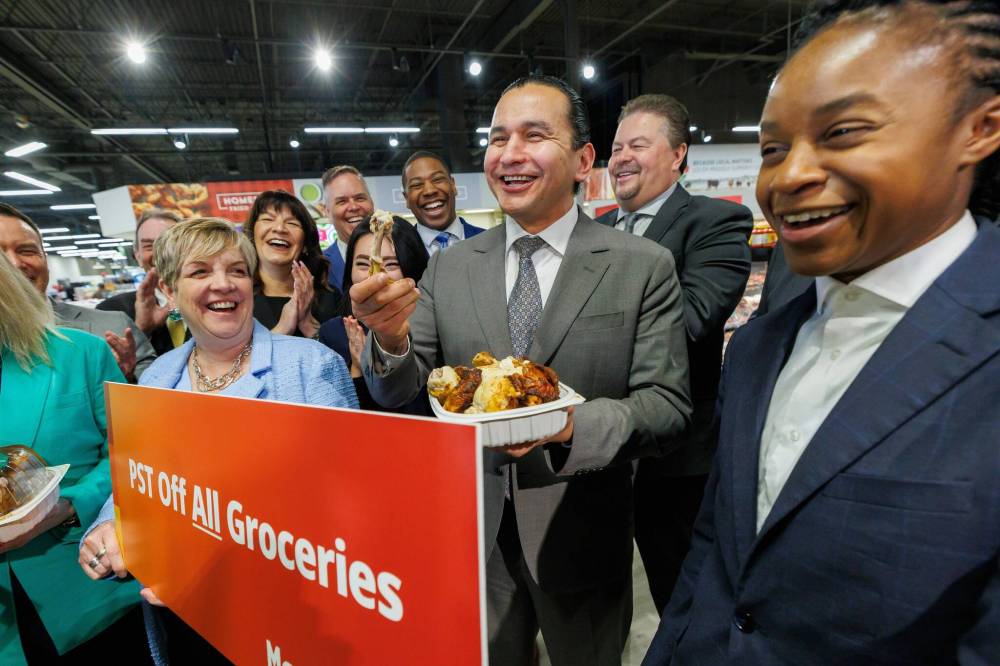
Now compare that to what the Manitoba government is doing with its broad-based provincial sales tax cut on groceries, including junk food.
On the surface, it sounds generous. Who doesn’t want cheaper groceries?
But here’s the problem: across-the-board tax cuts are blunt instruments. They don’t distinguish between someone struggling to put food on the table and someone filling a cart without thinking twice about the total.
In fact, higher-income households tend to spend more overall, which means they receive a larger share of the benefit. The people who need help the least often get the biggest break.
And it comes at a steep cost to the provincial treasury — money that could have been used to fund more targeted programs, such as rent supports, utility relief or direct income supplements.
That trade-off might be defensible if Manitoba were swimming in surplus cash. It’s not. The province continues to run massive deficits, adding to a growing debt burden that will eventually have to be paid down, likely through future tax increases or service cuts.
So instead of focusing limited resources where they’re needed most, the NDP government is — for populist, political reasons — spreading them thinly across the entire population, including those who don’t need help at all.
The federal Liberal government is doing the same thing.
Ottawa’s approach to affordability has leaned heavily on broad measures, such as cutting the gas tax. Again, it sounds good on paper and generates positive headlines. But it’s not targeted to the people who need help the most.
If you don’t own a vehicle — as is the case for many low-income Canadians — you get no benefit whatsoever. Zero. Meanwhile, households with multiple vehicles and long commutes pocket the savings.
That’s not affordability policy, that’s a subsidy for consumption.
And like the province, the federal government is doing this while running large, multi-year deficits, with no plan to balance the books, not even several years down the road.
There is one area where Ottawa is getting it right on affordability: its recent decision to boost the GST benefit, which targets lower-income Canadians.
At some point, governments have to make choices. Every dollar spent on poorly targeted tax cuts is a dollar not available for programs that could make a meaningful difference in people’s lives.
Winnipeg’s approach, modest as it is, shows what smarter policy looks like. The city recognized that rising utility costs were hitting vulnerable residents the hardest. It adjusted eligibility rules, increased benefit levels and worked with community organizations to ensure people knew help was available.

It’s not perfect. Councillors themselves acknowledge more “system-level” solutions may be needed as affordability pressures worsen. But it’s grounded in a clear principle: help the people who need it most.
That’s the piece provincial and federal policy-makers keep missing.
Affordability isn’t improved by scattering small benefits across the entire population and hoping it adds up to something meaningful. It’s improved by concentrating resources where they can have the greatest impact.
That requires discipline. It requires resisting the political temptation of broad, feel-good tax cuts. And it requires acknowledging that not everyone needs help.
tom.brodbeck@freepress.mb.ca
Tom Brodbeck is an award-winning author and columnist with over 30 years experience in print media. He joined the Free Press in 2019. Born and raised in Montreal, Tom graduated from the University of Manitoba in 1993 with a Bachelor of Arts degree in economics and commerce. Read more about Tom.
Tom provides commentary and analysis on political and related issues at the municipal, provincial and federal level. His columns are built on research and coverage of local events. The Free Press’s editing team reviews Tom’s columns before they are posted online or published in print – part of the Free Press’s tradition, since 1872, of producing reliable independent journalism. Read more about Free Press’s history and mandate, and learn how our newsroom operates.
Our newsroom depends on a growing audience of readers to power our journalism. If you are not a paid reader, please consider becoming a subscriber.
Our newsroom depends on its audience of readers to power our journalism. Thank you for your support.
Tom Brodbeck is an award-winning author and columnist with over 30 years experience in print media. He joined the Free Press in 2019. Born and raised in Montreal, Tom graduated from the University of Manitoba in 1993 with a Bachelor of Arts degree in economics and commerce. Read more about Tom.
Tom provides commentary and analysis on political and related issues at the municipal, provincial and federal level. His columns are built on research and coverage of local events. The Free Press’s editing team reviews Tom’s columns before they are posted online or published in print – part of the Free Press’s tradition, since 1872, of producing reliable independent journalism. Read more about Free Press’s history and mandate, and learn how our newsroom operates.
Our newsroom depends on a growing audience of readers to power our journalism. If you are not a paid reader, please consider becoming a subscriber.
Our newsroom depends on its audience of readers to power our journalism. Thank you for your support.
Related Articles
PST tax structure called confusing, unfair to inner city



Advertisement Advertise With Us
Advertisement Advertise With Us