

Ontario eyes further ban on green development standards, bigger fare evasion fines
Advertisement
Read this article for free:
or
Already have an account? Log in here »
To continue reading, please subscribe:

Digital Subscription
One year of digital access for only $205*
- Enjoy unlimited reading on winnipegfreepress.com
- Read the E-Edition, our digital replica newspaper
- Access News Break, our award-winning app
- Play interactive puzzles
*First annual payment billed as $205.00 + GST for one year. This annual subscription will automatically renew at $233.00 + GST every 52 weeks (10% off the regular annual price of $259.35). Offer available to new and qualified returning subscribers only. Cancel any time.
To continue reading, please subscribe:
Add Free Press access to your Brandon Sun subscription for only an additional
$1 for the first 4 weeks*
- Enjoy unlimited reading on winnipegfreepress.com
- Read the E-Edition, our digital replica newspaper
- Access News Break, our award-winning app
- Play interactive puzzles
*Your next Brandon Sun subscription payment will increase by $1.00 and you will be charged $17.95 plus GST for four weeks. After four weeks, your payment will increase to $24.95 plus GST every four weeks.
Read unlimited articles for free today:
or
Already have an account? Log in here »
Hey there, time traveller!
This article was published 30/03/2026 (185 days ago), so information in it may no longer be current.
TORONTO – Ontario is proposing to dramatically increase fines for fare evasion on GO Transit, allow rideshare services in some northern communities, and ban municipalities from requiring EV charging stations and other outdoor features as part of development standards.
The measures were among those announced Monday by the housing and transportation ministers, as they table a new bill meant to make transit easier to build and access, and speed up home building.
It comes the same day Prime Minister Mark Carney and Premier Doug Ford announced their governments would each spend $4.4 billion on housing-related infrastructure in Ontario municipalities that cut development charges.
New home construction, particularly in Ontario, has drastically slowed in the face of high inflation rates, rising construction costs, labour shortages and tariff-related economic uncertainty and the province expects to see just 64,800 housing starts this year.
Ontario cabinet ministers have been downplaying the significance of their goal to build 1.5 million homes by 2031, as the target moves further out of reach.
Municipal Affairs and Housing Minister Rob Flack said Monday that he believes the new legislation will help, and as long as starts trend progressively upward, he is happy.
“Every little bit helps,” he said. “It all adds up.”
The new steps meant to spur home construction include standardizing municipalities’ official plans, reviewing the building code, advancing public water and wastewater corporations to help municipalities amortize infrastructure costs, and setting a provincewide minimum lot standard exempting non-profit retirement homes from development charges.
The Ontario Real Estate Association said the bill’s combined effects will be “transformative.”
“This is the kind of bold action we need to drive economic growth, support jobs, and keep the dream of home ownership alive,” president Kim Fairley wrote in a statement.
One part of the bill, though, is set to raise the ire of environmental groups, with the legislation proposing to build on a previous move by the province to block municipalities from imposing their own mandatory climate-friendly standards on building developers.
The new measure would also ban cities from requiring green outdoor standards, with officials giving examples of landscaping, foliage requirements, soil composition and electric vehicle chargers at street level. They say having differing standards in different municipalities slows down the building process.
Lana Goldberg, a climate campaigner with environmental group Stand.earth, said municipalities enacted those standards in the absence of strong provincial building regulations.
“These common sense rules would have simply encouraged new homes to be resilient to extreme weather and more affordable to heat and cool,” Goldberg wrote in a statement.
“Eliminating these initiatives passes down costs to residents who will be on the hook for higher monthly energy bills, expensive energy retrofits, and possibly costly repairs after extreme weather events like floods.”

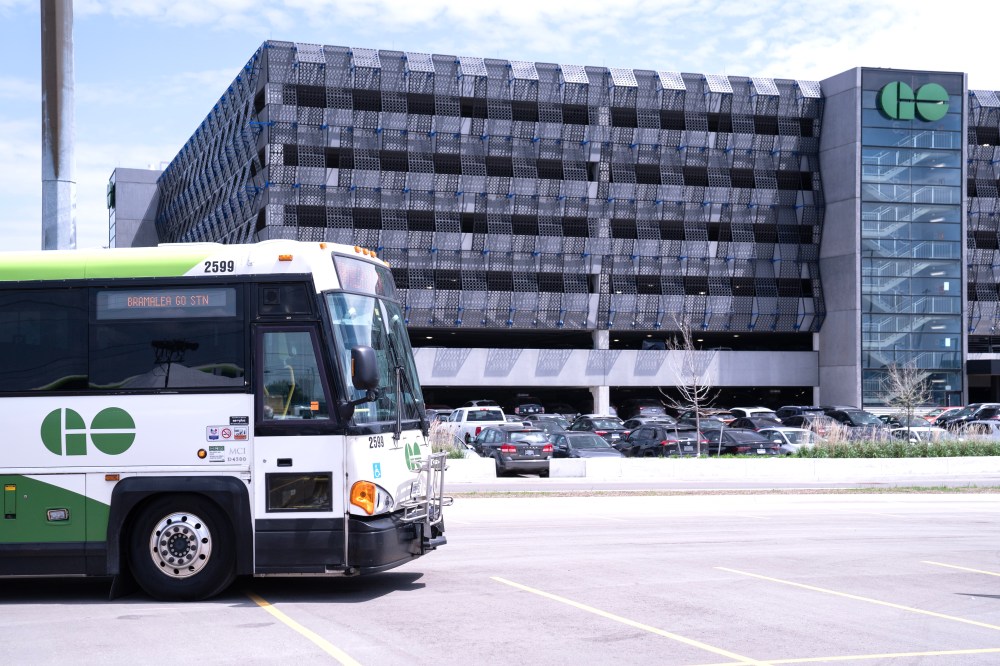
On the transit side of the legislation, the government is looking to increase the fare evasion fine on GO Transit from $35 to $200 on first offence, increasing on subsequent offences to $500. Fare evasion costs provincial transit agency Metrolinx about $21 million in lost revenue each year, the government said.
It is also looking to expand its One Fare program that prevents transit riders from being charged a second fare when transferring between transit systems in the Greater Toronto Area by requiring transit agencies to adopt the same fare levels, and including Hamilton and Halton transit systems.
The bill and associated measures also include previously announced steps to open high-occupancy vehicle lanes to all drivers in off-peak hours and set a rideshare framework along the upcoming route for the Northlander train.
– With files from Jordan Omstead
This report by The Canadian Press was first published March 30, 2026.