

IMF chief warns that Iran war will slow global economic growth
Advertisement
Read this article for free:
or
Already have an account? Log in here »
To continue reading, please subscribe:

Digital Subscription
One year of digital access for only $205*
- Enjoy unlimited reading on winnipegfreepress.com
- Read the E-Edition, our digital replica newspaper
- Access News Break, our award-winning app
- Play interactive puzzles
*First annual payment billed as $205.00 + GST for one year. This annual subscription will automatically renew at $233.00 + GST every 52 weeks (10% off the regular annual price of $259.35). Offer available to new and qualified returning subscribers only. Cancel any time.
To continue reading, please subscribe:
Add Free Press access to your Brandon Sun subscription for only an additional
$1 for the first 4 weeks*
- Enjoy unlimited reading on winnipegfreepress.com
- Read the E-Edition, our digital replica newspaper
- Access News Break, our award-winning app
- Play interactive puzzles
*Your next Brandon Sun subscription payment will increase by $1.00 and you will be charged $17.95 plus GST for four weeks. After four weeks, your payment will increase to $24.95 plus GST every four weeks.
Read unlimited articles for free today:
or
Already have an account? Log in here »
WASHINGTON (AP) — The Iran war is darkening the outlook for the world economy — whether or not a fragile ceasefire holds, the head of the International Monetary Fund warned Thursday.
Managing Director Kristalina Georgieva said the fund will downgrade its forecast for the world economy next week.
“Had it not been for this shock, we would have been upgrading global growth,” Georgieva said in remarks before next week’s IMF-World Bank spring meetings. “But now, even our most hopeful scenario involves a growth downgrade.”
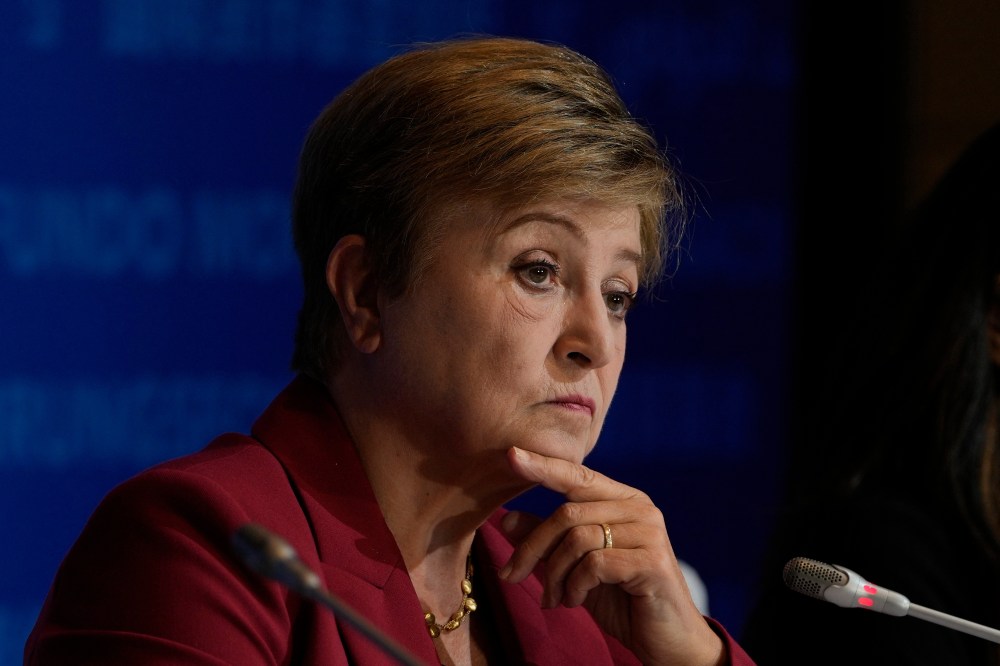
The world economy had proved resilient in the face of President Donald Trump’s decision to impose sweeping taxes last year on imports from most the world’s countries. In January, the 191-country IMF had upgraded the global growth outlook to 3.3% and was poised to do so again when its new forecasts came out next Tuesday.
But the war, which began Feb. 28, changed everything. The conflict has driven up the price of oil and natural gas; damaged oil refineries, tanker terminals and other energy infrastructure; disrupted shipments of fertilizer the world’s farmers depend on; and damaged the confidence of businesses and consumers.
The United States and Iran announced Tuesday they’d reached a ceasefire — after Trump warned that otherwise “a whole civilization will die tonight.”
Still, Georgieva said Thursday that “growth will be slower — even if the new peace is durable.”
Sub-Saharan Africa and small island countries are most vulnerable to the energy shock, Georgieva said. Around the world, governments have only a limited ability to support their economies with spending increases and tax cuts because their debts are already so high.
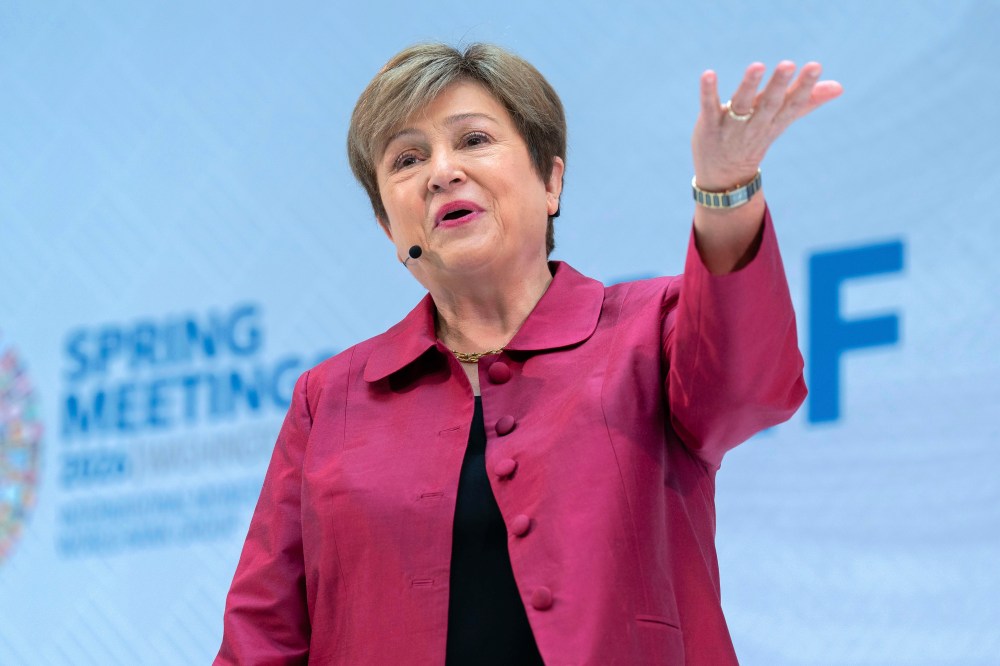

She noted that many countries have taken steps to limit the damage from the energy shock such as urging or requiring people to work from home; encouraging more use of public transportation; and limiting travel by public officials.
Georgieva pleaded that policymakers “be careful not to make things worse” with ”go-it-alone” moves such as limiting exports and imposing price controls. “Don’t pour gasoline on the fire,” she said.
Related Articles
European leaders urge a negotiated settlement as Iran closes the Strait of Hormuz

Advertisement Advertise With Us
Advertisement Advertise With Us