

TSX rises more than 200 points, U.S. stock markets mixed amid focus on Middle East
Advertisement
Read this article for free:
or
Already have an account? Log in here »
To continue reading, please subscribe:
Digital Subscription
One year of digital access for only $1.44 a week*
- Enjoy unlimited reading on winnipegfreepress.com
- Read the E-Edition, our digital replica newspaper
- Access News Break, our award-winning app
- Play interactive puzzles
*Billed as $5.77 plus GST every four weeks. After 52 weeks, price increases to the regular rate of $19.95 plus GST every four weeks. Offer available to new and qualified returning subscribers only. Cancel any time.
To continue reading, please subscribe:
Add Free Press access to your Brandon Sun subscription for only an additional
$1 for the first 4 weeks*
- Enjoy unlimited reading on winnipegfreepress.com
- Read the E-Edition, our digital replica newspaper
- Access News Break, our award-winning app
- Play interactive puzzles
*Your next Brandon Sun subscription payment will increase by $1.00 and you will be charged $17.95 plus GST for four weeks. After four weeks, your payment will increase to $24.95 plus GST every four weeks.
Read unlimited articles for free today:
or
Already have an account? Log in here »
TORONTO – Canada’s main stock index rose on Friday, while U.S. markets were mixed amid a shaky ceasefire agreement between the U.S. and Iran.
“The big story really is on the situation in the Middle East that is continuing to remain fluid, and the oil volatility that is still a key swing factor for inflation and consumer sentiment,” said Brianne Gardner, senior wealth manager of Velocity Investment Partners at Raymond James Ltd.
Negotiators from Iran and the U.S. are preparing for high-level talks on Saturday.
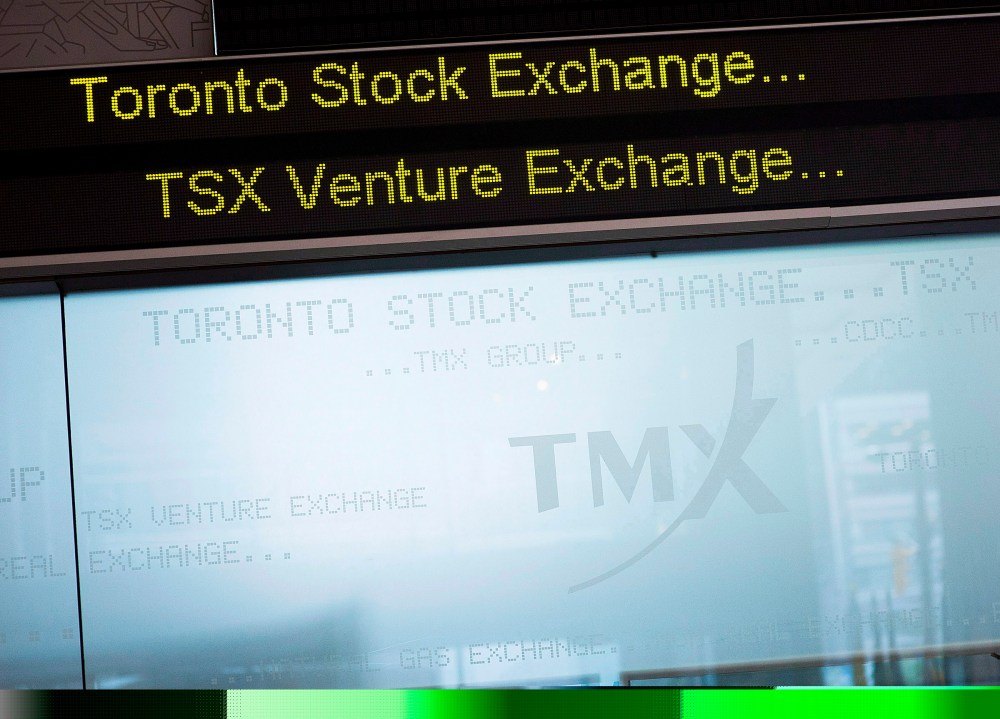
The S&P/TSX composite index was up 218.05 points at 33,695.76.
In New York, the Dow Jones industrial average was down 269.23 points at 47,916.57. The S&P 500 index was down 7.77 points at 6,816.89, while the Nasdaq composite was up 80.48 points at 22,902.89.
Trading on Wall Street remained choppy. Most companies in the benchmark S&P 500 were losing ground.
The major U.S. indexes posted modest losses for the week, despite having mostly notched gains this month amid optimism that the war with Iran could be heading toward a resolution.
Oil prices have been behind many of the stock market’s sharp movements. They’ve risen significantly as shipping through the vital Strait of Hormuz essentially stalled since the war began.
The May crude oil contract was down US$1.30 at US$96.57 per barrel.
Brent crude oil, the international standard, has gone from roughly US$70 per barrel before the war in late February to more than US$119 at times. Brent for June delivery fell 0.8 per cent to US$95.20 per barrel Friday.
The conflict is behind surging inflation in the U.S. in March. The government reported the biggest spike in inflation in four years as prices at the gas pump jumped. The inflation increase was just short of what economists expected.
Inflation remains a major concern for the U.S. Federal Reserve, which has signalled more caution amid worries about inflation reheating. The rate of inflation remains above the central bank’s two per cent target. The threat of rising inflation will likely mean the central bank continues to hold interest rates steady.
On the TSX, gains in the basic materials sector led the overall index on Friday.
Gardner said she expects basic materials to be a top-performing sector in 2026.
“Yes, gold is taking a little bit of a breather off its peaks, but I still think that copper and gold are going to continue to lead the way,” she said.
The June gold contract was down US$30.60 at US$4,787.40 an ounce.
Investors also reacted to fresh labour force data from Statistics Canada on Friday. The agency said employers collectively added 14,000 jobs in March, roughly in line with economists’ expectations. The unemployment rate remained unchanged at 6.7 per cent.

“We did see the gains were more concentrated in services and natural resources, but overall hiring remained, I believe, too weak to signal a strong rebound, especially in trade-sensitive sectors that are still facing pressure,” Gardner said.
The Canadian dollar traded for 72.33 cents US compared with 72.35 cents US on Thursday.
This report by The Canadian Press was first published April 10, 2026.
— With files from The Associated Press.
Companies in this story: (TSX:GSPTSE, TSX:CADUSD)