

Board game inspires business name
Founder of Shortline Moving Solutions Inc. fell in love with playing Monopoly during his childhood

Advertisement
Read this article for free:
or
Already have an account? Log in here »
To continue reading, please subscribe:

Digital Subscription
One year of digital access for only $205*
- Enjoy unlimited reading on winnipegfreepress.com
- Read the E-Edition, our digital replica newspaper
- Access News Break, our award-winning app
- Play interactive puzzles
*First annual payment billed as $205.00 + GST for one year. This annual subscription will automatically renew at $233.00 + GST every 52 weeks (10% off the regular annual price of $259.35). Offer available to new and qualified returning subscribers only. Cancel any time.
To continue reading, please subscribe:
Add Free Press access to your Brandon Sun subscription for only an additional
$1 for the first 4 weeks*
- Enjoy unlimited reading on winnipegfreepress.com
- Read the E-Edition, our digital replica newspaper
- Access News Break, our award-winning app
- Play interactive puzzles
*Your next Brandon Sun subscription payment will increase by $1.00 and you will be charged $17.95 plus GST for four weeks. After four weeks, your payment will increase to $24.95 plus GST every four weeks.
Read unlimited articles for free today:
or
Already have an account? Log in here »
Alexander Hupé found his company’s moniker between Pacific Avenue and Park Place.
When the entrepreneur was brainstorming names for Shortline Moving Solutions Inc. — the moving company in Winnipeg’s North End that he opened for business on April 7, 2015 — he was inspired by Monopoly.
Short Line is one of the four railroads featured in the classic board game. Hupé fell in love with the game as a child, a passion that followed him into his early 20s, including when he lived in B.C. for six months and played football for the Okanagan Sun.

“We used to play all the time in Kelowna to unwind after practice,” says Hupé, now 35. “I had to win at all costs.”
Hupé says he picked the name because it evokes different images for different people. It also fit because the company is involved with transporting goods.
“I was a big Monopoly aficionado until I realized it’s more luck than skill.”
Hupé doesn’t play the game very often anymore. Instead, he makes real-life decisions about purchases, what to build and where to allocate resources.
As president at Shortline, he and co-owner Riley George oversee a company that does local, rural, long-distance and commercial relocations, primarily in Manitoba and northwestern Ontario.
In 2025, the company completed 7,000 jobs. The owners keep the company’s total annual income close to the vest, but share that last year, Shortline’s gross revenue grew by 42 per cent compared to 2024.
This year is looking good, too. The company’s first-quarter gross revenue jumped 70 per cent year-over-year, Hupé says, thanks to a busy March that saw the company do a number of jobs in northern communities before winter ice roads closed.
Shortline has a fleet of 50 vehicles, and one of the things that make Hupé and George most proud is that the company employs around 100 people during peak season.
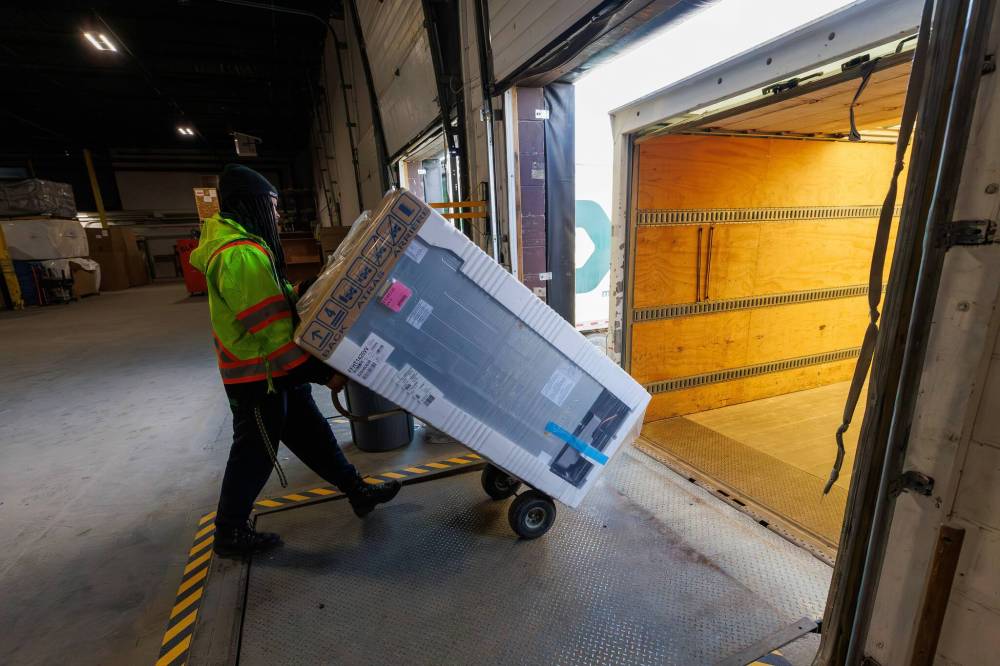
Being a mover has a reputation as a dead-end job, Hupé says, but he and George don’t see it that way.
“Moving (employees) to higher and higher paying jobs — I find that really fulfilling,” says George, 34. “If you come to Shortline with a work ethic, we’ll take care of the rest of it.”
“We’re people persons first and we’re movers second,” Hupé adds. “You need that attitude if you’re going to be successful here.”
It was April 2013 when Hupé got his start in the moving industry.
His junior football career had ended, he’d started studying criminology at the University of Winnipeg, and he was making ends meet as a bouncer and pizza delivery driver.
When an acquaintance told Hupé about a local moving company, Hupé showed up at the business the following Monday to see if they were hiring. He started that day.
In February 2014, Hupé purchased his first five-ton truck and became an owner-operator at the company. Eventually, he left and started Shortline.

The Red River Métis citizen says the low barrier to entry attracted him to the industry. He didn’t need to be a tradesperson or have a degree.
“It’s very much a people business,” he says. “I enjoy interacting and conversing with people from all different walks of life, and that’s something I picked up on pretty quick. Every day was another chance to get to know someone.”
Three years after opening Shortline, Hupé had 15 employees, five trucks and annual revenue north of $1 million.
Unsure of how to keep growing the business, the entrepreneur turned to the Louis Riel Capital Corp., an affiliate of the Manitoba Métis Federation that helps Red River Métis citizens start, expand or acquire businesses.
Staff at the corporation helped Hupé put together a business plan, and he received a loan from the organization that allowed him to purchase the capital assets he needed to keep going.
“It couldn’t have come at a more crucial time,” he says.
By then, Hupé had formed a friendship with George, a University of Manitoba business school graduate he met at the gym. The two talked about Shortline in between sets and kicked around the idea of George buying into the company.
George was working at a tech firm at the time. When COVID-19 reached the province, he began thinking more seriously about joining Shortline.
“We basically had a socially distanced conversation in a backyard (about whether) it’s time to finally take the plunge,” George recalls. “I just decided I would regret not ever seeing if our friendship could turn into a business partnership and what that could look like.”
George’s first day at Shortline was July 1, 2020. It was a busy time for the company, which was deemed an essential service during the pandemic. Interest rates were low, home sales were high and people needed help relocating.
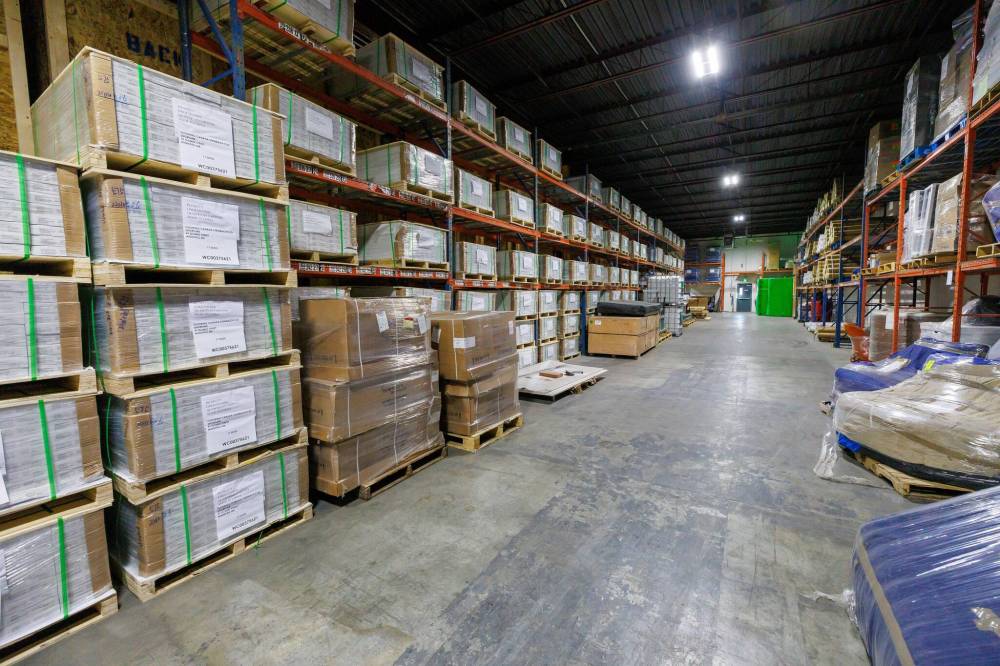
By 2023, Shortline had outgrown its headquarters on Dufferin Avenue. The company moved into its current digs that May — a 50,000 sq. ft. space on Gomez Street. Six months later, the demand for Shortline’s services “started falling off a cliff,” Hupé says.
On top of that, the company had made capital investments at a time when interest rates were high. It was a challenging time.
“We had to make some cuts to the budget, and some months we didn’t take a paycheque,” Hupé says. “The rate at which we were losing money, we really had to believe in what we were doing.”
That belief and commitment started paying off last year, he says, and now the future looks bright.

Hupé is quick to credit the people who have helped him keep Shortline moving — the company’s first client, the landlord that offered the company a flexible lease agreement, his parents, the Louis Riel Capital Corp., and so many others.

“Those kinds of individual stories of assistance are a big part of why the company is where it is today,” he says.
The owners once contemplated moving Shortline to a larger market such as Calgary to expand the business, but ultimately decided to keep the company’s roots planted in Manitoba.
“We’re very proud to be Winnipeg business owners,” George says.
aaron.epp@freepress.mb.ca
Aaron Epp reports on business for the Free Press. After freelancing for the paper for a decade, he joined the staff full-time in 2024. Read more about Aaron.
Every piece of reporting Aaron produces is reviewed by an editing team before it is posted online or published in print — part of the Free Press‘s tradition, since 1872, of producing reliable independent journalism. Read more about Free Press’s history and mandate, and learn how our newsroom operates.
Our newsroom depends on a growing audience of readers to power our journalism. If you are not a paid reader, please consider becoming a subscriber.
Our newsroom depends on its audience of readers to power our journalism. Thank you for your support.
Aaron Epp reports on business for the Free Press. After freelancing for the paper for a decade, he joined the staff full-time in 2024. Read more about Aaron.
Every piece of reporting Aaron produces is reviewed by an editing team before it is posted online or published in print — part of the Free Press‘s tradition, since 1872, of producing reliable independent journalism. Read more about Free Press’s history and mandate, and learn how our newsroom operates.
Our newsroom depends on a growing audience of readers to power our journalism. If you are not a paid reader, please consider becoming a subscriber.
Our newsroom depends on its audience of readers to power our journalism. Thank you for your support.
Advertisement Advertise With Us
Advertisement Advertise With Us