

A long-shuttered Iraq-Syria border crossing reopens for the first time in more than a decade
Advertisement
Read this article for free:
or
Already have an account? Log in here »
To continue reading, please subscribe:

Digital Subscription
One year of digital access for only $205*
- Enjoy unlimited reading on winnipegfreepress.com
- Read the E-Edition, our digital replica newspaper
- Access News Break, our award-winning app
- Play interactive puzzles
*First annual payment billed as $205.00 + GST for one year. This annual subscription will automatically renew at $233.00 + GST every 52 weeks (10% off the regular annual price of $259.35). Offer available to new and qualified returning subscribers only. Cancel any time.
To continue reading, please subscribe:
Add Free Press access to your Brandon Sun subscription for only an additional
$1 for the first 4 weeks*
- Enjoy unlimited reading on winnipegfreepress.com
- Read the E-Edition, our digital replica newspaper
- Access News Break, our award-winning app
- Play interactive puzzles
*Your next Brandon Sun subscription payment will increase by $1.00 and you will be charged $17.95 plus GST for four weeks. After four weeks, your payment will increase to $24.95 plus GST every four weeks.
Read unlimited articles for free today:
or
Already have an account? Log in here »
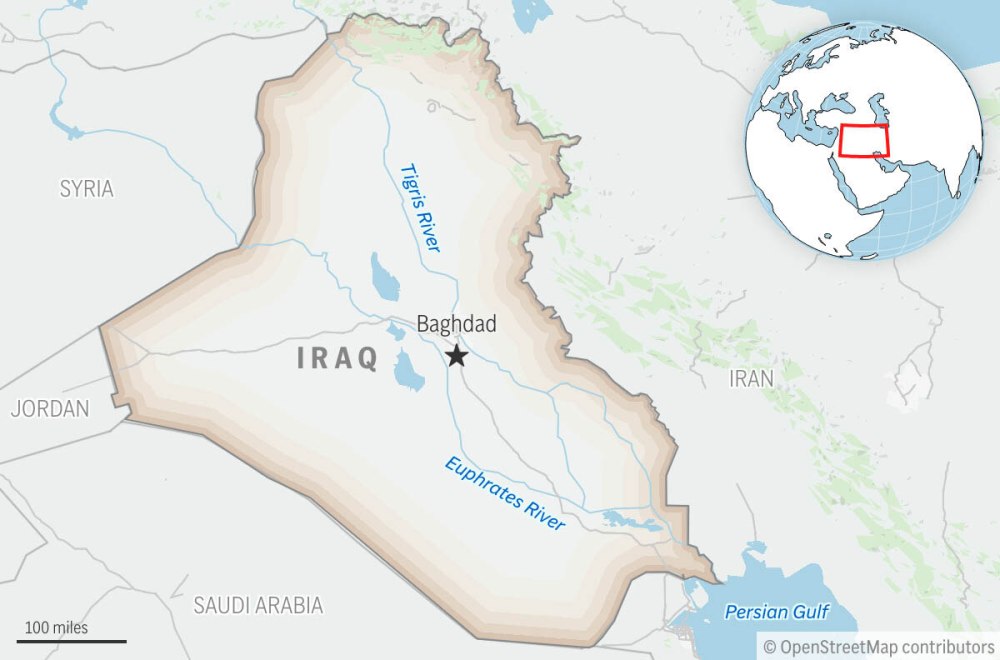
BAGHDAD (AP) — A key border crossing between Iraq and Syria reopened on Monday for the first time in more than a decade, with officials highlighting its potential for trade and oil exports. Syria touted the crossing as a safe overland route for oil exports and an alternative to the Strait of Hormuz at the focus of the Iran war.
The crossing — known as Rabia in Iraq and Yarubiyah in Syria — was closed after the Syrian civil war began in 2011. Then in 2014, militants from the Islamic State group seized the area. Iraqi Kurdish forces later retook it.
Syria’s state-run SANA news agency said that Syrian and Iraqi officials at the crossing discussed how to improve coordination and ease transit and trade “in line with shared interests.”
Nadia al-Jubouri, a member of Iraq’s provincial council of Nineveh, said at the ceremony that the reopening will allow for “trade exchange and oil transportation toward this great gate.”

Still, transporting oil over land is far inferior — in capacity — to pipelines and oil tankers at sea.
Iraq relies heavily on oil revenues for roughly 90% of its budget, and most of its oil is exported through the Strait of Hormuz, the narrow mouth of the Persian Gulf and a critical chokepoint through which 20% of the world’s oil normally flows.