

EU-Mercosur trade deal takes provisional effect, boosting hopes and concerns for millions
Advertisement
Read this article for free:
or
Already have an account? Log in here »
To continue reading, please subscribe:

Digital Subscription
One year of digital access for only $205*
- Enjoy unlimited reading on winnipegfreepress.com
- Read the E-Edition, our digital replica newspaper
- Access News Break, our award-winning app
- Play interactive puzzles
*First annual payment billed as $205.00 + GST for one year. This annual subscription will automatically renew at $233.00 + GST every 52 weeks (10% off the regular annual price of $259.35). Offer available to new and qualified returning subscribers only. Cancel any time.
To continue reading, please subscribe:
Add Free Press access to your Brandon Sun subscription for only an additional
$1 for the first 4 weeks*
- Enjoy unlimited reading on winnipegfreepress.com
- Read the E-Edition, our digital replica newspaper
- Access News Break, our award-winning app
- Play interactive puzzles
*Your next Brandon Sun subscription payment will increase by $1.00 and you will be charged $17.95 plus GST for four weeks. After four weeks, your payment will increase to $24.95 plus GST every four weeks.
Read unlimited articles for free today:
or
Already have an account? Log in here »
SAO PAULO (AP) — The long-awaited trade deal between South American bloc Mercosur and the European Union took effect Friday, at least provisionally. The initiative creates a trans-Atlantic market estimated at $22 trillion with 720 million potential consumers, and some nations expect to boost their exports by more than 10% by 2038, once it is fully implemented.
The trade deal was signed Jan. 17 at a meeting of the South American group. European Commission President Ursula von der Leyen’s move to provisionally enact the deal, effectively sidestepping the EU Parliament, is being challenged by EU lawmakers at the bloc’s judiciary. The agreement will be halted if the European body rules against it.
“This is good news for EU businesses of all sizes, good news for our consumers and good news for our farmers, who will gain valuable new export opportunities, with full protection for sensitive sectors,” she said Thursday.
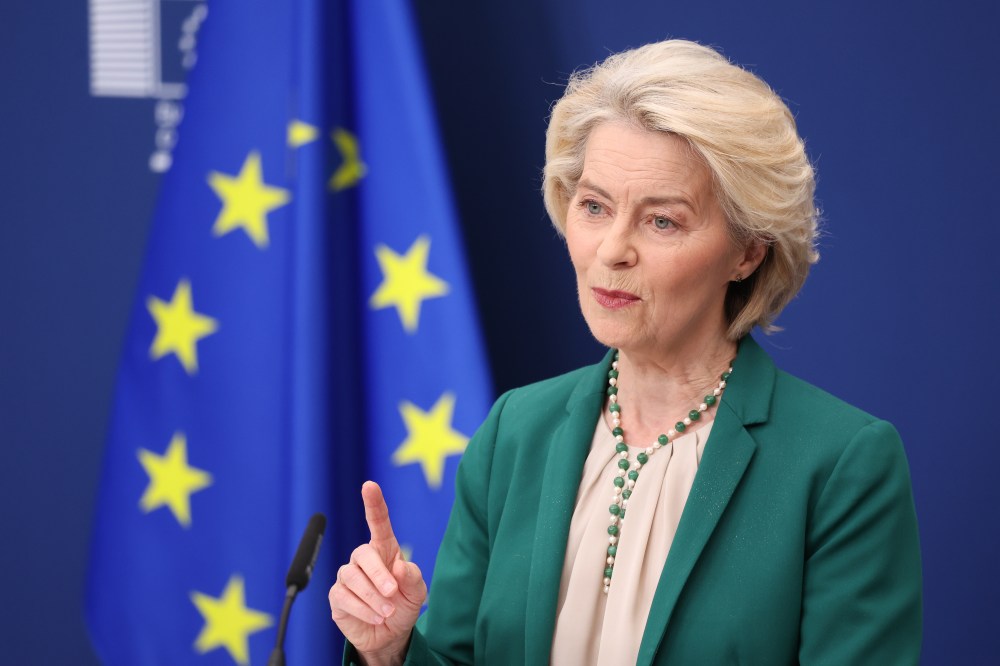
Von der Leyen is expected to hold a videoconference Friday with leaders of Mercosur nations Brazil, Argentina, Uruguay and Paraguay to celebrate the agreement.
Earlier this week, Brazil’s President Luiz Inácio Lula da Silva, one of the key supporters of the agreement, signed a decree validating the deal in his country. He said it is a response to unilateral tariffs imposed last year by U.S. President Donald Trump and a reaffirmation of multilateralism.
“Nothing better than believing in the exercise of democracy, in multilateralism, and in cordial relations between nations,” Lula said in a ceremony in the capital, Brasilia, to celebrate the milestone after more than 25 years of negotiations.
Last week, Brazil’s vice president and one of the negotiators of the deal, Geraldo Alckmin, said in an interview with The Associated Press and other news agencies that not striking the deal with the EU would have meant staying behind while competitor nations made other agreements.
Brazil is by far Mercosur’s largest economy, with a gross domestic product estimated at over $2.3 trillion in 2025.
Lia Valls, an associate researcher at the think-tank Fundacao Getulio Vargas based in Rio de Janeiro, agrees that the deal offers better perspectives against unilateralism worldwide.
“The EU and Mercosur are showing that it is possible for big blocs to reach a deal in this world where that multilateral system is being very weakened and where the U.S. clearly operates to do that,” Valls told the AP. “It is a very positive sign.”
The agreement faced opposition from European farmers and environmental groups and was delayed in December, before being referred to the EU’s top court.
South American agribusiness industries, chiefly beef, fruit and minerals, are expecting a boost in exports to Europe. European automakers, pharmaceutical companies and technology firms also look forward to making new inroads in Mercosur markets.

While companies based in Mercosur countries have expressed fear of tough competition from European peers in hi-tech industries, European farmers have shown concerns about price pressures and imports that do not follow similar environmental standards.
French President Emmanuel Macron, one of the critics of the deal, has long demanded safeguards to monitor and stop large economic disruption in the EU, increased regulations in the Mercosur nations like pesticide restrictions, and more inspections of imports at EU ports.
The agreement gradually removes trade barriers and tariffs in the two blocs, but it also keeps economic safeguard clauses for European countries to protect some sectors from excessive competition, such as poultry, beef, sugar, and fruit.
___
Follow AP’s coverage of Latin America and the Caribbean at https://apnews.com/hub/latin-america