

Heavy equipment manufacturers to see uneven demand: report
Advertisement
Read this article for free:
or
Already have an account? Log in here »
To continue reading, please subscribe:

Digital Subscription
One year of digital access for only $205*
- Enjoy unlimited reading on winnipegfreepress.com
- Read the E-Edition, our digital replica newspaper
- Access News Break, our award-winning app
- Play interactive puzzles
*First annual payment billed as $205.00 + GST for one year. This annual subscription will automatically renew at $233.00 + GST every 52 weeks (10% off the regular annual price of $259.35). Offer available to new and qualified returning subscribers only. Cancel any time.
To continue reading, please subscribe:
Add Free Press access to your Brandon Sun subscription for only an additional
$1 for the first 4 weeks*
- Enjoy unlimited reading on winnipegfreepress.com
- Read the E-Edition, our digital replica newspaper
- Access News Break, our award-winning app
- Play interactive puzzles
*Your next Brandon Sun subscription payment will increase by $1.00 and you will be charged $17.95 plus GST for four weeks. After four weeks, your payment will increase to $24.95 plus GST every four weeks.
Read unlimited articles for free today:
or
Already have an account? Log in here »
TORONTO – As the federal government moves to boost Canada’s manufacturing sector, a new report shows a range of pressures are creating uneven growth for heavy equipment makers.
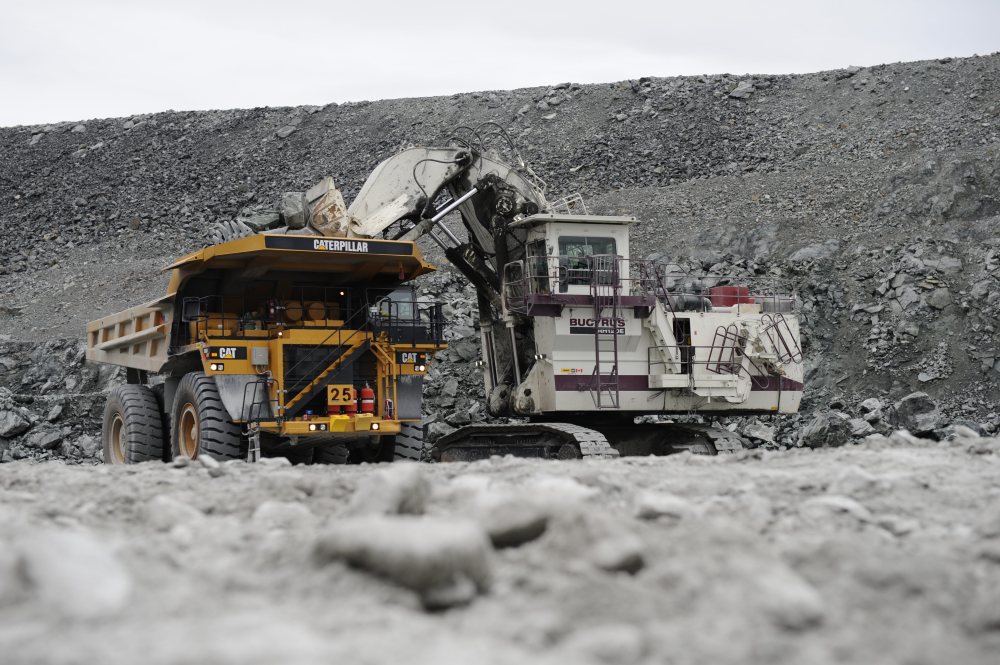
Focusing on equipment for construction, farming and mining needs, a report prepared for the Association of Equipment Manufacturers found that the segment has seen some gains in recent years.
Manufacturers of non-highway equipment generated $54 billion in direct and indirect sales last year, up from $48.7 billion when the study was last done in 2022, according to the S&P Global Market Intelligence report.
“This is an industry that has held up well, but one that is still navigating a volatile operating environment,” said AEM chief executive Megan Tanel during a press conference.
The tariffs imposed by the United States have been disrupting trade, but it’s difficult to say how directly growth is being affected, she said.
The report notes that while U.S. trade policy has affected demand, Canada’s favourable tariff rates have helped soften the blow. It found construction machinery exports to the U.S. were down only 2.2 per cent compared with declines of 28.6 per cent for Germany and 18.9 per cent for Japan.
With the AEM representing the industry in both Canada and the U.S., it’s making sure U.S. politicians are aware of the importance of free trade, she said.
“On both sides of the border, industry is working extremely hard to share the importance of this relationship.”
The pressure from the U.S. trade war, including a recent change in the way metal tariffs are applied, led the federal government to announce an additional $1.5 billion in supports Monday.
The announcement includes the creation of a new $1 billion program under the Business Development Bank of Canada to bolster the manufacturing sector, along with a $500 million top-up to the regional tariff response fund.
The federal government also announced in the spring economic update that it would spend up to $6 billion to boost skilled labour in the trades, the shortage of which is also a barrier to growth, said Tanel.

Mixed pressures have led to uneven employment growth in recent years.
Direct employment in the sector grew in 2023 but then declined in 2024 and 2025, leaving direct employment at 70,915, still up 3.2 per cent from the last report in 2022.
Canada’s slate of mining projects to increase critical minerals production could create more demand, but project timing and price volatility create lumpiness.
“Canada’s heavy equipment manufacturing outlook is best described as selectively resilient, but uneven,” said Tanel.
This report by The Canadian Press was first published on May 4, 2026.

Advertisement Advertise With Us
Advertisement Advertise With Us