

Investment pros’ dos and don’ts
New book examines how world’s leading stock pickers may only be right half the time but still get exceptional returns over long run
Advertisement
Read this article for free:
or
Already have an account? Log in here »
To continue reading, please subscribe:

Digital Subscription
One year of digital access for only $205*
- Enjoy unlimited reading on winnipegfreepress.com
- Read the E-Edition, our digital replica newspaper
- Access News Break, our award-winning app
- Play interactive puzzles
*First annual payment billed as $205.00 + GST for one year. This annual subscription will automatically renew at $233.00 + GST every 52 weeks (10% off the regular annual price of $259.35). Offer available to new and qualified returning subscribers only. Cancel any time.
To continue reading, please subscribe:
Add Free Press access to your Brandon Sun subscription for only an additional
$1 for the first 4 weeks*
- Enjoy unlimited reading on winnipegfreepress.com
- Read the E-Edition, our digital replica newspaper
- Access News Break, our award-winning app
- Play interactive puzzles
*Your next Brandon Sun subscription payment will increase by $1.00 and you will be charged $17.95 plus GST for four weeks. After four weeks, your payment will increase to $24.95 plus GST every four weeks.
Read unlimited articles for free today:
or
Already have an account? Log in here »
The world’s best, most successful investors are not market wizards. They’re maestros, argues a former top fund manager turned successful financial writer.
To Lee Freeman-Shor, wizards are traders, speculating on price movements, and the successful ones are indeed skilled, making money by trading frequently based on pricing data.
Maestros, in contrast, are often more focused on a company’s fundamentals. They invest based on the quality of the business and the prospects for future growth and profitability.

MAGNIFICA
‘Maestros’ are often more focused on a company’s fundamentals. They invest based on the quality of the business and the prospects for future growth and profitability.
A few years ago, Freeman-Shor — a former, award-winning money manager with a master’s degree in psychology and neuroscience — authored The Art of Execution: How the World’s Best Investors Get it Wrong and Still Make Millions.
It looked at the stock-picking skills of the world’s leading professional investors — A.K.A. the maestros.
“I discovered that the chance of any of their ideas making money was generally around 49 per cent — worse than a coin toss,” says Freeman-Shor, based in Tel Aviv, who recently spoke with the Free Press.
Yet these investors were successful all the same in providing exceptional long-term returns for their clients.
As Freeman-Shor writes in his new book, Stock Market Maestros: the Winning Habits, Strategies and Mindsets of the World’s Best Investors, success is not just about picking winning stocks.
Success comes afterward. It’s what the maestros do with the winners and losers that leads to significant, long-term returns.
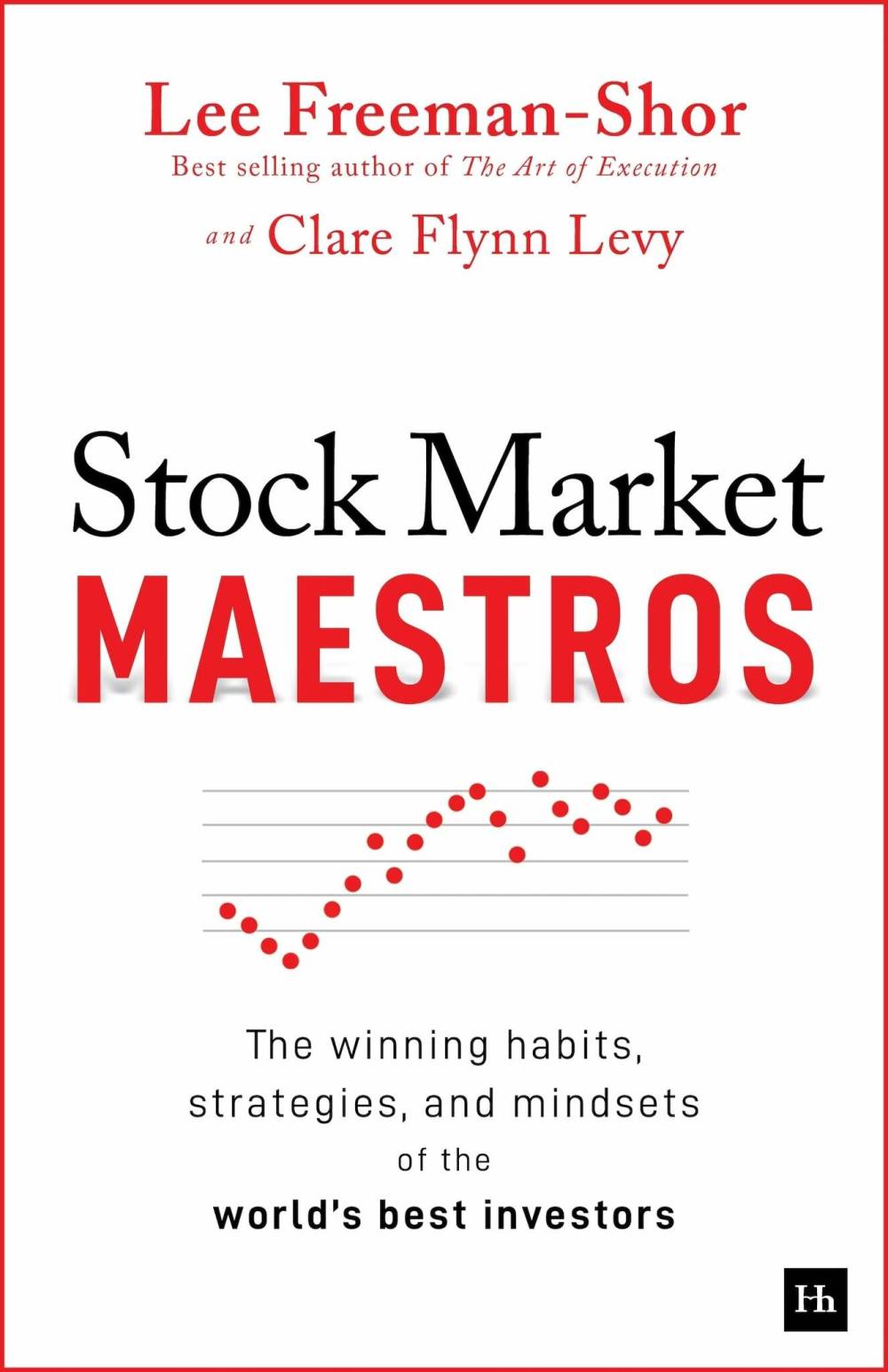
Stock Market Maestros, published this spring, is co-authored by Clare Flynn Levy, founder and chief executive officer of Essentia Analytics. Her investment data analysis firm uses behavioural, market and other information to help institutional investors make better decisions.
Her firm has found the most successful investors are often better than most at picking good stocks, but even the best maestros have a hit rate (success) of less than 60 per cent. Yet they excel at sizing their investments ensuring an allocation is not too big or too small. This is bolstered by a deep understanding of a company’s business and the broader economic context that could bolster or harm financial growth in the future.
They closely monitor a business’s financial data and focus less on market data, particularly short-term pricing. While they prefer to buy and hold for longer periods, they can be clinical in their decision to sell when conditions change for the worse. And they are willing to double down when they believe a company, whose stock price has fallen while navigating a challenging environment, will rebound and grow its market share.
At the heart of the maestros’ success is when the growth from stock picks they get right outweighs the losses from the picks they get wrong — by a wide margin — due to those aforementioned practices after entering into stock position. Essentia Analytics measures this skill with a metric called the median payoff ratio.
The maestros in the book have an average ratio of 182 per cent, or their hits provide a return of 1.82 times of their losses from their misses.
Stock Market Maestros interviewed a dozen of these award-winning money managers, with the best hit percentage and payout ratios, discussing their processes for success.
“The book is like being a fly on the wall, learning vicariously through real-life stock examples where these pros talk us through an investment, explaining what caused them to buy, sell, hold, add more money, or get out,” says Freeman-Shor.
These investors are not necessarily household names in Canada. Yet the likes of U.S. equity fund manager Greg Padilla with Aristotle Capital Management in Los Angeles have been generating incredible returns for large pension funds and other large investors for many years.
Padilla’s hit rate for stock-picking is 56 per cent, which is above the 49 per cent average for the best of the best (30 per cent is roughly the average for most equity managers selecting stocks). Even more notable is his payout ratio of 216 per cent.
Central to his success is a process called WAWI or “Why are we idiots?” His team finds a promising investment and then asks: what are the reasons this investment won’t make money?
They continue to ask this question even after investing in a company. Should the investment make them feel increasingly like “idiots,” they will exit that position.
Like other maestros in the book, Padilla discusses stocks he has invested in, describing his process from beginning to end. One is online payments provider PayPal. His fund initially bought shares after PayPal was spun out from eBay in 2015 as a stand alone company.
PayPal had promising upside stemming from e-commerce’s rapid growth, which only accelerated during the COVID-19 pandemic. Yet after the allocation doubled in value, he pared back the position, taking profits, to ensure it did not become too large in the broader portfolio. The share price continued to grow afterward.
But that proved unsustainable, as e-commerce did not grow as quickly as forecast after the pandemic. People returned to shopping in person, he recounts. And so, he sold all remaining shares, which were up about 30 per cent from the initial price of investment.

Padilla discusses the many WAWI indicators that led to the exit, including a loss of confidence in top decision makers, stemming in part from the departure of a key member of the leadership team.
Written for investment professionals and DIYers, Stock Market Maestros seeks to offer insights into how these successful investors think, revealing their dos and don’ts, which readers can then use to increase their own success, Freeman-Shor says.
“The goal is helping investors realize that how they react when winning or losing is the key to success,” he says. “It’s less about picking and more about how you execute after investing.”
Joel Schlesinger is a Winnipeg-based freelance journalist.
joelschles@gmail.com