

Housing starts held back by regulatory conditions, structural factors: CMHC
Advertisement
Read this article for free:
or
Already have an account? Log in here »
To continue reading, please subscribe:
Digital Subscription
One year of digital access for only $1.44 a week*
- Enjoy unlimited reading on winnipegfreepress.com
- Read the E-Edition, our digital replica newspaper
- Access News Break, our award-winning app
- Play interactive puzzles
*Billed as $5.77 plus GST every four weeks. After 52 weeks, price increases to the regular rate of $19.95 plus GST every four weeks. Offer available to new and qualified returning subscribers only. Cancel any time.
To continue reading, please subscribe:
Add Free Press access to your Brandon Sun subscription for only an additional
$1 for the first 4 weeks*
- Enjoy unlimited reading on winnipegfreepress.com
- Read the E-Edition, our digital replica newspaper
- Access News Break, our award-winning app
- Play interactive puzzles
*Your next Brandon Sun subscription payment will increase by $1.00 and you will be charged $17.95 plus GST for four weeks. After four weeks, your payment will increase to $24.95 plus GST every four weeks.
Read unlimited articles for free today:
or
Already have an account? Log in here »
OTTAWA – A new report by the Canada Mortgage and Housing Corp. says regulatory conditions, along with economic and demographic structural factors, have slowed the pace of housing starts and pushed home prices higher.
In a report that looked at the housing market from 2006 to 2024, the agency estimated that annual housing starts could have been nearly 30 per cent higher in 2024 if the Canadian housing industry had been as responsive as the U.S. industry.
It also says the national MLS average prices would have been about eight per cent lower in 2024.
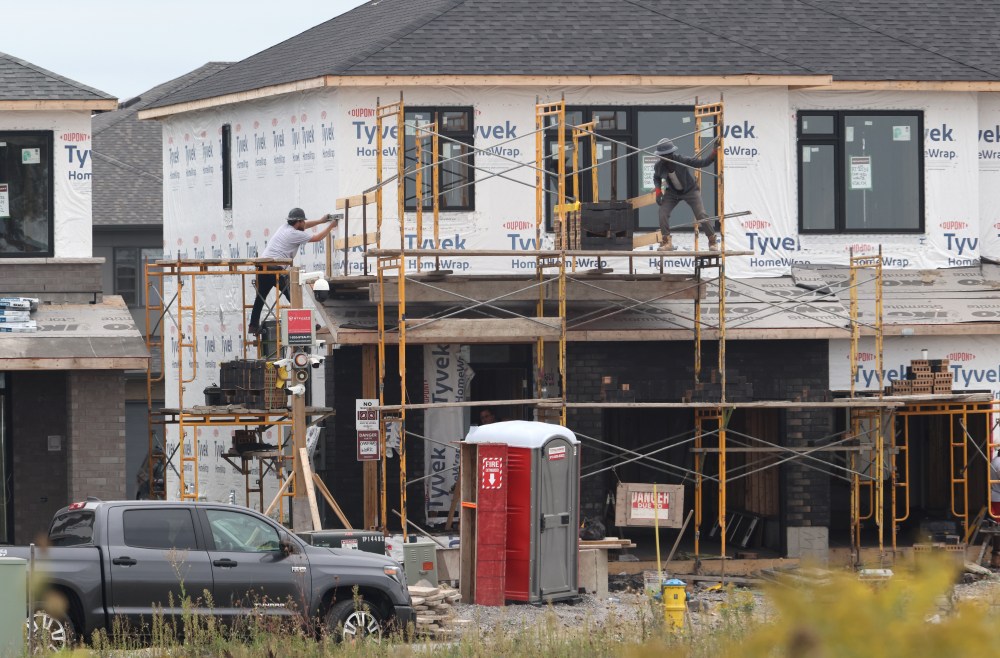
CMHC says Canada has tighter rules when it comes to land use compared with those in the U.S. which makes it more difficult to add new housing supply quickly.
It also says other structural factors beyond our control have played a role in the poorer performance compared with the U.S.

It says some of our largest cities face geographical constraints, while fewer big urban centres in Canada than the U.S. makes many households captive to a handful of cities, slowing the construction industry’s response to changes in housing demand.
This report by The Canadian Press was first published May 28, 2026.