

Gas prices fall on Middle East optimism — but no one sure if relief will last
Advertisement
Read this article for free:
or
Already have an account? Log in here »
To continue reading, please subscribe:

Digital Subscription
One year of digital access for only $205*
- Enjoy unlimited reading on winnipegfreepress.com
- Read the E-Edition, our digital replica newspaper
- Access News Break, our award-winning app
- Play interactive puzzles
*First annual payment billed as $205.00 + GST for one year. This annual subscription will automatically renew at $233.00 + GST every 52 weeks (10% off the regular annual price of $259.35). Offer available to new and qualified returning subscribers only. Cancel any time.
To continue reading, please subscribe:
Add Free Press access to your Brandon Sun subscription for only an additional
$1 for the first 4 weeks*
- Enjoy unlimited reading on winnipegfreepress.com
- Read the E-Edition, our digital replica newspaper
- Access News Break, our award-winning app
- Play interactive puzzles
*Your next Brandon Sun subscription payment will increase by $1.00 and you will be charged $17.95 plus GST for four weeks. After four weeks, your payment will increase to $24.95 plus GST every four weeks.
Read unlimited articles for free today:
or
Already have an account? Log in here »
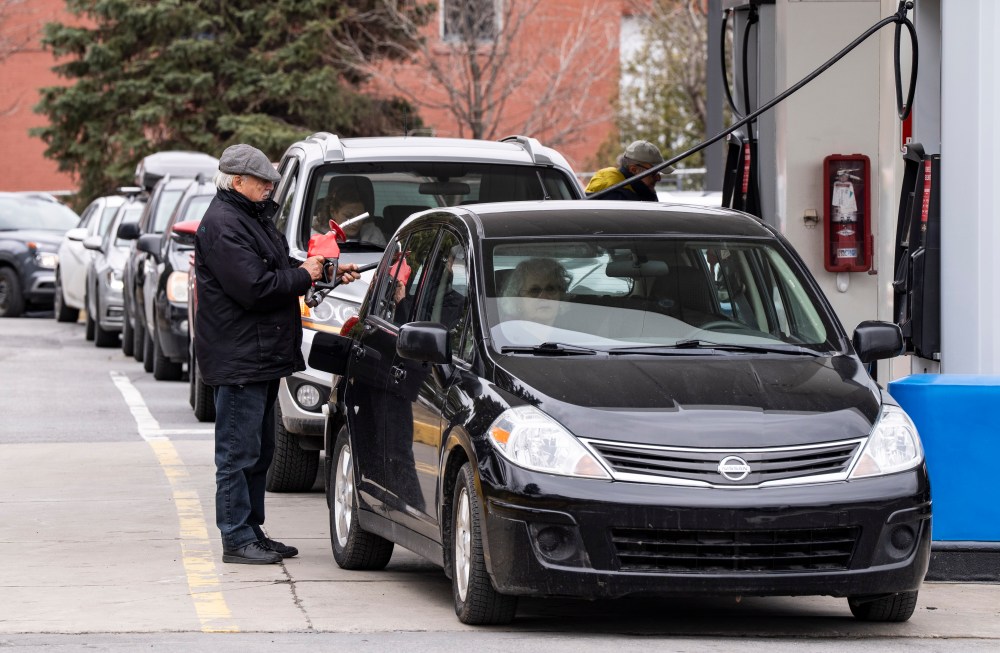
It’s anyone’s guess whether the relief Canadians have been feeling at the pumps over the past week will last into June, experts say.
Data from energy analytics website GasBuddy shows the cost of fuelling up has been dropping for the last 10 days to about $1.76 per litre on Friday.
The decrease has largely been driven by optimism that Iran and the U.S. will soon reach a deal, quelling the ongoing conflict in the Middle East, said Behrouz Bakhtiari, an assistant professor of operations management at McMaster University.
“These movements have not been attributed to a real change in anything that’s happening,” he said. “Basically, these are mostly anticipation/expectation.”
U.S. President Donald Trump was expected to meet with advisers Friday to make a “final determination” on moving forward with a deal to extend the Iran ceasefire and reopen the Strait of Hormuz, a key fuel passageway in the Middle East that has been blocked since February.
The two sides have had encouraging talks before, but the situation quickly changed, so it’s too hard to say whether this deal will happen or even stick, said En-Pro International chief petroleum analyst Roger McKnight.
“One day we have a ceasefire, the next day we don’t have a ceasefire and it goes on and on,” he said.
“I think the energy people generally are just saying, well, we don’t know really what’s going to happen, so the consumer is stuck in the middle.”
Even if the feud ends soon, McKnight said it could be four months until gas prices really decline because fuel inventories have been depleted during the conflict.
The supply of crude oil, gasoline, jet fuel and most refined products is running so low, he said suppliers won’t be able to dip into their inventory for much longer.
“There’s no more ink left in the well, so in July and August, you’re going to see some really fantastically high prices for both crude oil and all refined products and there’s nothing you can do about it. It’s too late,” he said.
“If I was a consumer, I would grab any price reductions you’re seeing right now because they’re not going to hold up in July and August.”
Before gas prices started dipping around May 20, they had been on the rise since the conflict broke out at the end of the winter.
The war pushed up prices to well over $1.90 per litre around the start of May, GasBuddy data shows.
Bakhtiari said politics, supply chains and consumer behaviour all get reflected in gas prices.

On the supply chain side, he said there are many vessels stranded in the Middle East, putting pressure on prices.
At the same time, he said North Americans tend to drive more during the warmer months, when gas stations stock more expensive blends of summer fuel.
Yet these days, politics have the biggest impact on what prices consumers are presented with.
“We can talk about supply chain, we can talk about behaviour, we can talk about North Americans driving more in the months of June and July, and we can also talk about the suspension,” he said, “but sometimes a tweet from Donald Trump would send the prices through the roof and there is no way one can anticipate this.”
This report by The Canadian Press was first published May 29, 2026.