

Missed signal led to near-collision of GO trains in Burlington, Ont.: TSB report
Advertisement
Read this article for free:
or
Already have an account? Log in here »
To continue reading, please subscribe:
Digital Subscription
One year of digital access for only $1.44 a week*
- Enjoy unlimited reading on winnipegfreepress.com
- Read the E-Edition, our digital replica newspaper
- Access News Break, our award-winning app
- Play interactive puzzles
*Billed as $5.77 plus GST every four weeks. After 52 weeks, price increases to the regular rate of $19.95 plus GST every four weeks. Offer available to new and qualified returning subscribers only. Cancel any time.
To continue reading, please subscribe:
Add Free Press access to your Brandon Sun subscription for only an additional
$1 for the first 4 weeks*
- Enjoy unlimited reading on winnipegfreepress.com
- Read the E-Edition, our digital replica newspaper
- Access News Break, our award-winning app
- Play interactive puzzles
*Your next Brandon Sun subscription payment will increase by $1.00 and you will be charged $17.95 plus GST for four weeks. After four weeks, your payment will increase to $24.95 plus GST every four weeks.
Read unlimited articles for free today:
or
Already have an account? Log in here »
TORONTO – The Transportation Safety Board of Canada says a near-collision between two GO trains carrying more than 400 passengers two years ago highlights the need for physical systems to stop trains that don’t respond to signals.
The board has released its report into the near-crash that took place near a GO Transit station in Burlington, Ont. on March 14, 2024.
The board says a commuter train that left Aldershot station passed by a signal telling it to stop, then ran through a switch and went onto a track where another GO train was travelling in the opposite direction.
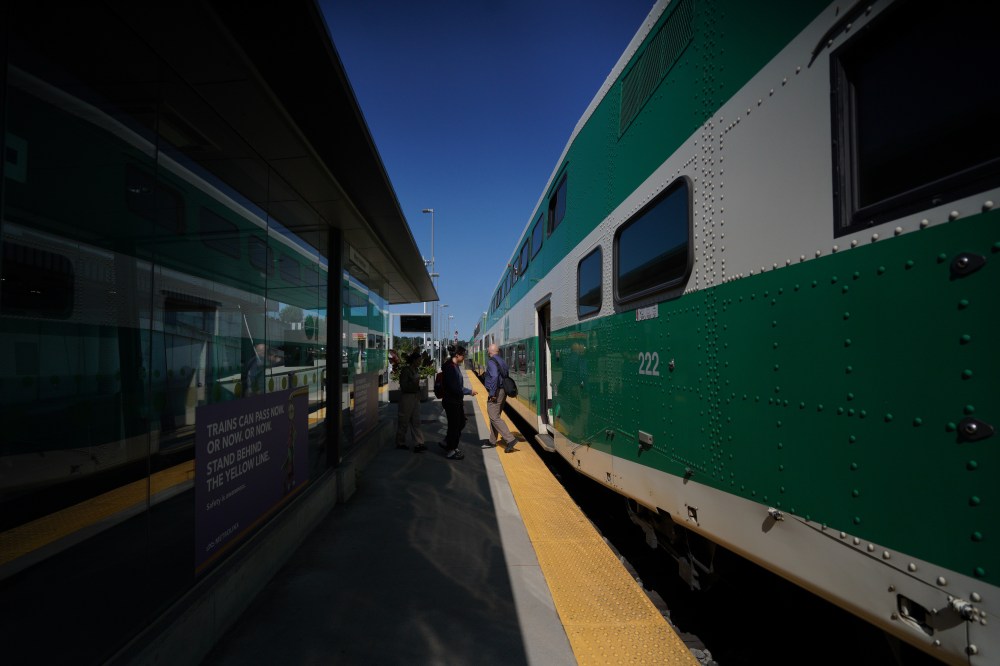
It says both trains were stopped by their respective crews, avoiding a collision by about 167 metres.
Investigators say they found that the crew heading out from Aldershot station expected the other train to have already gone by and the signal to give them the go-ahead.
They say the conductor was focused on his tablet during departure preparations, while the locomotive engineer was dealing with equipment issues in the cab, taking attention away from the signal. As a result, the board says, they did not see the signal to stop.

“In this occurrence, a catastrophic collision involving 400 passengers was narrowly averted, underscoring the need for physical fail-safe train controls that can intervene when signal indications are not followed,” TSB chair Yoan Marier said in a statement.
“For more than 25 years, we have been calling on industry and regulators to expedite the implementation of physical fail-safe train control systems and put strong interim measures in place while these systems are being developed and installed.”
Since 2023, the TSB has investigated eight separate collisions or near-collisions where signal indications were not followed, it said.
Physical fail-safe systems automatically slow or stop a train when crews do not respond to signals, the board said. These systems have been fully implemented in the United States since 2020 on high-hazard routes, including those operated by Canadian National and Canadian Pacific Railway Company, it said.
This report by The Canadian Press was first published June 3, 2026.