

N.S. says it’s on schedule to move people with disabilities out of institutions
Advertisement
Read this article for free:
or
Already have an account? Log in here »
To continue reading, please subscribe:

Digital Subscription
One year of digital access for only $205*
- Enjoy unlimited reading on winnipegfreepress.com
- Read the E-Edition, our digital replica newspaper
- Access News Break, our award-winning app
- Play interactive puzzles
*First annual payment billed as $205.00 + GST for one year. This annual subscription will automatically renew at $233.00 + GST every 52 weeks (10% off the regular annual price of $259.35). Offer available to new and qualified returning subscribers only. Cancel any time.
To continue reading, please subscribe:
Add Free Press access to your Brandon Sun subscription for only an additional
$1 for the first 4 weeks*
- Enjoy unlimited reading on winnipegfreepress.com
- Read the E-Edition, our digital replica newspaper
- Access News Break, our award-winning app
- Play interactive puzzles
*Your next Brandon Sun subscription payment will increase by $1.00 and you will be charged $17.95 plus GST for four weeks. After four weeks, your payment will increase to $24.95 plus GST every four weeks.
Read unlimited articles for free today:
or
Already have an account? Log in here »
HALIFAX – The Nova Scotia government says it’s on track to comply with a human rights ruling that requires the province to move people with disabilities out of institutions and into their own homes by 2028.
Meanwhile, the group behind the legal case sparking the change says while the province has made progress, it is still behind schedule.
Opportunities and Social Development Minister Susan Corkum-Greek told reporters in Halifax on Wednesday that the government is taking the time to consult with residents to ensure they have a smooth transition after leaving an institution. She said she’s confident the department can hit the 2028 target.
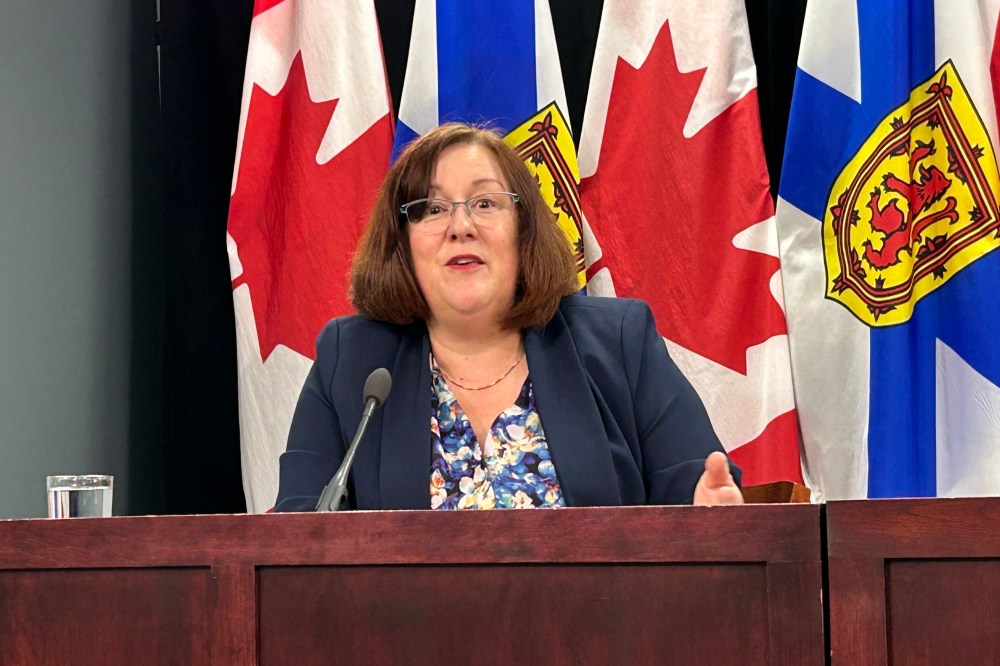
“Closing the institutions, in and of itself, could be a very simple act: they’re closed, out you go,” she said.
“But we want to help people to choose where they want to live, how they want to live and (provide) the supports. But there is an absolutely solid plan to get us to that milestone for sure.”
In 2022, Statistics Canada said Nova Scotia had the highest disability rate in Canada at 37.9 per cent. The national average was 27 per cent.
In 2021, the Disability Rights Coalition won an Appeal Court decision that identified systemic government discrimination in Nova Scotia against people with disabilities seeking housing and services in their communities. The three people behind the original complaints were medically discharged but still spent years living in a locked ward at a psychiatric hospital.
A human rights board of inquiry subsequently created a list of reforms required to address the province’s shortcomings.
These recommendations are also known as “the remedy.”
Among other measures, the remedy requires the government to close all large institutions for people with disabilities and transition them into community housing of their choice. The government must work with individuals to create support plans tailored to their specific needs.
Maria Medioli, executive director of the province’s disability support program, said that 35 per cent of people with disabilities — 301 people — had been moved out of places like residential care homes and rehabilitation centres between December 2023 and March 2026.
That leaves about 559 people institutionalized, many of whom Medioli said are in the planning stage for a move. She said the process should go more quickly now that the province has spent three years on the issue.
“The system is built, and now it’s about circling back, making improvements, getting feedback and fine-tuning and tweaking what isn’t quite right,” she said.
The Disability Rights Coalition said in a news release Wednesday that the remedy calls for a 75 per cent reduction of institutionalized people by the third year. That would have been 653 people — more than double the amount moved to date. The goal for the fourth year is 87.5 per cent.
Kim Long, the coalition’s vice-chair, said the province has done a lot of work, but the group is concerned about how much is left to do over the next two years.
“There are people that have not had any choice in their life and have been institutionalized, and there are still hundreds of people that are in that situation. So we are desperate for them to have the options,” Long said in an interview.
While she appreciates the government is taking the time to consult, Long said it also needs to ensure proper staffing is in place to support individuals, their families and their caregivers so they can find suitable housing.
“So we’re optimistic, but I don’t think we feel maybe as strongly as the province does that it’s absolutely doable in two years,” Long said.
Victoria Levack, who lives with cerebral palsy and advocates for people with disabilities, says most of the update is positive. She says she would rather the government take the time to move people out of institutions properly rather than rushing.

“I know how slow government can be, we all do,” she said in an interview. “It’s sad that there aren’t more, yes. One day is too long for the people who are in these places, but I’d rather they do it right.”
In January, the province enacted a policy prohibiting new admissions to institutions. Government officials were unable to say how many sites remain, but confirmed on Wednesday that two facilities recently closed.
The remedy calls on the government to support service providers across Nova Scotia and provide disability funding directly to individuals so they can make their own decisions about what support they need.
The province said it has started using a new provincewide planning system and established regional teams to help connect people to allied health supports. There’s also more money for crisis prevention along with 101 people enrolled in a new program designed to help people with disabilities prepare for adult life after leaving school.
This report by The Canadian Press was first published June 10, 2026.