

The economy in the occupied West Bank is being dismantled, report says
Advertisement
Read this article for free:
or
Already have an account? Log in here »
To continue reading, please subscribe:

Digital Subscription
One year of digital access for only $205*
- Enjoy unlimited reading on winnipegfreepress.com
- Read the E-Edition, our digital replica newspaper
- Access News Break, our award-winning app
- Play interactive puzzles
*First annual payment billed as $205.00 + GST for one year. This annual subscription will automatically renew at $233.00 + GST every 52 weeks (10% off the regular annual price of $259.35). Offer available to new and qualified returning subscribers only. Cancel any time.
To continue reading, please subscribe:
Add Free Press access to your Brandon Sun subscription for only an additional
$1 for the first 4 weeks*
- Enjoy unlimited reading on winnipegfreepress.com
- Read the E-Edition, our digital replica newspaper
- Access News Break, our award-winning app
- Play interactive puzzles
*Your next Brandon Sun subscription payment will increase by $1.00 and you will be charged $17.95 plus GST for four weeks. After four weeks, your payment will increase to $24.95 plus GST every four weeks.
Read unlimited articles for free today:
or
Already have an account? Log in here »
RAMALLAH, West Bank (AP) — The economy in the West Bank is teetering toward collapse as Israel maintains a web of restrictions that limit opportunities for Palestinians living under long-term military occupation, according to a new report from a leading conflict tracker.
The International Crisis Group says that Israeli measures restricting movement, withholding revenue and taking land are not only crippling the Palestinian economy but also fueling deep instability.
“The economic conditions necessary for any Palestinian future other than permanent subjugation are being dismantled,” it says.
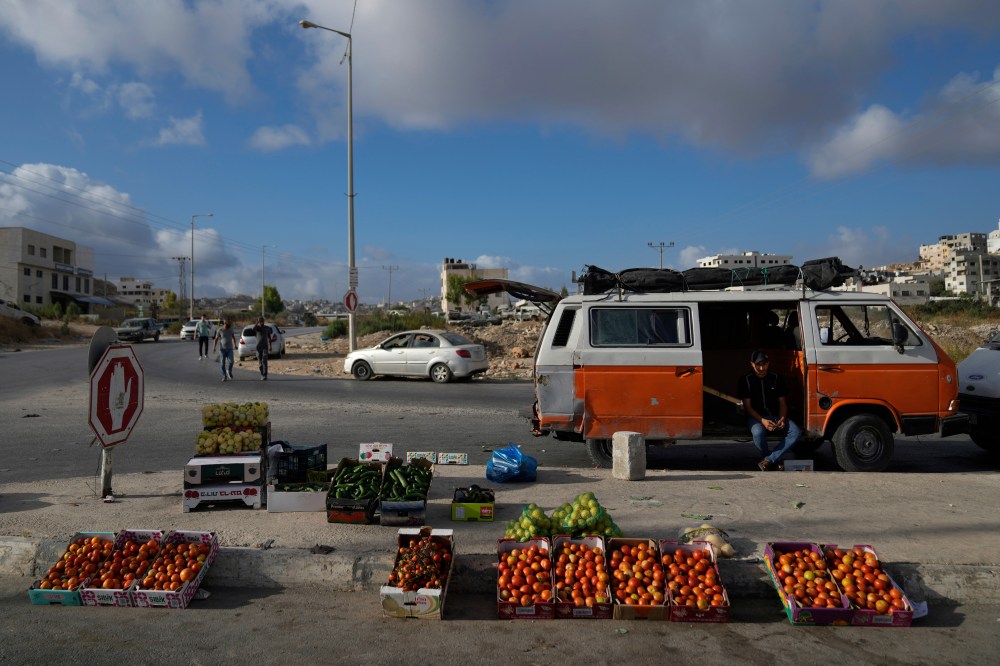
The report, based on interviews with Palestinian business leaders, mayors and government officials, details the financial crisis afflicting companies, households and the internationally backed Palestinian Authority, which administers cities and towns in the West Bank.
It says Israeli policies suggest a concerted effort to “advance Israel’s own declared goal of extending its control and preventing a Palestinian state from emerging.”
Throughout decades of military occupation, the Palestinian economy has been hobbled by checkpoints and military gates that curtail movement of people and goods. Households and businesses have relied heavily on jobs and imports tied to Israel, and faced restrictions on land and trade. The roughly 3.4 million Palestinians living in the West Bank today face roughly 30% unemployment and have seen their economy contract substantially since the start of the Israel-Hamas war.
After Hamas’ Oct. 7, 2023, attack, Israel revoked work permits for most of the nearly 200,000 Palestinians who had worked there previously. Officials cited security but in effect, it deprived the Palestinian economy of nearly $400 million a month, or almost one-fourth of its overall economic output.
Many businesses today are struggling to pay workers, contractors and suppliers, with private companies seeing an estimated 50% decline in business since before the war, “reflecting tightened movement controls, disrupted supply chains and heightened uncertainty,” the report says.
“Palestinian society survives, but in a state of grinding immiseration. Absent remedies, the result will likely be a loss of hope and a growing risk of instability and greater violence,” it says.

As the occupied West Bank’s largest employer and service provider, Palestinian Authority is at the heart of the crisis. Government agencies have borrowed heavily to stay afloat as public sector workers go unpaid and infrastructure like roads and water lines crumble. The inability to fund to public services is keeping patients out of hospitals and kids out of school.
Most of the PA’s money comes from taxes collected on goods entering the West Bank through Israeli ports, because Palestinians do not control their own borders. But under hard-line ministers in Israeli Prime Minister Benjamin Netanyahu’s government, Israel has withheld billions of dollars in owed tax revenue and unilaterally imposed deductions on the funds. No transfers have been made since May 2025.
Joost Hiltermann, International Crisis Group’s special adviser for the Middle East and North Africa, said the world’s focus on more than two years of war in Gaza had drawn attention away from the West Bank, but that changes taking place now could have arguably wider consequences for Palestinians’ future aspirations.
Hiltermann, who wrote the report, said Israeli officials, who exert considerable control over many of the policies in question, did not agree to be interviewed. But he noted disagreements within Netanyahu’s government, with settler leaders and security officials often clashing on how to manage the Palestinian economy.
“The security establishment doesn’t want the Palestinian Authority or economy to collapse because they would have to assume the burden of governing the territory in full after essentially destroying it,” he said.