

What prediction market trading is and why it’s gaining popularity
Advertisement
Read this article for free:
or
Already have an account? Log in here »
To continue reading, please subscribe:
Digital Subscription
One year of digital access for only $1.44 a week*
- Enjoy unlimited reading on winnipegfreepress.com
- Read the E-Edition, our digital replica newspaper
- Access News Break, our award-winning app
- Play interactive puzzles
*Billed as $5.77 plus GST every four weeks. After 52 weeks, price increases to the regular rate of $19.95 plus GST every four weeks. Offer available to new and qualified returning subscribers only. Cancel any time.
To continue reading, please subscribe:
Add Free Press access to your Brandon Sun subscription for only an additional
$1 for the first 4 weeks*
- Enjoy unlimited reading on winnipegfreepress.com
- Read the E-Edition, our digital replica newspaper
- Access News Break, our award-winning app
- Play interactive puzzles
*Your next Brandon Sun subscription payment will increase by $1.00 and you will be charged $17.95 plus GST for four weeks. After four weeks, your payment will increase to $24.95 plus GST every four weeks.
Read unlimited articles for free today:
or
Already have an account? Log in here »
Financial services company Wealthsimple announced Thursday that it will start offering a new form of investment based on real-world events.
The product is called prediction market trading and it’s gaining increasing popularity around the world.
Here’s a breakdown of how it works, what’s driving its growth and what investors should beware of.
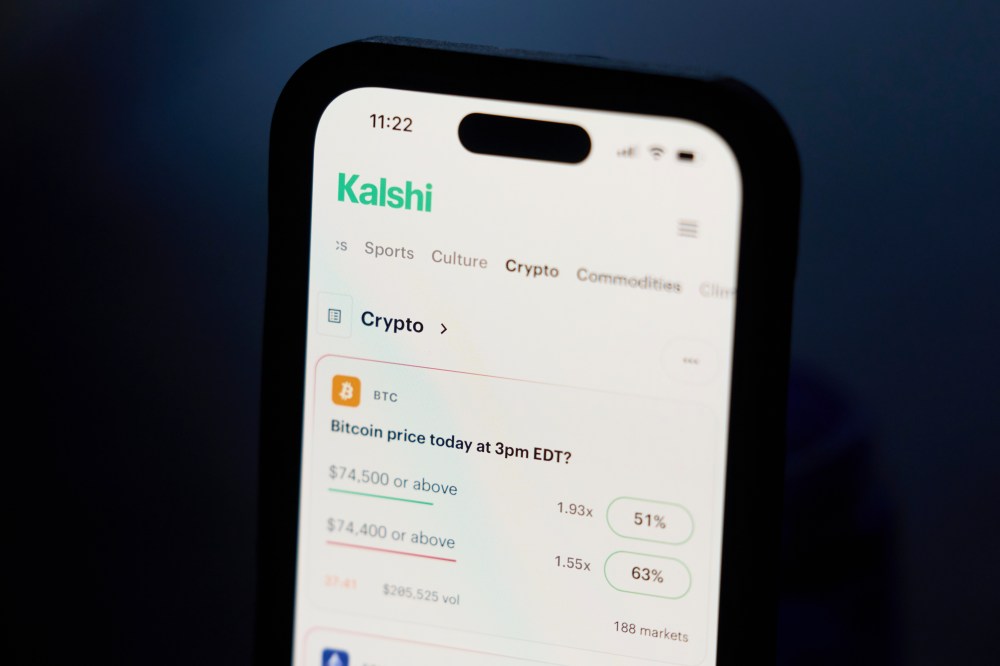
What are prediction markets?
Prediction markets allow investors to bet on the outcome of real-world events like whether Canada’s inflation rate will rise in a particular period, who will win an election or which team will come out on top after a sporting match.
The topic they’re betting on usually has a fixed number of outcomes and poses a yes-or-no question.
Investors put their support behind one of the outcomes by purchasing corresponding contracts, usually for less than $1.
The more people who bet on one of the outcomes by purchasing a contract, the higher the purchase price will be. If a “yes” contract is available for purchase at 40 cents, that suggests there’s a 40 per cent chance of the event happening.
If you guess correctly, usually these investments pay out $1 per contract. The more contracts you buy, the more you make — if you’re right.
How does it work?
Marius Zoican, the Canada Research Chair in financial technology and associate professor at the University of Calgary, used a soccer match between Canada and Switzerland as an example.
If the probability of Canada winning is 30 per cent, an investor would buy contracts for 30 cents each.
Say they buy 1,000 at that price, he said. They’d pay about $300.
If they are right and Canada actually won, they’d make $1 for every contract, or $1,000 total, and make a $700 gain. If Canada lost, they’d lose their $300.
Why are prediction markets so popular?
More and more investment platforms have begun offering prediction market products.
Investors tend to like them because you don’t always have to intensely study traditional markets to benefit and there’s a much broader range of things you can trade on.
“It’s not just a fixed menu that’s being set by the booking agency,” Zoican said. “If you want to create a contract that says (soccer player) Jonathan David will score for Canada or a celebrity-related contract, you can create that and people will trade on it, so you feel like you have a voice.”
What are the risks?
Critics compare prediction trading to gambling because you’re essentially placing a bet on an outcome.

They say the low barrier to entry — contracts cost less than a dollar to buy, typically — makes it easy for people to get addicted and then carried away.
In reality, Zoican said the top one per cent of accounts make most of the profits from prediction trading.
Most investors think the prices are formed by the community and people like them, so they “stand a fair chance.”
“But in reality, it’s the whales and the market makers that make money on these platforms, and that’s not immediately apparent to everybody,” he said.
This report by The Canadian Press was first published June 18, 2026.
Related Articles
Wealthsimple to launch prediction market trading through new app
Advertisement Advertise With Us
Advertisement Advertise With Us