

What to know about Cuba’s economic measures aimed at opening up the island’s economy
Advertisement
Read this article for free:
or
Already have an account? Log in here »
To continue reading, please subscribe:

Digital Subscription
One year of digital access for only $205*
- Enjoy unlimited reading on winnipegfreepress.com
- Read the E-Edition, our digital replica newspaper
- Access News Break, our award-winning app
- Play interactive puzzles
*First annual payment billed as $205.00 + GST for one year. This annual subscription will automatically renew at $233.00 + GST every 52 weeks (10% off the regular annual price of $259.35). Offer available to new and qualified returning subscribers only. Cancel any time.
To continue reading, please subscribe:
Add Free Press access to your Brandon Sun subscription for only an additional
$1 for the first 4 weeks*
- Enjoy unlimited reading on winnipegfreepress.com
- Read the E-Edition, our digital replica newspaper
- Access News Break, our award-winning app
- Play interactive puzzles
*Your next Brandon Sun subscription payment will increase by $1.00 and you will be charged $17.95 plus GST for four weeks. After four weeks, your payment will increase to $24.95 plus GST every four weeks.
Read unlimited articles for free today:
or
Already have an account? Log in here »
HAVANA (AP) — Cuba’s Communist Party has approved an emergency economic package featuring unprecedented free-market measures aimed at opening up the struggling island’s economy following heightened pressure from the United States.
While the full document has not been released, here are some of the proposals, based on statements by Cuban President Miguel Díaz-Canel and other officials.
Decentralize state-run economy
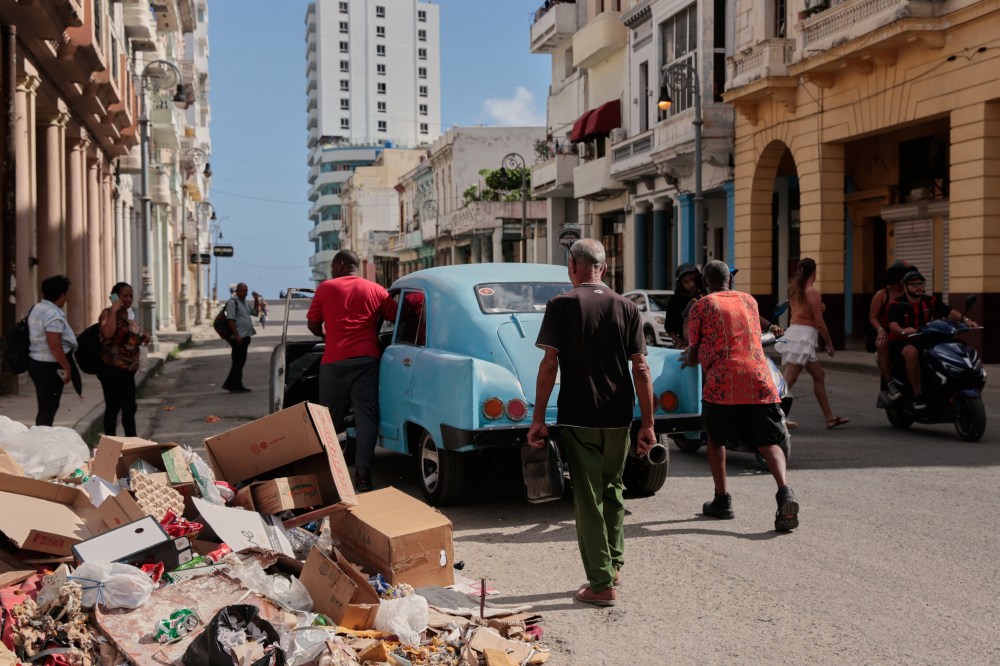
Measures are expected to further decentralize Cuba’s state-run economy. Under the island’s current economic model, the government largely determines what is produced, who produces it, the prices at which goods are sold and how the country’s resources are allocated.
Nonspecific changes to foreign exchange market
Currently, only state agencies and banks can exchange currencies, though many people rely on the informal market.
Government downsizing
Legislation has been introduced to reduce the number of ministries from 27 to 21 for greater efficiency.
Municipal independence
The measures would give municipalities greater authority to approve businesses operating within their jurisdictions and to manage relations with economic actors, including state-owned enterprises, cooperatives and private companies. Municipalities also would be allowed to import and export goods and manage their own foreign-currency revenue. Cuba has 168 municipalities across its 15 provinces.
Autonomy for state-owned companies
Companies would be allowed to design their own pay systems, use and distribute profits with fewer restrictions, import and export goods, and enter into partnerships with private businesses and cooperatives.
The reforms also would broaden the range of activities that state-owned companies are permitted to undertake. Cuba has about 2,000 state-owned enterprises.
Elimination of state intermediaries
Under the proposed changes, businesses, including small and medium-sized enterprises, would be allowed to import and export goods directly rather than through state-run entities that currently oversee the process and set fees.
The measures also would provide incentives for the import of inputs and raw materials used in production.
Subsidies to phase out
Cuba’s post-revolution rationing system long guaranteed access to basic products at low, controlled prices. However, upcoming reforms will gradually phase out these subsidies, moving food and other goods to market pricing.
Rebuilding abandoned infrastructure
Recent U.S. sanctions against Cuba’s business conglomerate Gaesa have forced historic hotel chains like Meliá and Iberostar to suspend contracts with their Cuban counterparts. New measures include finding new ways to utilize the island’s nearly abandoned infrastructure.
Díaz-Canel has said the emergency plan and the policy document prepared by the Communist Party’s Central Committee were shaped by the experiences of China and Vietnam, two communist countries that have introduced market-oriented economic reforms while maintaining one-party rule.
Mounting US pressure

The announcement of the new economic measures follows months of mounting U.S. pressure and high-level talks between the two countries, which have included former President Raúl Castro’s grandson, Raúl Guillermo Rodríguez Castro.
The United States has long restricted trade with and travel to Cuba in efforts to get the Cuban government to release all political prisoners, end political and religious repression and open its economy to private U.S. investment.
The Trump administration has ramped up that pressure in recent months, imposing a fuel embargo on the island and indicting Raúl Castro in connection with the 1996 downing of two civilian planes operated by Miami exiles.
___
Follow AP’s coverage of Latin America and the Caribbean at https://apnews.com/hub/latin-america

Advertisement Advertise With Us
Advertisement Advertise With Us