

A Serbian town is known for raspberries that are exported around the world
Advertisement
Read this article for free:
or
Already have an account? Log in here »
To continue reading, please subscribe:

Digital Subscription
One year of digital access for only $205*
- Enjoy unlimited reading on winnipegfreepress.com
- Read the E-Edition, our digital replica newspaper
- Access News Break, our award-winning app
- Play interactive puzzles
*First annual payment billed as $205.00 + GST for one year. This annual subscription will automatically renew at $233.00 + GST every 52 weeks (10% off the regular annual price of $259.35). Offer available to new and qualified returning subscribers only. Cancel any time.
To continue reading, please subscribe:
Add Free Press access to your Brandon Sun subscription for only an additional
$1 for the first 4 weeks*
- Enjoy unlimited reading on winnipegfreepress.com
- Read the E-Edition, our digital replica newspaper
- Access News Break, our award-winning app
- Play interactive puzzles
*Your next Brandon Sun subscription payment will increase by $1.00 and you will be charged $17.95 plus GST for four weeks. After four weeks, your payment will increase to $24.95 plus GST every four weeks.
Read unlimited articles for free today:
or
Already have an account? Log in here »
ARILJE, Serbia (AP) — Serbia ‘s town of Arilje is known as the Balkan country’s “raspberry capital,” with its fame reaching beyond borders.
Arilje and its surroundings yield berries that are exported as far as the United States and Japan. Serbia is among the top three exporters of raspberries globally.
“We are born, we live and we die with raspberries,” said Mileta Pilcevic, who heads a local association of raspberry producers. “Arilje is unique in the world. You can’t find a smaller place with such big concentration of raspberry production.”
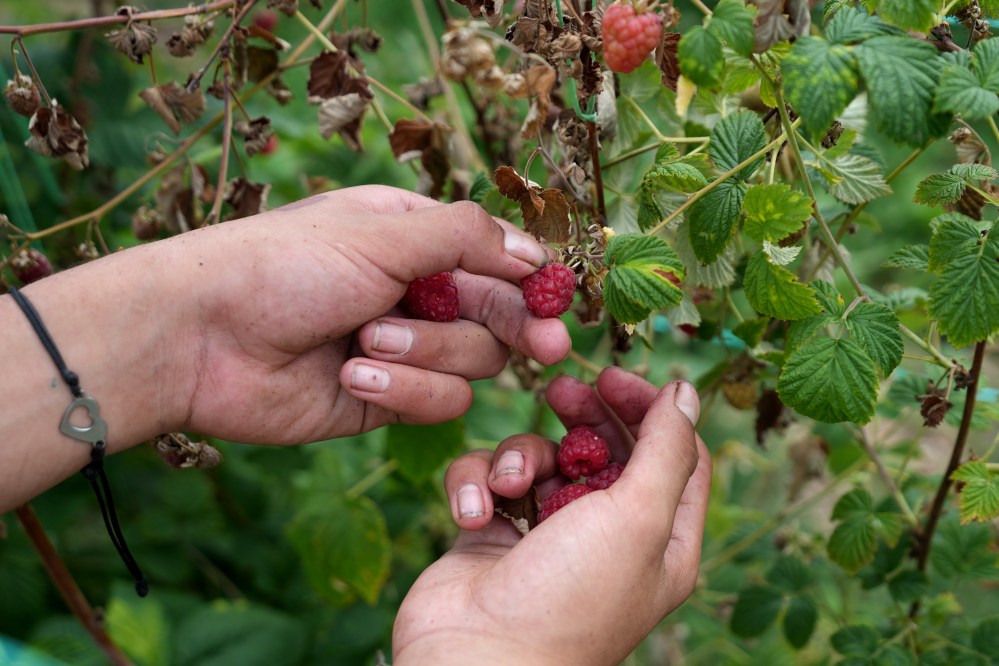
The hilly landscape has ideal climate for raspberry cultivation. The berries from Arilje are grown without chemicals and picked by hand for high quality.
Producers say the work is demanding. Increasingly unpredictable weather and unstable purchase prices have brought uncertainty to the business in recent years.
The raspberry fields have been run mostly as family businesses through generations. With its roughly 17,000 residents, the municipality some 170 kilometers (around 100 miles) from the capital of Belgrade accounts for about a fifth of Serbia’s raspberry exports.
The fields on average yield around 15,000-20,000 tons annually.
Pilcevic said a raspberry field takes at least two years to mature. The fruit is sensitive and requires constant care to develop the smell, taste and aroma that are globally recognized.
“Nothing must be done with machines or chemicals,” Pilcevic said.
Early summer is the picking season, and many people come to the town as seasonal workers to help, including from other countries. Pilcevic said some come from India and elsewhere in South Asia.
Local resident Nada Marinkovic said everything must be cleared by hand of weeds and grass. The actual picking “is only hard because of the sun.”
Around 90% of Serbian raspberries are exported frozen while the rest end up in markets across the country. Some producers offer direct sale of their fruit and natural juices online.
The frozen raspberries are used mainly in Europe for food processing, retail fruit, jams, yogurt and bakery products.

This year’s yield is expected to be 20-30% lower than normal, a consequence of last year’s drought.
Extreme weather that experts say may be fueled by climate change has become a concern for producers, who say the problem should be accommodated with a more predictable purchase price.
Pilcevic said that too often, the price offered for raspberries leaves producers with little or no profit and without the means to cover any unpredictable costs.
The concern has led to protests on the roads near Arilje in the past.
“It is not our job to be on the road but in the orchard,” Pilcevic said. “But, believe me when I say that we will be on the road if we have to.”