

Democratic congressman asks the CFPB to investigate ‘rent now, pay later’ companies
Advertisement
Read this article for free:
or
Already have an account? Log in here »
To continue reading, please subscribe:

Digital Subscription
One year of digital access for only $205*
- Enjoy unlimited reading on winnipegfreepress.com
- Read the E-Edition, our digital replica newspaper
- Access News Break, our award-winning app
- Play interactive puzzles
*First annual payment billed as $205.00 + GST for one year. This annual subscription will automatically renew at $233.00 + GST every 52 weeks (10% off the regular annual price of $259.35). Offer available to new and qualified returning subscribers only. Cancel any time.
To continue reading, please subscribe:
Add Free Press access to your Brandon Sun subscription for only an additional
$1 for the first 4 weeks*
- Enjoy unlimited reading on winnipegfreepress.com
- Read the E-Edition, our digital replica newspaper
- Access News Break, our award-winning app
- Play interactive puzzles
*Your next Brandon Sun subscription payment will increase by $1.00 and you will be charged $17.95 plus GST for four weeks. After four weeks, your payment will increase to $24.95 plus GST every four weeks.
Read unlimited articles for free today:
or
Already have an account? Log in here »
NEW YORK (AP) — A Democratic member of Congress is calling for the federal government to investigate the growing “rent now, pay later” industry, saying Americans may not understand the fees and cost structure of these products as the services become more widely available.
Rep. Maxwell Frost, D-Florida, sent a letter to Consumer Financial Protection Bureau Acting Director Russell Vought urging the bureau to investigate rent now, pay later companies and hold them accountable for potential violations of federal consumer financial protection laws. In the letter, obtained by The Associated Press, Frost also asked the bureau to explain what it is doing to protect renters and whether landlords are steering tenants toward rent-financing products.
“Rent now, pay later” companies allow renters to split their monthly rent into smaller payments over the course of a month. A renter with a $1,000 monthly rent bill might pay in four weekly payments of $250 or two payments of $500.
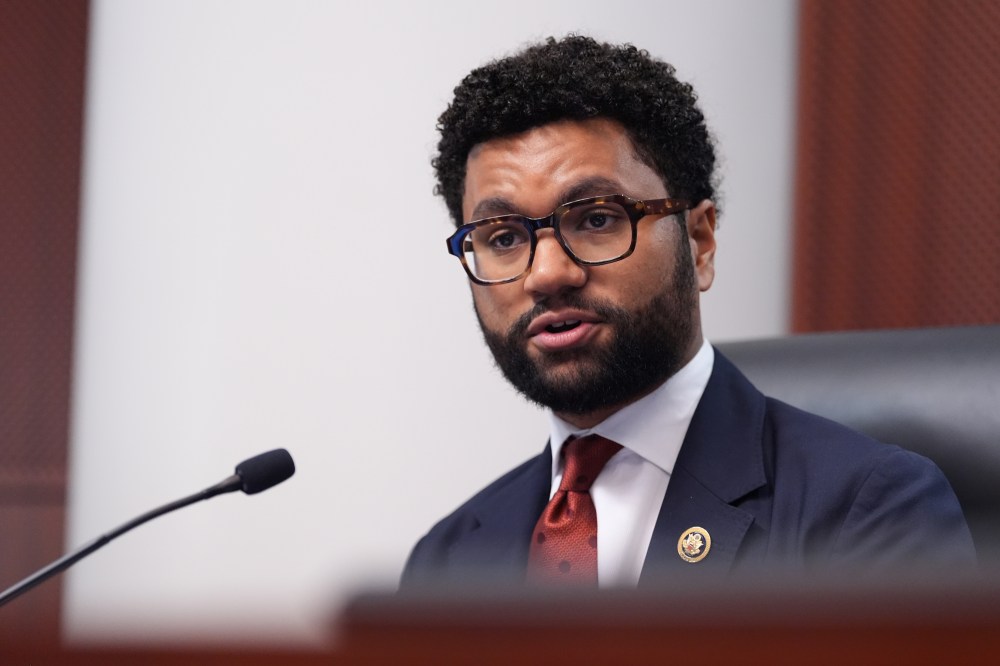
First elected to Congress in 2022 at the age of 25, Frost said he frequently used buy now, pay later services to furnish his first apartment in Washington, which put him heavily into debt. In an interview, Frost said it was only because he made a healthy salary as a member of Congress that he was recently able to pay those debts off. He said he believes his experience is likely the same as other young Americans.
“Americans should know they have rights when using these buy now, pay later products,” Frost said. “This is why the CFPB was created in the first place.”
Frost looked into using his credit card to pay rent, but “thank God that didn’t happen,” he added.
Companies such as Flex and Livble say breaking rent into multiple payments can help renters manage cash flow. Some payment plans can come with fees and finance charges. In February, the AP reported on how users of these services were paying as much as $50 a month to split their rent.
Other companies, such as Affirm, are running limited experiments with splitting rent into multiple payments. Affirm’s offering through a partner splits rent into bimonthly payments.
These RNPL companies differ from companies like Bilt, which allows some renters to pay rent through its credit card and rewards platform. Bilt says it has more than 5 million members, and its customers have historically used its service to earn rewards points on rent payments. RNPL companies are more focused on allowing customers to finance large rent payments across multiple payments.
Frost says there should be more disclosure to consumers around the products as they become more popular.
“While many of these companies market their loans as ‘innovative’ products that can help struggling cash-strapped renters, including by allegedly boosting their credit scores, many of these products more closely resemble repackaged payday loans,” Frost said in his letter.
A February report by Protect Borrowers and Toward Justice argued that some RNPL companies should comply with Truth in Lending Act requirements based on how they structure their products. The industry strongly disagreed with the groups’ findings at the time.

“In addition to structural reforms to drive down the cost of housing, lawmakers, policymakers, and law enforcement at every level of government need to wake up to the reality that a broad array of companies are cashing in, at working people’s expense, on the massive burden of rent in Americans’ lives,” the groups said in the report.
The Consumer Financial Protection Bureau has sharply curtailed its work under the second Trump administration. Under Vought, the bureau has rolled back regulations and guidance, dropped enforcement actions and moved to rescind previous agency activity. Other calls by members of Congress for bureau investigations have largely gone unanswered. The bureau did not immediately respond to a request for comment on Frost’s letter.
Vought’s tenure at the CFPB will end this summer. President Trump has nominated Brian Johnson, an executive formerly with Capital One, to be the next permanent director of the bureau. Johnson previously held a high-ranking position at the bureau during Trump’s first term in office.
Frost said that if the bureau does not act on buy now, pay later and rent now, pay later companies, he hopes to use information gathered from this letter and other resources to propose legislation next year if Democrats take control of Congress.
“I’m not holding my breath for the Trump administration to do the right thing, but this is the first step of many we can take to make sure these products are used correctly and Americans are protected,” he said.