Stock markets pare losses but still end lower after Trump says Iran ceasefire over
Advertisement
Read this article for free:
or
Already have an account? Log in here »
To continue reading, please subscribe:

Digital Subscription
One year of digital access for only $205*
- Enjoy unlimited reading on winnipegfreepress.com
- Read the E-Edition, our digital replica newspaper
- Access News Break, our award-winning app
- Play interactive puzzles
*First annual payment billed as $205.00 + GST for one year. This annual subscription will automatically renew at $233.00 + GST every 52 weeks (10% off the regular annual price of $259.35). Offer available to new and qualified returning subscribers only. Cancel any time.
To continue reading, please subscribe:
Add Free Press access to your Brandon Sun subscription for only an additional
$1 for the first 4 weeks*
- Enjoy unlimited reading on winnipegfreepress.com
- Read the E-Edition, our digital replica newspaper
- Access News Break, our award-winning app
- Play interactive puzzles
*Your next Brandon Sun subscription payment will increase by $1.00 and you will be charged $17.95 plus GST for four weeks. After four weeks, your payment will increase to $24.95 plus GST every four weeks.
Read unlimited articles for free today:
or
Already have an account? Log in here »
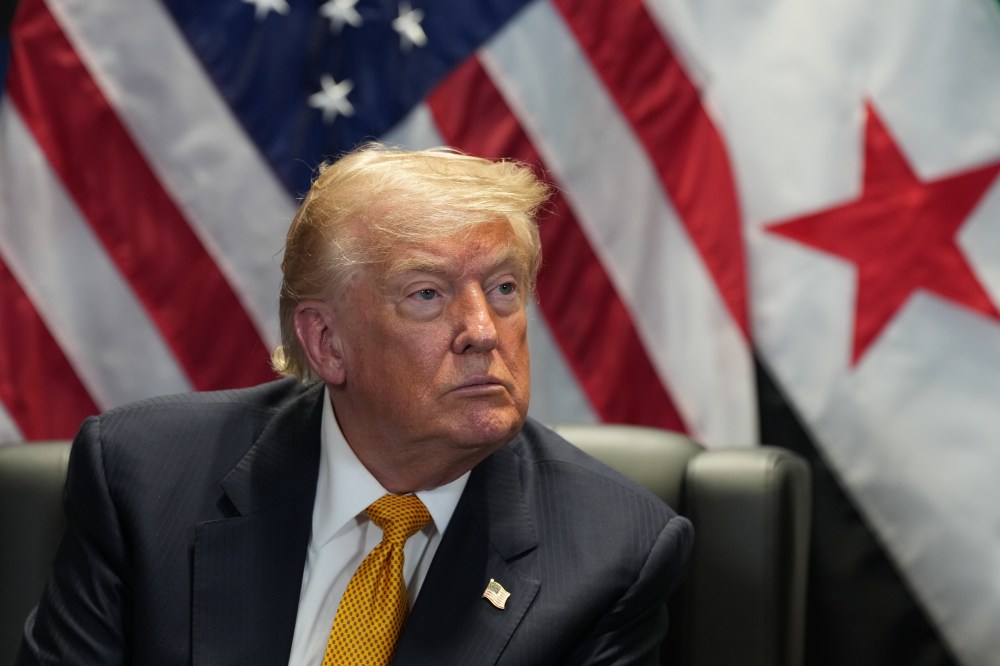
TORONTO – Stock markets fell on Wednesday after U.S. President Donald Trump said the ceasefire with Iran was over, sending oil prices higher.
“At the end of the day, Middle East risk is back into markets … and the transmission mechanism into markets is via the price of oil,” said Anish Chopra, managing director with Portfolio Management Corp.
The S&P/TSX composite index was down 336.79 points at 34,935.80.
In New York, the Dow Jones industrial average was down 576.76 points at 52,348.39. The S&P 500 index was down 21.14 points at 7,482.71, while the Nasdaq composite was up 51.96 points at 25,870.65.
The S&P 500 fell as much as 1.1 per cent after Trump said the ceasefire agreement was “over,” but the index then trimmed its loss to 0.3 per cent after Trump said recent fighting did not mean a return to full-scale war. They’re his latest mixed messages on what will happen with the war, which threatens to worsen inflation for the world.
In the oil market, the price for a barrel of Brent crude climbed 5.2 per cent to US$78.02 and briefly topped US$80. That’s still below its peak from earlier in the conflict, when the price for the most actively traded contract reached nearly US$120. But the jump is unsettling because oil prices had just dropped back to prewar levels.
The August crude oil contract was up US$3.08 at US$73.52 per barrel.
“Markets and investors don’t react to geopolitics in isolation. They react to what geopolitics could mean for oil, inflation and interest rates,” he said.
The worry is that a continuation of the war will block the Strait of Hormuz and prevent the delivery of crude from the Persian Gulf to customers worldwide. That could worsen inflation, which economists expected would ease with oil prices, and in turn force the U.S. Federal Reserve and other central banks to raise interest rates.
Higher rates can keep a lid on inflation, but they also slow the economy and hurt prices for all kinds of investments.
Chopra said markets “may have become a little complacent around geopolitical risk going away to a significant extent.”
Helping to offset those losses was a steadying for some influential stocks in the artificial-intelligence industry. They’ve been under pressure in recent weeks on worries that their prices shot too high and that AI may not produce enough productivity and profits to make all the investments in chips and data centres worth it.
Their swings carry a lot of weight on Wall Street because AI stocks have grown into some of the U.S. market’s biggest, giving their movements more effect on the S&P 500 than other stocks.
Nvidia rose 3.7 per cent, for example, and was the strongest force pushing upward on the S&P 500 because it’s the largest stock on Wall Street.
In the Canadian stock market, the basic materials sector led the decline. The August gold contract was down US$75.00 at US$4,082.40 an ounce.

Chopra said that, generally, geopolitical risks are positive for gold, but markets were focused on the potential for higher inflation and interest rates, which are headwinds for gold.
The Canadian dollar traded for 70.55 cents US compared with 70.43 cents US on Tuesday.
This report by The Canadian Press was first published July 8, 2026.
— With files from The Associated Press
Companies in this story: (TSX: GSPTSE, TSX: CADUSD)