

South Africa seeks tariff exemption as US probes forced labor tied to imports
Advertisement
Read this article for free:
or
Already have an account? Log in here »
To continue reading, please subscribe:

Digital Subscription
One year of digital access for only $205*
- Enjoy unlimited reading on winnipegfreepress.com
- Read the E-Edition, our digital replica newspaper
- Access News Break, our award-winning app
- Play interactive puzzles
*First annual payment billed as $205.00 + GST for one year. This annual subscription will automatically renew at $233.00 + GST every 52 weeks (10% off the regular annual price of $259.35). Offer available to new and qualified returning subscribers only. Cancel any time.
To continue reading, please subscribe:
Add Free Press access to your Brandon Sun subscription for only an additional
$1 for the first 4 weeks*
- Enjoy unlimited reading on winnipegfreepress.com
- Read the E-Edition, our digital replica newspaper
- Access News Break, our award-winning app
- Play interactive puzzles
*Your next Brandon Sun subscription payment will increase by $1.00 and you will be charged $17.95 plus GST for four weeks. After four weeks, your payment will increase to $24.95 plus GST every four weeks.
Read unlimited articles for free today:
or
Already have an account? Log in here »
JOHANNESBURG (AP) — South Africa has asked the United States to exempt it from proposed tariffs linked to a U.S. investigation into the enforcement of bans on imports of products made with forced labor in dozens of countries, arguing that it has robust laws prohibiting the practice.
A South African delegation led by the Department of Trade, Industry and Competition appeared before the Office of the U.S. Trade Representative in Washington this week as part of a Section 301 investigation examining whether at least 60 economies adequately enforce bans on imports of goods made with forced labor.
The delegation stressed that South Africa has ratified key International Labor Organization conventions prohibiting forced labor and has legislation that allows authorities to block imports produced using forced labor. It also noted that goods produced through prison labor are already prohibited under South African law.
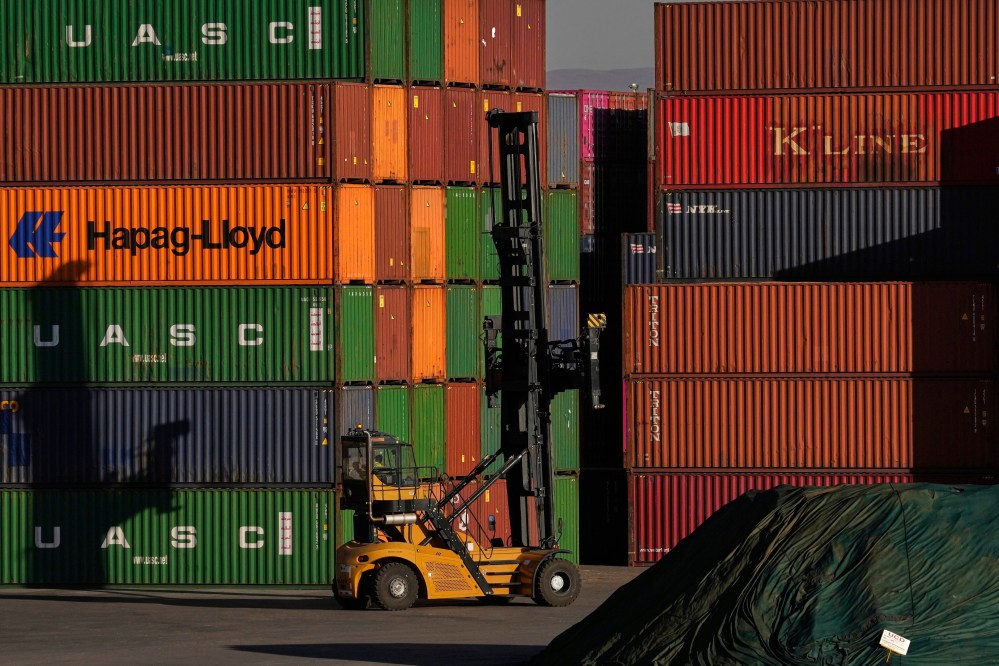
It urged Washington not to impose a proposed 12.5% tariff on South African exports and requested exemptions for key exports, including platinum group metals, vehicles, citrus, seafood, wine, and nuts, arguing there was no evidence they were produced using forced labor.
Trade relations between Washington and Pretoria have become increasingly strained with repeated tensions over trade and foreign policy in recent years, including disagreements over tariffs, South Africa’s domestic policies and differing positions on several conflicts, including the war in Gaza.
South Africa has long benefited from duty-free access to the U.S. market under the African Growth and Opportunity Act, a trade program that has supported billions of dollars in exports from sub-Saharan Africa. The program is due to expire unless renewed by the U.S. Congress.
South Africa’s Trade Minister Parks Tau said the U.S. remained an important trading partner, adding that the government would continue to engage with Washington on the probe and other issues, such as the existing U.S. tariffs on steel, aluminum, and automobiles.
After the hearing, the U.S. trade office gave time for additional submissions by Thursday, before it was to make a decision.

___
AP Africa news: https://apnews.com/hub/africa