

Stock markets edge higher amid positive U.S. inflation data
Advertisement
Read this article for free:
or
Already have an account? Log in here »
To continue reading, please subscribe:

Digital Subscription
One year of digital access for only $205*
- Enjoy unlimited reading on winnipegfreepress.com
- Read the E-Edition, our digital replica newspaper
- Access News Break, our award-winning app
- Play interactive puzzles
*First annual payment billed as $205.00 + GST for one year. This annual subscription will automatically renew at $233.00 + GST every 52 weeks (10% off the regular annual price of $259.35). Offer available to new and qualified returning subscribers only. Cancel any time.
To continue reading, please subscribe:
Add Free Press access to your Brandon Sun subscription for only an additional
$1 for the first 4 weeks*
- Enjoy unlimited reading on winnipegfreepress.com
- Read the E-Edition, our digital replica newspaper
- Access News Break, our award-winning app
- Play interactive puzzles
*Your next Brandon Sun subscription payment will increase by $1.00 and you will be charged $17.95 plus GST for four weeks. After four weeks, your payment will increase to $24.95 plus GST every four weeks.
Read unlimited articles for free today:
or
Already have an account? Log in here »
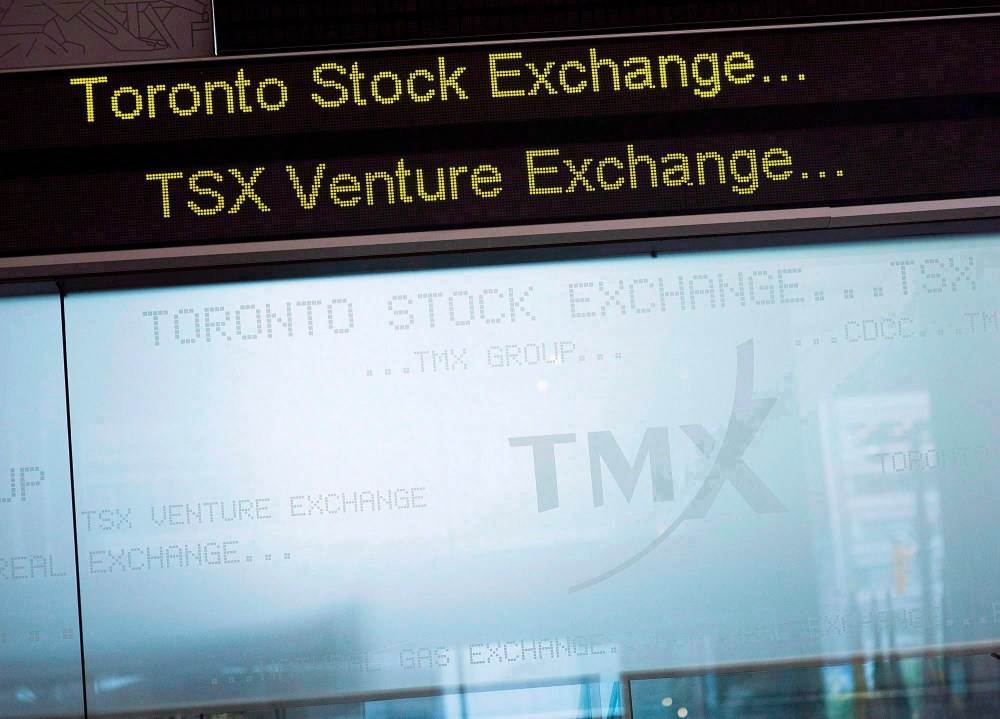
TORONTO – Stock markets edged higher on Tuesday as U.S. inflation data spurred some optimism among investors even though oil prices continued to rise.
The S&P/TSX composite index was up 67.82 points at 35,320.54.
In New York, the Dow Jones industrial average was up 9.63 points at 52,508.27. The S&P 500 index was up 28.25 points at 7,543.59, while the Nasdaq composite was up 233.83 points at 26,107.01.
Brian Madden, chief investment officer with First Avenue Investment Counsel, said there are “cross currents” in the market.
“On the one hand you get the seemingly dovish inflation reading out of the states. On the other hand … we know that energy has a consequential weight in the consumer price index basket,” he said.
“And energy is reinflating in real time as bombs and rockets and drones fly across the (Strait of Hormuz). This relief could be fleeting in terms of consumer price index pressure if we don’t get things calming down in the Middle East.”
A report showed U.S. inflation was not as bad last month as economists expected. U.S. consumers had to pay prices for gasoline, food and other costs of living that were 3.5 per cent higher last month than a year earlier.
Less bad inflation could take pressure off the U.S. Federal Reserve, which is considering raising interest rates. Higher rates can keep a lid on inflation, but they also slow the economy and hurt prices for all kinds of investments.
To be sure, big risks remain for inflation. Fighting in the Middle East is threatening to close or slow traffic in the Strait of Hormuz, the narrow waterway that oil tankers use to exit the Persian Gulf and deliver crude to customers worldwide.
The August crude oil contract for North American benchmark West Texas Intermediate was up US$1.20 at US$79.34 per barrel.
The price for a barrel of Brent crude, the international standard, pared its gain and settled at US$84.73, up 1.7 per cent from Monday’s settlement. It eased after U.S. President Donald Trump backed away from his threat made Monday to charge 20 per cent on all cargo going through the strait to reimburse the U.S. military for its protection.
Rebounds for big, influential tech stocks also helped steady the market.
Micron Technology rose 4.9 per cent, and Nvidia climbed 4.1 per cent. A day before, they were two of the heaviest weights on the S&P 500 after falling 4.4 per cent and 3.5 per cent, respectively.
Wall Street’s other big focus this week is the start of earnings reporting season, as companies tell investors how much profit they made from April through June. The pressure is on companies to deliver big growth to justify how high their stock prices have jumped.
Bank of America, Citigroup, JPMorgan Chase, Goldman Sachs and Wells Fargo all on Tuesday reported fatter profits for the latest quarter than analysts expected. Their reports showed strength for their trading desks and suggested spending by U.S. consumers remains resilient.
IBM was the heaviest weight on the S&P 500 and the biggest reason the Dow lagged behind other indexes after dropping 25.2 per cent.
On the TSX, the basic materials sector led the overall index higher. Madden said the sector benefited from rising gold prices, which started to climb after the release of the U.S. inflation data.
The August gold contract was up US$64.00 at US$4,069.70 an ounce.
Separately, the Bank of Canada is set to make its fifth interest rate announcement of the year on Wednesday. Most economists are expecting monetary policymakers to leave the key borrowing rate unchanged at 2.25 per cent.

Madden said “there’s not a strong case” for the central bank to change interest rates at this time.
The Canadian dollar traded for 71.09 cents US compared with 70.70 cents US on Monday.
This report by The Canadian Press was first published July 14, 2026.
— With files from The Associated Press
Companies in this story: (TSX: GSPTSE, TSX: CADUSD)