

UK nationalizes Chinese-owned British Steel to protect nation’s steelmaking capacity
Advertisement
Read this article for free:
or
Already have an account? Log in here »
To continue reading, please subscribe:

Digital Subscription
One year of digital access for only $205*
- Enjoy unlimited reading on winnipegfreepress.com
- Read the E-Edition, our digital replica newspaper
- Access News Break, our award-winning app
- Play interactive puzzles
*First annual payment billed as $205.00 + GST for one year. This annual subscription will automatically renew at $233.00 + GST every 52 weeks (10% off the regular annual price of $259.35). Offer available to new and qualified returning subscribers only. Cancel any time.
To continue reading, please subscribe:
Add Free Press access to your Brandon Sun subscription for only an additional
$1 for the first 4 weeks*
- Enjoy unlimited reading on winnipegfreepress.com
- Read the E-Edition, our digital replica newspaper
- Access News Break, our award-winning app
- Play interactive puzzles
*Your next Brandon Sun subscription payment will increase by $1.00 and you will be charged $17.95 plus GST for four weeks. After four weeks, your payment will increase to $24.95 plus GST every four weeks.
Read unlimited articles for free today:
or
Already have an account? Log in here »
LONDON (AP) — The U.K. government has nationalized British Steel to protect the nation’s steelmaking capacity after the company’s Chinese owners moved to shut the plant’s blast furnaces.
The Department for Business and Trade announced the move on Thursday, saying it would save thousands of jobs and protect the U.K.’s national interest by ensuring a supply of domestically produced steel for major construction projects and the defense industry.
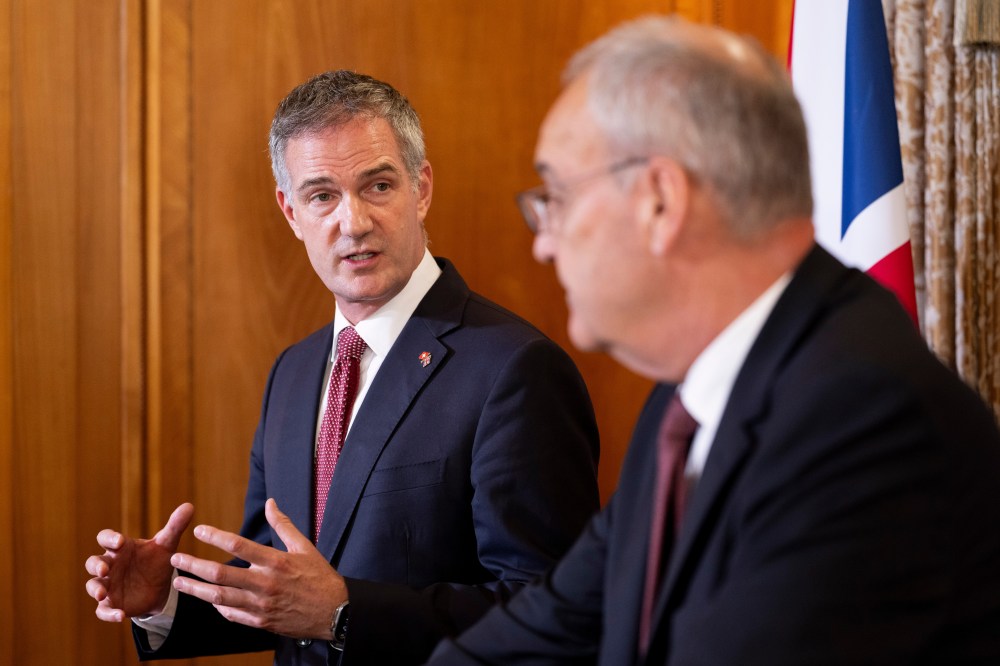
“British Steel now belongs to the British people, and our focus is on the future: stabilizing the business, backing the communities that rely on it and building a sustainable, competitive and decarbonized steel sector for the years ahead,” Business Secretary Peter Kyle said in a statement.
An independent evaluation will be carried out to determine whether any compensation will be paid to the firm’s former owner, China’s Jingye Group.
The U.K. government took operational control of British Steel last year after Jingye said that it was considering closing the blast furnaces at its Scunthorpe plant in northern England. The blast furnaces are the last in the U.K. that make “virgin steel” from raw materials.
British Steel and its forebears have been making steel at Scunthorpe for more than 130 years, building on the U.K.’s development of improved steelmaking technology during the Industrial Revolution. The plant currently employs about 2,700 people.
Jingye bought British Steel in 2020 and says it has invested more than 1.2 billion pounds ($1.6 billion) to keep the plant running in the face of “ongoing production instability.”
On Friday, China’s Ministry of Commerce expressed firm opposition and “strong dissatisfaction” with the U.K. government’s move.

“It has seriously hurt Jingye’s legitimate rights and interests, and dealt a serious blow to the confidence of Chinese enterprises investing in the U.K.,” the ministry said in a statement.
The ministry added that it supports Chinese enterprises in “using legal means to defend their rights,” adding that China will closely monitor the developments and will “take resolute measures to firmly safeguard the interests of Chinese enterprises.”