

Vancouver works to avoid ‘great sigh’ in the wake of World Cup hosting duties
Advertisement
Read this article for free:
or
Already have an account? Log in here »
To continue reading, please subscribe:

Digital Subscription
One year of digital access for only $205*
- Enjoy unlimited reading on winnipegfreepress.com
- Read the E-Edition, our digital replica newspaper
- Access News Break, our award-winning app
- Play interactive puzzles
*First annual payment billed as $205.00 + GST for one year. This annual subscription will automatically renew at $233.00 + GST every 52 weeks (10% off the regular annual price of $259.35). Offer available to new and qualified returning subscribers only. Cancel any time.
To continue reading, please subscribe:
Add Free Press access to your Brandon Sun subscription for only an additional
$1 for the first 4 weeks*
- Enjoy unlimited reading on winnipegfreepress.com
- Read the E-Edition, our digital replica newspaper
- Access News Break, our award-winning app
- Play interactive puzzles
*Your next Brandon Sun subscription payment will increase by $1.00 and you will be charged $17.95 plus GST for four weeks. After four weeks, your payment will increase to $24.95 plus GST every four weeks.
Read unlimited articles for free today:
or
Already have an account? Log in here »
VANCOUVER – As the FIFA banners come down across Vancouver and barriers are removed from BC Place, Destination Vancouver’s CEO Royce Chwin says the city is working to avoid what he calls “the great sigh.”
That’s the lull in tourism that can follow a major event, with Chwin citing the quiet year that came after Vancouver hosted the Olympics in 2010.
He says the city has been preparing years in advance to avoid a similar slump after the conclusion of its World Cup hosting duties, including by booking conferences and cultural events that began the day after the final whistle was blown at BC Place on July 7.
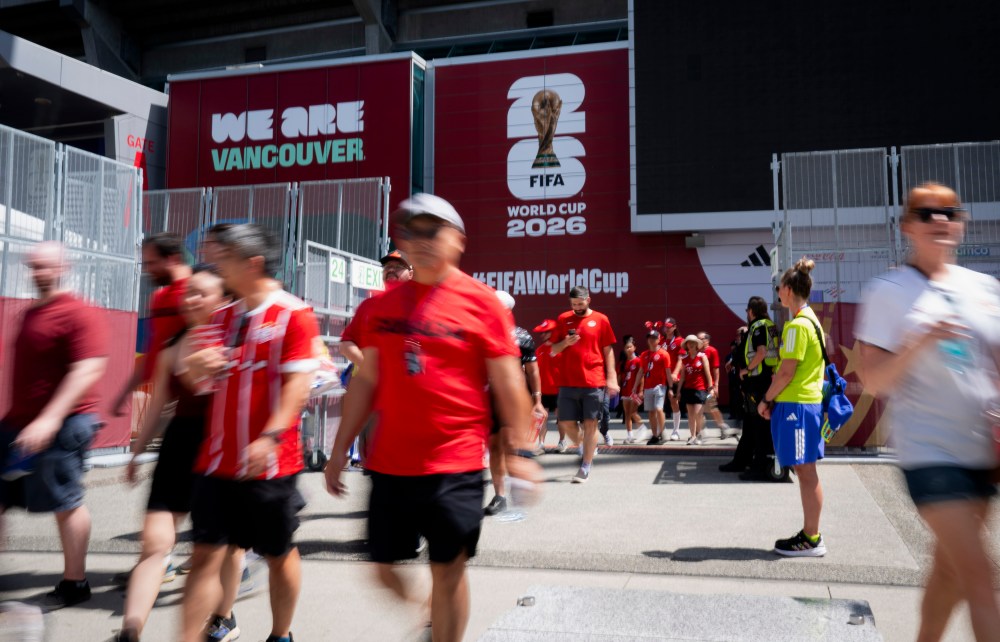
Vancouver was one of 16 cities across Canada, the United States and Mexico that hosted the tournament, which will conclude with Sunday’s final between Argentina and Spain in New Jersey.
Reflecting on the seven World Cup games hosted in Vancouver, Chwin says he thinks the city “presented incredibly well” as a fan experience and on the world stage.
He notes an uptick in sales for businesses geared toward a soccer crowd, such as sports bars, while he admits other businesses may have suffered.
“We had some successes and unfortunately, we had some misses,” he says.
“We’re still trying to assess the impacts, positively and negatively, throughout the entire region, what did successfully and what didn’t do successfully.”
Chwin noted this World Cup was unprecedented, as hosting duties spanned three countries. That, he said, was reflected in hotel rates.
“People are spread out all over the place, and so you’ve really dispersed your audiences,” Chwin said in an interview.
He said in June, downtown Vancouver hotels had a 75 per cent occupancy rate, while the same period in 2025 had 91 per cent occupancy.
“That story rings true to some degree in all of the 16 cities, so it’s not a unique-to-Vancouver problem.”
Despite this, transit and airport authorities reported usage spikes throughout Vancouver’s hosting run.
The Vancouver Airport Authority said in a statement that data around passenger counts, including reasons for travel to YVR, won’t be available until later this summer.
But it said “YVR continues to see very strong demand and is tracking toward another robust summer season, supported by the FIFA World Cup, a busy cruise season and typical peak travel patterns.”
“Early numbers from the start of the FIFA games period on June 8 through to July 10 suggest continued strong activity at YVR, with approximately 2.8 million passengers travelling through the airport, an average of about 86,000 passengers per day and peak days reaching close to 92,000,” the statement said.
“Depending on the day, this represents an approximately five to 10 per cent increase in passenger volumes over the same period last year, which was a record year in YVR’s history.”
The city’s transit authority issued a news release saying ridership also increased across the city, particularly on match days.
“Together, those match days generated an increase of more than 600,000 transit boardings across the region,” it said.

“Around BC Place, the increase in ridership was even more significant on match days, with nearby SkyTrain stations seeing ridership rise by an average of 54 per cent, the highest ridership seen in the area since the 2010 Olympics.”
Overall, Chwin said it was a “clean event” that garnered “lots of fun and lots of positive comments about the city and the city experience and what people loved about Vancouver.”
“We were reminded of the power of civic pride in our place and that we could pull off something significant and have a very positive impact,” he said.
“That’s the momentum now that we need to capitalize on for the years to come.”
This report by The Canadian Press was first published July 16, 2026.