

Fuel costs on the rise as latest geopolitical turmoil drives up crude oil prices
Advertisement
Read this article for free:
or
Already have an account? Log in here »
To continue reading, please subscribe:

Digital Subscription
One year of digital access for only $205*
- Enjoy unlimited reading on winnipegfreepress.com
- Read the E-Edition, our digital replica newspaper
- Access News Break, our award-winning app
- Play interactive puzzles
*First annual payment billed as $205.00 + GST for one year. This annual subscription will automatically renew at $233.00 + GST every 52 weeks (10% off the regular annual price of $259.35). Offer available to new and qualified returning subscribers only. Cancel any time.
To continue reading, please subscribe:
Add Free Press access to your Brandon Sun subscription for only an additional
$1 for the first 4 weeks*
- Enjoy unlimited reading on winnipegfreepress.com
- Read the E-Edition, our digital replica newspaper
- Access News Break, our award-winning app
- Play interactive puzzles
*Your next Brandon Sun subscription payment will increase by $1.00 and you will be charged $17.95 plus GST for four weeks. After four weeks, your payment will increase to $24.95 plus GST every four weeks.
Read unlimited articles for free today:
or
Already have an account? Log in here »
CALGARY – Fuel costs are on the rise in Canada as geopolitical turmoil drives the price of crude oil to its highest level in more than a month.
The Canadian national average sat above $1.80 a litre on Thursday — a two-cent increase from a day earlier and an eight-cent bump from a week ago, according to Gasbuddy.com, which crowdsources pump price data from across Canada and the U.S.
That could rise by another five to 10 cents over the next week or two as the full impact of the crude price jump works its way through the supply chain, said Patrick De Haan, head of petroleum analysis at Gasbuddy.

West Texas Intermediate crude for September delivery is hovering above US$92 a barrel, an almost six per cent increase from a day earlier. The price of Brent, the benchmark for seaborne light crude, has edged back into the triple digits, its highest level since May.
The impact is being felt even more sharply for another fuel derived from crude — diesel. That fuel now costs around $2.10 a litre and could surge past its April record of $2.28 a litre in the coming weeks, De Haan said.
“Diesel is the fuel that powers much of the global economy. Such is true for Canada as well, from trucks to tractors and trains,” he said.
“The Canadian economy moves with diesel, and so the surge in the price of diesel is problematic.”
Global oil prices have been elevated since the U.S. and Israel launched their war on Iran in late February, causing one fifth of the globe’s oil tanker shipments to grind to a halt through the Strait of Hormuz, a vital waterway that links the Persian Gulf to the open sea.
Disruptions have spread to another major Middle East choke point — the Bab el-Mandeb Strait connecting the Red Sea to the Gulf of Aden. Yemen’s Iran-backed Houthi rebels said Thursday they attacked two Saudi oil tankers in the Red Sea.

Ukrainian attacks on Russian refineries are also cutting the supply of diesel and jet fuel to global markets, De Haan added.
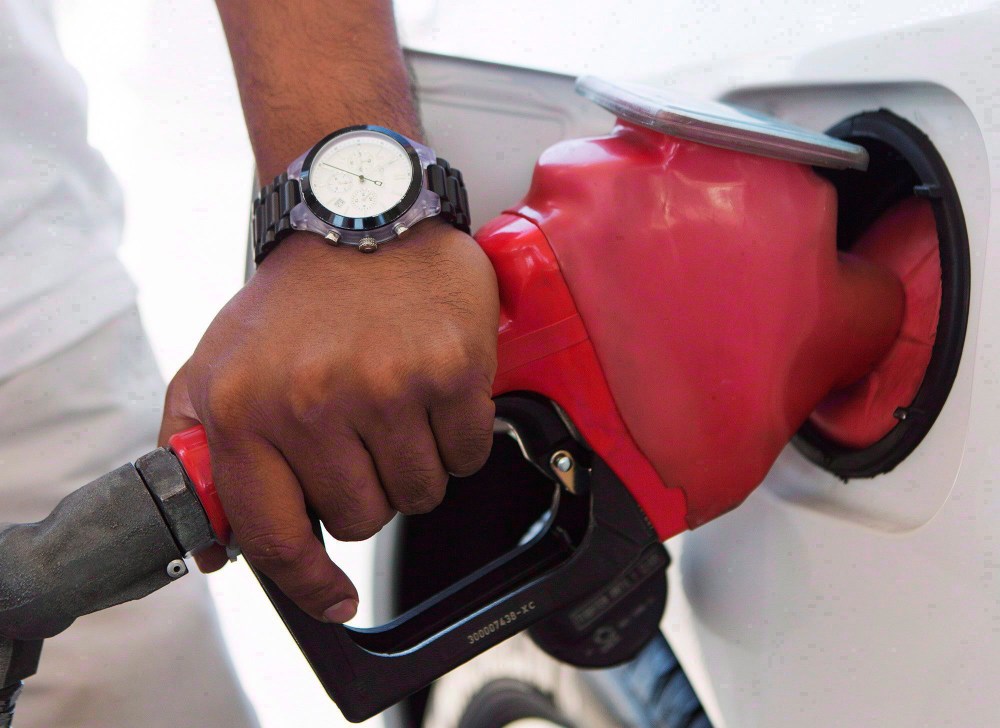
The fuel price jolt comes in the thick of the high-demand summer driving season. With travel plans locked down, De Haan said there likely won’t be an immediate change in how much gasoline Canadians buy.
“I don’t think that we’re going to see a significant drop in demand until after the summer driving season is over, until after Labour Day,” he said.
“Then we’re likely will start to see a potentially sizable drop in gasoline demand as Canadians get back to the grind, as schools reopen.”
This report by The Canadian Press was first published July 23, 2026.
Related Articles
Trump adds new condition to Saudi nuclear deal, says kingdom must normalize relations with Israel
Advertisement Advertise With Us
Advertisement Advertise With Us