

Canadian, U.S. markets drop as oil prices rise amid continued Middle East fighting
Advertisement
Read this article for free:
or
Already have an account? Log in here »
To continue reading, please subscribe:

Digital Subscription
One year of digital access for only $205*
- Enjoy unlimited reading on winnipegfreepress.com
- Read the E-Edition, our digital replica newspaper
- Access News Break, our award-winning app
- Play interactive puzzles
*First annual payment billed as $205.00 + GST for one year. This annual subscription will automatically renew at $233.00 + GST every 52 weeks (10% off the regular annual price of $259.35). Offer available to new and qualified returning subscribers only. Cancel any time.
To continue reading, please subscribe:
Add Free Press access to your Brandon Sun subscription for only an additional
$1 for the first 4 weeks*
- Enjoy unlimited reading on winnipegfreepress.com
- Read the E-Edition, our digital replica newspaper
- Access News Break, our award-winning app
- Play interactive puzzles
*Your next Brandon Sun subscription payment will increase by $1.00 and you will be charged $17.95 plus GST for four weeks. After four weeks, your payment will increase to $24.95 plus GST every four weeks.
Read unlimited articles for free today:
or
Already have an account? Log in here »
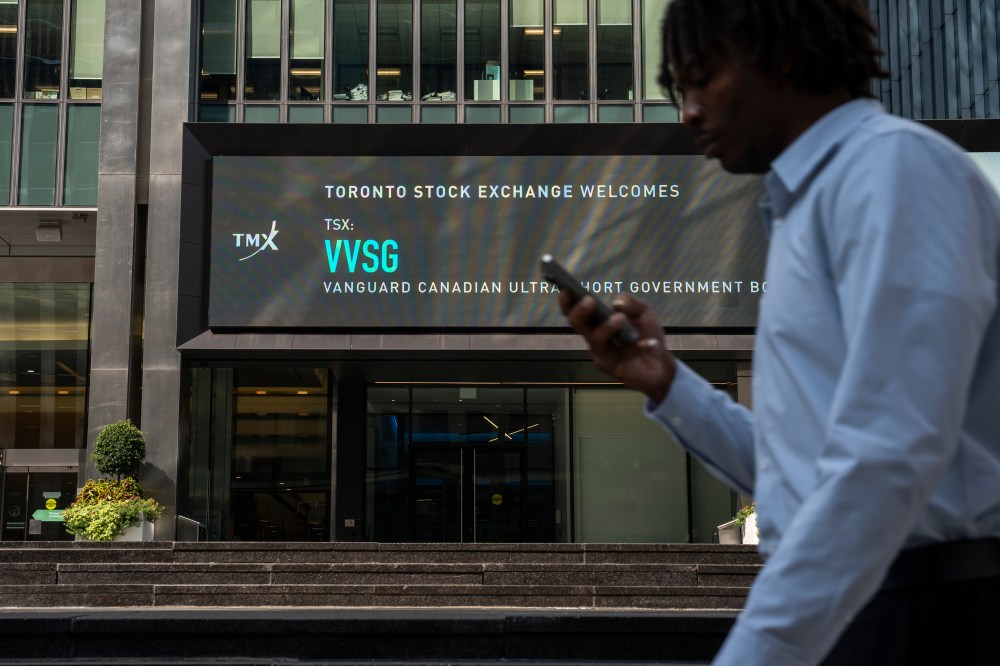
TORONTO – Stock markets across Canada and the U.S. tumbled on Wednesday as oil prices rose and fighting resumed in the Middle East.
“The negative sentiment had a lot to do with the war in Iran and the escalation that we have been seeing over the last couple of days,” said Étienne Bergeron, an economist at iA Financial Group.
The S&P/TSX composite index was down 415.92 points at 35,333.78.
In New York, the Dow Jones industrial average was down 1,153.18 points at 51,594.14. The S&P 500 index was down 112.63 points at 7,316.15, while the Nasdaq composite was down 433.97 points at 24,442.94.
Iran launched a barrage of missiles at American forces in the Middle East, while the U.S. military partnered with Saudi Arabia to strike Tehran-backed militias in Iraq.
The September crude oil contract for North American benchmark West Texas Intermediate was up US$5.20 at US$84.46 per barrel.
The price of Brent crude leaped 7.3 per cent to settle at US$88.09 per barrel.
Brent oil’s price had swung as low as US$72 early this month and as high as US$102 last week on uncertainty about whether the United States and Iran could reach a deal to allow oil tankers to move freely again from the Middle East to customers worldwide.
The swings have raised worries that inflation will reaccelerate, and traders came into the day betting on a roughly 34 per cent probability that the U.S. Federal Reserve would raise its main interest rate in the afternoon, according to data from CME Group.
“The situation is definitely getting more worrying, more concerning. More and more people are realizing that there’s no easy way out of there on the U.S. part, so people are starting to price a more prolonged conflict,” Bergeron said.
He added that the effect on oil prices can translate into inflationary pressure and higher interest rates, which over time will weigh on global markets.
U.S. Fed officials voted to keep the federal funds rate steady, though three members of the policymaking committee did want to raise rates. Bergeron said markets are trying to assess how the U.S. central bank will change under the leadership of new Fed chair Kevin Warsh.
Warsh implied the bond market may already be doing some of the work to restrain inflation, and he pointed to how yields have climbed since the central bank’s last meeting six weeks ago.
Higher rates can keep a lid on inflation, but they can also slow the economy and undercut prices for stocks and other investments.
On the TSX, all sectors were in the red except for energy, with financials leading the downside. Bergeron said higher commodity prices were lifting the energy sector, while more growth-oriented sectors like banks and industrials were feeling the effect of higher inflation risks.
Separately, Canadian investors sifted through the Bank of Canada’s summary of deliberations for its July 15 decision, where it held rates steady for a sixth straight time. Members of the bank’s governing council were split over how sustainable a recent economic rebound could be.
“There was no surprise; I think the Bank of Canada is firmly on the sidelines and it doesn’t seem to be much of a surprise to financial markets,” Bergeron said.

The Canadian dollar traded for 71.01 cents US compared with 70.91 cents on Tuesday.
The December gold contract was down US$1.60 at US$4,097.00 an ounce.
This report by The Canadian Press was first published July 29, 2026.
— With files from The Associated Press
Companies in this story: (TSX: GSPTSE, TSX: CADUSD)