

Minister says changes to Nutrition North program set to roll out in the fall
Advertisement
Read this article for free:
or
Already have an account? Log in here »
To continue reading, please subscribe:

Digital Subscription
One year of digital access for only $205*
- Enjoy unlimited reading on winnipegfreepress.com
- Read the E-Edition, our digital replica newspaper
- Access News Break, our award-winning app
- Play interactive puzzles
*First annual payment billed as $205.00 + GST for one year. This annual subscription will automatically renew at $233.00 + GST every 52 weeks (10% off the regular annual price of $259.35). Offer available to new and qualified returning subscribers only. Cancel any time.
To continue reading, please subscribe:
Add Free Press access to your Brandon Sun subscription for only an additional
$1 for the first 4 weeks*
- Enjoy unlimited reading on winnipegfreepress.com
- Read the E-Edition, our digital replica newspaper
- Access News Break, our award-winning app
- Play interactive puzzles
*Your next Brandon Sun subscription payment will increase by $1.00 and you will be charged $17.95 plus GST for four weeks. After four weeks, your payment will increase to $24.95 plus GST every four weeks.
Read unlimited articles for free today:
or
Already have an account? Log in here »
OTTAWA – Northern Affairs Minister Rebecca Chartrand says changes to the Nutrition North program are coming this fall, but they won’t be limited to subsidies to reduce the cost of food in the North.
Instead, Chartrand said, the federal government is looking at all options to help reduce food insecurity in the region, including strengthening local supply chains and supporting harvesters.
Nutrition North provides money to retailers to help bring down the high cost of groceries in 124 communities. Some retailers have been accused of not applying the full subsidy to the items they sell.

The federal government says it has been reviewing the program to strengthen the food economy, restructure governance and reform subsidies.
Inuit Tapiriit Kanatami, which represents Inuit in Canada, said earlier this year that Nutrition North isn’t working and should be scrapped.
“It’s a scattershot approach in a policy environment that is begging for specific intervention,” ITK president Natan Obed told The Canadian Press.
“We want to take back control more of this space and say, ‘If the government of Canada is going to spend a dollar on poverty reduction, on food security, on the well-being of children, that we’d love to do it within these policy parameters and the priorities that we have decided ourselves that we feel will make the best possible difference.’”
Obed said he wants a program exclusively for Inuit households based on co-ops and other locally-owned food retailers. He said such a program would give Inuit greater control over supply chains and food pricing, and expand support for harvesting and community-led food security initiatives.
Aluki Kotierk, an Inuk leader from Iqaluit, was selected as a special representative on Nutrition North by Chartrand’s department.
Chartrand’s department quietly published Kotierk’s report in late June. In it, she called for a universal basic income and more comprehensive monitoring of food insecurity.
She also called for the federal subsidy to be placed on all items to ensure grocery prices in the North are on par with what southerners pay.
“Canada needs to be investing in the Arctic in a sustained fashion so that we may lift ourselves out of poverty. Currently there is interest in the Arctic security and sovereignty. This interest needs to be sustained,” she wrote.
“This is a Canadian problem. The solution is a nation-building exercise. The modernization of Nutrition North Canada is not only a matter of food security but a nation-building initiative that contributes to reconciliation, economic development and Canadian sovereignty and security.”
Chartrand said input from Inuit leaders like Obed and Kotierk and her own engagements with northerners are helping her identify a policy direction.
“We want to ensure that we’re not designing something new from Ottawa for the people of the North,” she said in an interview with The Canadian Press on Thursday.
“We know that a subsidy alone cannot solve the food insecurity issue.”
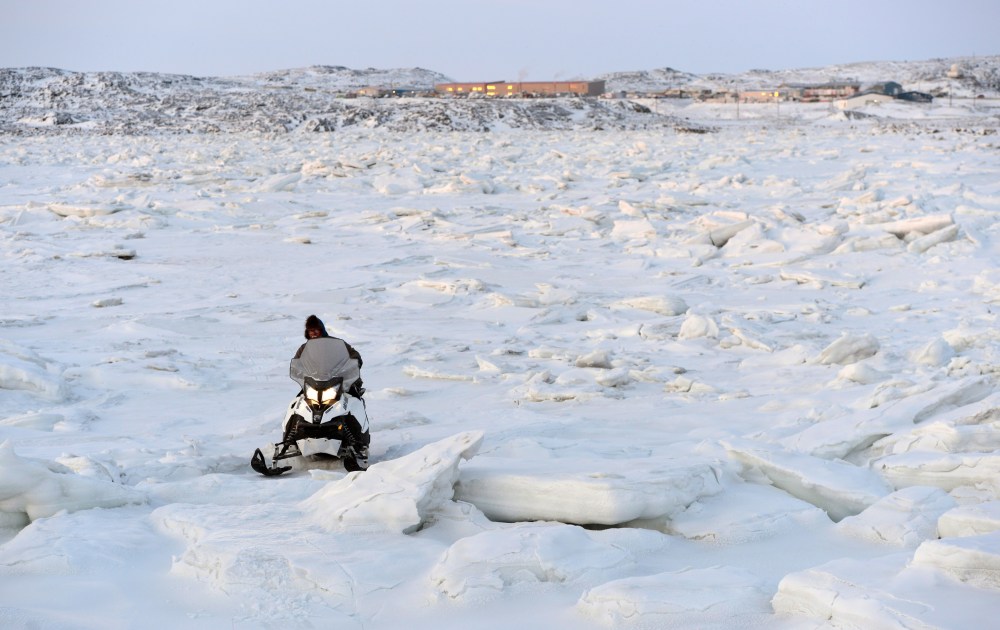
Chartrand pointed to higher fuel costs and a lack of infrastructure in remote communities as factors contributing to the problem. She said that as the federal government increases its presence in the Arctic, northerners should be kept in mind and infrastructure should be dual-use.
ITK’s report found non-Indigenous Canadians living in Inuit Nunangat, the Inuit homelands, have a median individual income of $100,000, while the median individual income for Inuit in the region is about $32,000.
ITK estimates the Inuit Nunangat market basket measure at $74,000 per year for a family of four. By comparing that figure with average family incomes, ITK estimates that about 41 per cent of families living in Inuit Nunangat experienced poverty in 2023, the year the data was collected.
Chartrand said she envisions region-based reforms to Nutrition North, adding no two areas are the same. That could involve co-ops owned by Indigenous groups or local food processing plants, she said.

Chartrand said traditional harvesting practices must also be part of the solution, both for sustenance and the maintenance of Indigenous cultures.
“If we’re using seal harvesting as an example, it remains an important source of nutritious food and its supports people’s local livelihood. It supports Inuit culture and identity,” she said.
She pointed to Nunavut Tunngavik Inc.’s calls for an Inuit food guide that incorporates and promotes those foods.
“They want to ensure that they’re promoting foods that are not only part of traditional practice but that are also close to home,” she said.
This report by The Canadian Press was first published July 30, 2026.